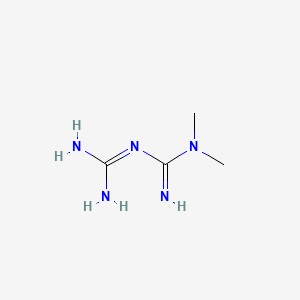
The source trail is separated into human randomized studies, pharmacokinetic interaction work, transporter experiments, and a mouse study; no cognitive-enhancement claim is inferred.
How it works
Predominantly gut-mediated glucose lowering
Delayed-release metformin retained glycemic efficacy despite approximately half the bioavailability of immediate/extended-release formulations, supporting a lower-bowel-mediated mechanism. [2]
OCT1 and thiamine transport
Metformin competitively inhibited OCT1-mediated thiamine uptake in mouse and human transporter models; hTHTR-2 also transported metformin in vitro. [11]
Counter-regulatory response during glycogen depletion
Metformin increased glycolytic use and lactate, followed by glucagon/cortisol and endogenous glucose production during prolonged fasting. [3]
02
Subjective effects
Reported experiences are kept separate from measured outcomes and remain tied to their cited context.
03
Measured outcomes
What the research measured, for whom, and under which exposure. Findings remain attached to the study’s task or clinical endpoint.
Delayed-release metformin 600, 800, or 1,000 mg once daily reduced fasting plasma glucose and HbA1c over 12 weeks in type 2 diabetes versus placebo; effects were dissociated from plasma exposure. [2]
Population240 adults with type 2 diabetes in dose-ranging studyExposureDelayed-release metformin 600–1,000 mg once dailyMeasureFasting plasma glucose and HbA1c
After 42-hour fasting, metformin increased glycolytic glucose use, lactate, counter-regulatory hormones, and endogenous glucose production without hypoglycemia in 34 completers. [3]
Population34 healthy volunteersExposure1 g twice daily before glycogen-depleting fastMeasureTracer glucose kinetics and hormones
Six months of metformin in aged high-fat-diet mice prevented diet-associated spatial reference-memory impairment, while reducing Nrf2 and neurotrophic-factor transcription. [6]
PopulationAged male C57BL/6J miceExposureMetformin in high-fat diet for 6 monthsMeasureMorris water maze and brain gene expression
A single 500 mg dose increased time to exhaustion versus placebo in 10 healthy men, without improving maximum accumulated oxygen deficit or lactate outcomes. [1]
Population10 healthy physically active menExposure500 mg 60 min before supramaximal cyclingMeasureCycle-ergometer exhaustion and oxygen/lactate measures
Human research
04
Doses & routes
Study doses and reference exposures, with route, formulation and duration.
Oral · By mouth · 3 records
05
Pharmacokinetics
Absorption, metabolism and elimination depend on the analyte, route, formulation, physiology and other exposures.
Timing explorer
Modeled elimination
The elimination model describes the named analyte after absorption and distribution. It does not establish felt-effect timing.
No validated elimination observation was imported in this corpus pass. [1]
Sourced elimination observations
06
Safety & uncertainty
Adverse effects and interactions reported in the cited studies.
Warning
Lactic-acidosis risk context
The linked index includes a review of metformin-associated lactic acidosis; risk is clinically context-dependent and not quantified by the retrieved PubMed abstracts here. [8]
Monitor
Transporter and nutrient interactions
Metformin interacts with OCT1 and thiamine transport systems in experimental models; St John’s wort reduced renal clearance but changed glucose tolerance in healthy men. [5]
 Wikipedia