The substance library

AshwagandhaBotanical and extract

Ashwagandha, or Withania somnifera, is a plant studied for stress, sleep and cognitive performance.
9 sourcesContent date Oct 27, 2026CompareExplore connectionsRevision history
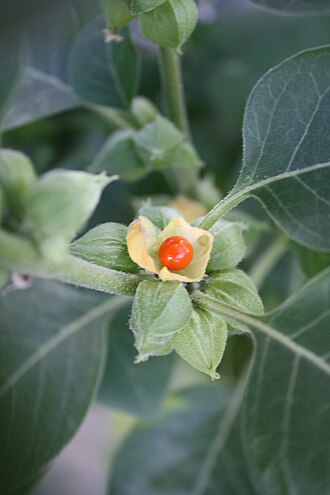
Withania somnifera
Wowbobwow12 · CC BY-SA 3.0
01

Overview

Ashwagandha, or Withania somnifera, is a plant studied for stress, sleep and cognitive performance.

How it works

Stress-axis and symptom measures

The stress trial measured serum cortisol alongside validated stress scales; the abstract supports an association with reduced stress/cortisol but does not establish a molecular mechanism. [6]

Sleep-deprivation cellular stress

In rats, leaf extract suppressed sleep-deprivation-associated changes in synaptic-plasticity, survival and apoptosis proteins in hippocampus. [5]

02

Subjective effects

Reported experiences are kept separate from measured outcomes and remain tied to their cited context.

Decreased
Human research

A naturopathic-care package including 300 mg twice-daily ashwagandha reduced Beck Anxiety Inventory scores more than psychotherapy over 12 weeks; component-specific attribution is uncertain. [3]

Population
81 randomized employees; 75 followed ≥8 weeks
Exposure context
Ashwagandha 300 mg BID plus naturopathic care
Decreased
Human research

A 300 mg twice-daily high-concentration root extract reduced all reported stress-assessment scores versus placebo at day 60. [6]

Population
64 adults with chronic stress
Exposure context
300 mg BID for 60 days
Increased
Human research

A reproducible burning/itching and dusky eroded plaque occurred with 5 g/day and flared within 12 hours after 1 g oral rechallenge. [8]

Population
One 28-year-old man
Exposure context
5 g/day then 1 g rechallenge
03

Measured outcomes

What the research measured, for whom, and under which exposure. Findings remain attached to the study’s task or clinical endpoint.

At six weeks, 88.2% of ethanolic-extract recipients met prespecified response criteria versus 50% of placebo recipients; statistical trends favored treatment at weeks 2 and 6. [4]

Population39 patients with ICD-10 anxiety disordersExposureEthanolic extract; dose not statedMeasurePrespecified response criteria
Human research

In bipolar disorder, adjunctive WSE improved digit-span backward, Flanker neutral response time and a social-cognition rating; other tasks were not significantly different. [7]

Population60 randomized; 53 completersExposure500 mg/day WSE for 8 weeksMeasureDigit span, Flanker, Penn Emotional Acuity Test
Human research

In sleep-deprived rats, 140 mg/kg/day aqueous leaf extract for 15 days improved behavioral performance and suppressed molecular markers of hippocampal stress/apoptosis. [5]

PopulationAdult Wistar ratsExposure140 mg/kg/day for 15 daysMeasureBehavioral tests and hippocampal proteins
Limited research

The 300 mg twice-daily root extract produced a greater serum-cortisol reduction than placebo at day 60. [6]

Population64 adults with chronic stressExposure300 mg BID for 60 daysMeasureSerum cortisol
Human research
04

Doses & routes

Study doses and reference exposures, with route, formulation and duration.

Oral · By mouth · 7 records

Naturopathic anxiety trial

Research exposure

300 mg [3]

Ingredient / form
Ashwagandha root extract · Extract standardized to 1.5% withanolides
Route
Oral
Frequency
Twice daily
Duration
12 weeks
Population
Employees with moderate-to-severe anxiety
Purpose
Anxiety and quality-of-life research

Part of a naturopathic-care package with counseling, breathing and multivitamin.

Ethanolic-extract anxiety trial

Research exposure

Not stated in abstract [4]

Ingredient / form
Withania somnifera ethanolic extract · Ethanolic extract
Route
Oral
Frequency
Study-specific
Duration
6 weeks
Population
Patients with ICD-10 anxiety disorders
Purpose
Anxiolytic efficacy research

Dose not reported in the PubMed abstract.

Stress trial

Research exposure

300 mg [6]

Ingredient / form
Ashwagandha root extract · High-concentration full-spectrum root extract
Route
Oral
Frequency
Twice daily
Duration
60 days
Population
Adults with chronic stress
Purpose
Stress and cortisol research

One capsule twice daily.

Bipolar cognition adjunct

Research exposure

500 mg/day [7]

Ingredient / form
Withania somnifera extract · Standardized extract adjunct
Route
Oral
Frequency
Daily
Duration
8 weeks
Population
Euthymic adults with bipolar disorder
Purpose
Cognitive research

Added to maintenance medication.

Sleep-deprived rat study

Research exposure

140 mg/kg [5]

Ingredient / form
Withania somnifera leaf extract · Aqueous leaf extract
Route
Oral
Frequency
Daily
Duration
15 days
Population
Adult Wistar rats
Purpose
Sleep-deprivation neuroprotection

Animal dose; not a human-equivalent recommendation.

Fixed-drug eruption case

Research exposure

5–5 g/day [8]

Ingredient / form
Ashwagandha powder · Ayurvedic powder
Route
Oral
Frequency
Daily then oral provocation
Duration
10 days; rechallenge flare within 12 h
Population
28-year-old man
Purpose
Safety case report

Rechallenge reproduced lesion at prior site.

Thyrotoxicosis case report

Research exposure

Increased capsule dose; quantity not stated [9]

Ingredient / form
Ashwagandha extract · Capsules containing ashwagandha extract
Route
Oral
Frequency
Increased dose after intermittent use
Duration
First few weeks then symptomatic escalation
Population
32-year-old healthy woman
Purpose
Safety case report

Dose was not reported; thyrotoxicosis resolved after discontinuation and laboratory values normalized.

05

Pharmacokinetics

Absorption, metabolism and elimination depend on the analyte, route, formulation, physiology and other exposures.

No pharmacokinetic observation was supplied by this identity import. [1]

06

Safety & uncertainty

Adverse effects and interactions reported in the cited studies.

Warning

Product and population heterogeneity

Different extracts, doses and populations were used; results cannot be generalized to all ashwagandha products. [6]

Monitor

Fixed-drug eruption

A case report documented a reproducible mucocutaneous fixed-drug eruption after 5 g/day and 1 g rechallenge. [8]

Context

Adjunctive and package effects

The strongest anxiety result came from a naturopathic-care package, so the independent contribution of ashwagandha is uncertain. [3]

Warning

Small preliminary cognition trial

The bipolar study had 53 completers and several cognitive outcomes were null; authors called results preliminary. [7]

Monitor

Thyrotoxicosis case report

A 32-year-old woman developed laboratory-confirmed thyrotoxicosis after increasing an ashwagandha capsule; symptoms and laboratory values normalized after discontinuation. Dose and product composition were not established in the abstract. [9]

Interactions in cited sources

Explore a pair of substances
07

Research & sources

9

Original publications, findings and available funding disclosures.

08

Connected claims

Explore the participants, roles and sources behind each relationship.

associated-withAuthored relationship

Selected standardized extracts reduced anxiety or stress measures in small randomized trials.

Ashwagandhaintervention or exposure
Anxiety and jitterinessreported endpoint

Publication abstract and/or retrieved PMC text; this is not a pooled efficacy estimate.

Limitation Publication-level association; direction and generalizability depend on the cited study.

associated-withAuthored relationship

Adjunctive WSE improved selected cognitive tasks in euthymic bipolar disorder over 8 weeks.

Ashwagandhaintervention or exposure

Publication abstract and/or retrieved PMC text; this is not a pooled efficacy estimate.

Limitation Publication-level association; direction and generalizability depend on the cited study.

associated-withAuthored relationship

A reproducible fixed-drug eruption occurred after high-dose powder and rechallenge.

Ashwagandhaintervention or exposure
Skin responsereported endpoint

Publication abstract and/or retrieved PMC text; this is not a pooled efficacy estimate.

Limitation Publication-level association; direction and generalizability depend on the cited study.

Explore the relationship graph
09

Publication history

Content updated Oct 27, 2026.

Keep exploring

View graph