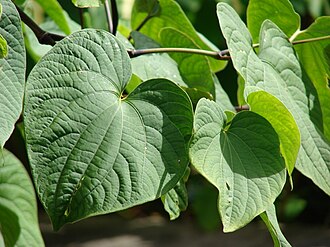
Kava is a Pacific Island plant whose root preparations are studied for relaxation and anxiety. Its main active compounds are kavalactones.
How it works
Source-specific finding from PMID 12225450
RESULTS: The use of kava occurs among indigenous populations in the South Pacific and in northern Australia, while also being used throughout the western world as a herbal medicine. Animal studies show that kava lactones alter neuronal excitation through direct interactions with voltage-dependent ion channels, giving rise to kava's muscle relaxant, anaesthetic, anxiolytic and anticonvulsive properties. Several isolated cases of psychotic and severe dystonic reactions following kava use suggest that kava also has psychoactive properties, yet there is no conclusive evidence that kava interferes with normal cognitive processes. CONCLUSIONS: Kava is effective in the treatment of tension and anx [2]
Source-specific finding from PMID 11642654
1. Antiepileptic drugs that are successful as mood stabilizers, e.g. carbamazepine, valproate and lamotrigine, exhibit a characteristic pattern of action on ion fluxes. [3]
Source-specific finding from PMID 9829291
1. Kavapyrones have well-known psychotropic properties. [4]
Source-specific finding from PMID 9832350
Kava-kava, a psychoactive beverage, induces relaxation, improves social interaction, promotes sleep and plays an important role in the sociocultural life in the islands of the South Pacific. On the other hand, standardized extracts of kava-kava roots are used for the therapy of anxiety, tension and restlessness. [5]
Source-specific finding from PMID 9434608
Three kava pyrones, the natural compounds (+)-methysticine and (+)-kavain, and the synthetic racemate (+/-)-kavain, were tested concerning their action on in vitro uptake of monoamines in synaptosomes prepared from the cerebral cortex and hippocampus of rats. (+/-)-Kavain and (+)-kavain were found to potently inhibit the uptake of [3H]-noradrenaline. Uptake of [3H]-noradrenaline was inhibited in the following order of potency: (+/-)-kavain = (+)-kavain > (+)-methysticine, whereas none of the kava pyrones efficiently blocked the uptake of [3H]-serotonin.[6]
Source-specific finding from PMID 1332016
Kava, an intoxicating beverage prepared from the pepper plant Piper methysticum, is widely consumed by the indigenous peoples in the islands of the South Pacific. As the first of a series of studies on the neuropharmacological interactions of kava with CNS receptors we tested purified pyrones and kava resin for activity on GABA and benzodiazepine binding sites in rat and mouse brain membranes. [7]
02
Subjective effects
Reported experiences are kept separate from measured outcomes and remain tied to their cited context.
03
Measured outcomes
What the research measured, for whom, and under which exposure. Findings remain attached to the study’s task or clinical endpoint.
RESULTS: The use of kava occurs among indigenous populations in the South Pacific and in northern Australia, while also being used throughout the western world as a herbal medicine. Animal studies show that kava lactones alter neuronal excitation through direct interactions with voltage-dependent ion channels, giving rise to kava's muscle relaxant, anaesthetic, anxiolytic and anticonvulsive properties. Several isolated cases of psychotic and severe dystonic reactions following kava use suggest that kava also has psychoactive properties, yet there is no conclusive evidence that kava interferes with normal cognitive processes. CONCLUSIONS: Kava is effective in the treatment of tension and anx [2]
PopulationPopulation description was not available in the retrieved abstract.ExposureRESULTS: The use of kava occurs among indigenous populations in the South Pacific and in northern Australia, while also being used throughout the western world as a herbal medicine. Animal studies show that kava lactones alter neuronal excitation through direct interactions with voltage-dependent ion channels, giving rise to kava's muscle relaxant, anaesthetic, anxiolytic and anticonvulsive properties. Several isolated cases of psychotic and severe dystonic reactions following kava use suggest that kava also has psychoactive properties, yet there is no conclusive evidence that kava interferes with normal cognitive processes. CONCLUSIONS: Kava is effective in the treatment of tension and anxMeasureNot assessed
1. Antiepileptic drugs that are successful as mood stabilizers, e.g. carbamazepine, valproate and lamotrigine, exhibit a characteristic pattern of action on ion fluxes. [3]
PopulationExperimental paradigms included current and voltage clamp recordings from rat hippocampal CA 1 pyramidal cells and dorsal root ganglia as well as field potential recordings in guinea pig hippocampal slices. 6.Exposure1. Antiepileptic drugs that are successful as mood stabilizers, e.g. carbamazepine, valproate and lamotrigine, exhibit a characteristic pattern of action on ion fluxes.MeasureNot assessed
1. Kavapyrones have well-known psychotropic properties. [4]
PopulationA small dose of kava extract (20 mg/kg body weight i.p.) caused changes in rat behaviour and concentrations of dopamine in the nucleus accumbens.Exposure1. Kavapyrones have well-known psychotropic properties.MeasureNot assessed
Kava-kava, a psychoactive beverage, induces relaxation, improves social interaction, promotes sleep and plays an important role in the sociocultural life in the islands of the South Pacific. On the other hand, standardized extracts of kava-kava roots are used for the therapy of anxiety, tension and restlessness. [5]
PopulationPopulation description was not available in the retrieved abstract.ExposureKava-kava, a psychoactive beverage, induces relaxation, improves social interaction, promotes sleep and plays an important role in the sociocultural life in the islands of the South Pacific. On the other hand, standardized extracts of kava-kava roots are used for the therapy of anxiety, tension and restlessness.MeasureNot assessed
The acute effects of the herbal anxiolytic Kava-kava (Piper methysticum G. Forster) on emotional reactivity and cognitive performance were investigated in a double-blind randomized placebo-controlled trial involving healthy volunteers. [8]
PopulationForster) on emotional reactivity and cognitive performance were investigated in a double-blind randomized placebo-controlled trial involving healthy volunteers.ExposureThe acute effects of the herbal anxiolytic Kava-kava (Piper methysticum G. Forster) on emotional reactivity and cognitive performance were investigated in a double-blind randomized placebo-controlled trial involving healthy volunteers.MeasureNot assessed
Volunteer subjects were assigned to receive a mixture of the intoxicating substance, kava, in a mixture with fruit juice, or juice alone. Subjects then undertook tasks of acute cognitive functioning, including reaction time and tracking tasks, and a measure of body sway. [10]
Populationassigned to receive a mixture of the intoxicating substance, kava, in a mixture with fruit juice, or juice aloneExposureVolunteer subjects were assigned to receive a mixture of the intoxicating substance, kava, in a mixture with fruit juice, or juice alone. Subjects then undertook tasks of acute cognitive functioning, including reaction time and tracking tasks, and a measure of body sway.MeasureNot assessed
Synthetic anxiolytic drugs are effective for treating anxiety, but they are burdened with adverse effects. Constraints on resources and time often render therapies such as psychologic interventions impracticable. [11]
Populationcontacted to provide further informationExposureSynthetic anxiolytic drugs are effective for treating anxiety, but they are burdened with adverse effects. Constraints on resources and time often render therapies such as psychologic interventions impracticable.MeasureNot assessed
HISTORY AND CLINICAL FINDINGS: A 60 year-old woman was admitted to hospital because of jaundice, fatigue, weight loss over several months and icteric skin. Because of progressive liver failure, concomitant renal failure and progressive encephalopathy she was transferred to an intensive care unit. [12]
PopulationTREATMENT AND CLINICAL COURSE: The patient's physical condition deteriorated.ExposureHISTORY AND CLINICAL FINDINGS: A 60 year-old woman was admitted to hospital because of jaundice, fatigue, weight loss over several months and icteric skin. Because of progressive liver failure, concomitant renal failure and progressive encephalopathy she was transferred to an intensive care unit.MeasureNot assessed
Kava is an extract from the Piper methysticum Forst. f. plant that has been consumed in the Pacific islands for millennia and more recently, among indigenous populations, in northern Australia and throughout the Western world as an herbal medicine. Through alterations on neuronal excitation, kava induces muscle relaxation, anasthesia, and has anxiolytic properties. [14]
PopulationPopulation description was not available in the retrieved abstract.ExposureKava is an extract from the Piper methysticum Forst. f. plant that has been consumed in the Pacific islands for millennia and more recently, among indigenous populations, in northern Australia and throughout the Western world as an herbal medicine. Through alterations on neuronal excitation, kava induces muscle relaxation, anasthesia, and has anxiolytic properties.MeasureNot assessed
Limited research
04
Doses & routes
Study doses and reference exposures, with route, formulation and duration.
Other routes · Other or unspecified · 4 records
05
Pharmacokinetics
Absorption, metabolism and elimination depend on the analyte, route, formulation, physiology and other exposures.
No pharmacokinetic observation was supplied by this identity import. [1]
06
Safety & uncertainty
Adverse effects and interactions reported in the cited studies.
Warning
Source-specific finding from PMID 12225450
RESULTS: The use of kava occurs among indigenous populations in the South Pacific and in northern Australia, while also being used throughout the western world as a herbal medicine. Animal studies show that kava lactones alter neuronal excitation through direct interactions with voltage-dependent ion channels, giving rise to kava's muscle relaxant, anaesthetic, anxiolytic and anticonvulsive properties. Several isolated cases of psychotic and severe dystonic reactions following kava use suggest that kava also has psychoactive properties, yet there is no conclusive evidence that kava interferes with normal cognitive processes. CONCLUSIONS: Kava is effective in the treatment of tension and anx [2]
Monitor
Source-specific finding from PMID 11642654
1. Antiepileptic drugs that are successful as mood stabilizers, e.g. carbamazepine, valproate and lamotrigine, exhibit a characteristic pattern of action on ion fluxes. [3]
Context
Source-specific finding from PMID 9829291
1. Kavapyrones have well-known psychotropic properties. [4]
Warning
Source-specific finding from PMID 9832350
Kava-kava, a psychoactive beverage, induces relaxation, improves social interaction, promotes sleep and plays an important role in the sociocultural life in the islands of the South Pacific. On the other hand, standardized extracts of kava-kava roots are used for the therapy of anxiety, tension and restlessness. [5]
Monitor
Source-specific finding from PMID 1332016
Kava, an intoxicating beverage prepared from the pepper plant Piper methysticum, is widely consumed by the indigenous peoples in the islands of the South Pacific. As the first of a series of studies on the neuropharmacological interactions of kava with CNS receptors we tested purified pyrones and kava resin for activity on GABA and benzodiazepine binding sites in rat and mouse brain membranes. [7]
Context
Source-specific finding from PMID 15181652
The acute effects of the herbal anxiolytic Kava-kava (Piper methysticum G. Forster) on emotional reactivity and cognitive performance were investigated in a double-blind randomized placebo-controlled trial involving healthy volunteers. [8]
Warning
Source-specific finding from PMID 10653213
Synthetic anxiolytic drugs are effective for treating anxiety, but they are burdened with adverse effects. Constraints on resources and time often render therapies such as psychologic interventions impracticable. [11]
Monitor
Source-specific finding from PMID 20720265
This review critically analyzes the clinical data of patients with suspected kava hepatotoxicity and suggests recommendations for minimizing risk. Kava is a plant (Piper methysticum) of the pepper family Piperaceae, and its rhizome is used for traditional aqueous extracts in the South Pacific Islands and for commercial ethanolic and acetonic medicinal products as anxiolytic herbs in Western countries. [13]
Original publications, findings and available funding disclosures.
08
Connected claims
Explore the participants, roles and sources behind each relationship.
associated-withAuthored relationship
PMID 12225450 reports: RESULTS: The use of kava occurs among indigenous populations in the South Pacific and in northern Australia, while also being used throughout the western world as a herbal medicine. Animal studies show that kava lactones alter neuronal excitation through direct interactions with voltage-dependent ion channels, giving rise to kava's muscle relaxant, anaesthetic, anxiolytic and anticonvulsive properties. Several isolated cases of psychotic and severe dystonic reactions following kava use suggest that kava also has psychoactive properties, yet there is no conclusive evidence that kava interferes with normal cognitive processes. CONCLUSIONS: Kava is effective in the treatment of tension and anx
Publication abstract; direction and population are retained on the linked observation.
Limitation Automated corpus import from an abstract; this record is not an independent meta-analysis.
associated-withAuthored relationship
PMID 11642654 reports: 1. Antiepileptic drugs that are successful as mood stabilizers, e.g. carbamazepine, valproate and lamotrigine, exhibit a characteristic pattern of action on ion fluxes.
Publication abstract; direction and population are retained on the linked observation.
Limitation Automated corpus import from an abstract; this record is not an independent meta-analysis.
associated-withAuthored relationship
PMID 9832350 reports: Kava-kava, a psychoactive beverage, induces relaxation, improves social interaction, promotes sleep and plays an important role in the sociocultural life in the islands of the South Pacific. On the other hand, standardized extracts of kava-kava roots are used for the therapy of anxiety, tension and restlessness.
Publication abstract; direction and population are retained on the linked observation.
Limitation Automated corpus import from an abstract; this record is not an independent meta-analysis.
associated-withAuthored relationship
PMID 9434608 reports: Three kava pyrones, the natural compounds (+)-methysticine and (+)-kavain, and the synthetic racemate (+/-)-kavain, were tested concerning their action on in vitro uptake of monoamines in synaptosomes prepared from the cerebral cortex and hippocampus of rats. (+/-)-Kavain and (+)-kavain were found to potently inhibit the uptake of [3H]-noradrenaline. Uptake of [3H]-noradrenaline was inhibited in the following order of potency: (+/-)-kavain = (+)-kavain > (+)-methysticine, whereas none of the kava pyrones efficiently blocked the uptake of [3H]-serotonin.
Publication abstract; direction and population are retained on the linked observation.
Limitation Automated corpus import from an abstract; this record is not an independent meta-analysis.
associated-withAuthored relationship
PMID 1332016 reports: Kava, an intoxicating beverage prepared from the pepper plant Piper methysticum, is widely consumed by the indigenous peoples in the islands of the South Pacific. As the first of a series of studies on the neuropharmacological interactions of kava with CNS receptors we tested purified pyrones and kava resin for activity on GABA and benzodiazepine binding sites in rat and mouse brain membranes.
Publication abstract; direction and population are retained on the linked observation.
Limitation Automated corpus import from an abstract; this record is not an independent meta-analysis.
associated-withAuthored relationship
PMID 15181652 reports: The acute effects of the herbal anxiolytic Kava-kava (Piper methysticum G. Forster) on emotional reactivity and cognitive performance were investigated in a double-blind randomized placebo-controlled trial involving healthy volunteers.
Publication abstract; direction and population are retained on the linked observation.
Limitation Automated corpus import from an abstract; this record is not an independent meta-analysis.
associated-withAuthored relationship
PMID 16818312 reports: Volunteer subjects were assigned to receive a mixture of the intoxicating substance, kava, in a mixture with fruit juice, or juice alone. Subjects then undertook tasks of acute cognitive functioning, including reaction time and tracking tasks, and a measure of body sway.
Publication abstract; direction and population are retained on the linked observation.
Limitation Automated corpus import from an abstract; this record is not an independent meta-analysis.
associated-withAuthored relationship
PMID 10653213 reports: Synthetic anxiolytic drugs are effective for treating anxiety, but they are burdened with adverse effects. Constraints on resources and time often render therapies such as psychologic interventions impracticable.
Publication abstract; direction and population are retained on the linked observation.
Limitation Automated corpus import from an abstract; this record is not an independent meta-analysis.
associated-withAuthored relationship
PMID 11544547 reports: HISTORY AND CLINICAL FINDINGS: A 60 year-old woman was admitted to hospital because of jaundice, fatigue, weight loss over several months and icteric skin. Because of progressive liver failure, concomitant renal failure and progressive encephalopathy she was transferred to an intensive care unit.
Publication abstract; direction and population are retained on the linked observation.
Limitation Automated corpus import from an abstract; this record is not an independent meta-analysis.
associated-withAuthored relationship
PMID 20720265 reports: This review critically analyzes the clinical data of patients with suspected kava hepatotoxicity and suggests recommendations for minimizing risk. Kava is a plant (Piper methysticum) of the pepper family Piperaceae, and its rhizome is used for traditional aqueous extracts in the South Pacific Islands and for commercial ethanolic and acetonic medicinal products as anxiolytic herbs in Western countries.
Publication abstract; direction and population are retained on the linked observation.
Limitation Automated corpus import from an abstract; this record is not an independent meta-analysis.
associated-withAuthored relationship
PMID 12589393 reports: Kava is an extract from the Piper methysticum Forst. f. plant that has been consumed in the Pacific islands for millennia and more recently, among indigenous populations, in northern Australia and throughout the Western world as an herbal medicine. Through alterations on neuronal excitation, kava induces muscle relaxation, anasthesia, and has anxiolytic properties.
 Wikipedia
 Examine