Aspirin pretreatment did not attenuate the ACTH or cortisol response to desmopressin despite reducing the awakening response. [3]
Human research
The substance library
Aspirin affects prostaglandin production and platelet activity. The linked studies examine its relationship to cognition.
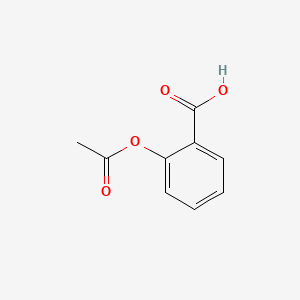
The index links one human neuroendocrine study, an aged-rat aspirin plus ascorbate experiment and an astrocyte mechanistic study. Doses and species differ substantially.
In astrocytes, aspirin activated PKA and CREB, recruited CREB/CBP to the CNTF promoter and increased CNTF expression; PKA or CREB inhibition blocked the effect. [2]
Reported experiences are kept separate from measured outcomes and remain tied to their cited context.
What the research measured, for whom, and under which exposure. Findings remain attached to the study’s task or clinical endpoint.
Aspirin pretreatment did not attenuate the ACTH or cortisol response to desmopressin despite reducing the awakening response. [3]
In aged rats, aspirin alone partially improved Morris-water-maze learning, while aspirin plus ascorbate produced significant improvement and reduced oxidative-stress markers. [1]
Aspirin increased CNTF mRNA and protein in mouse and human astrocytes through PKA/CREB signaling; conditioned media protected oligodendrocytes in vitro. [2]
Study doses and reference exposures, with route, formulation and duration.
Oral · By mouth · 1 record
Absorption, metabolism and elimination depend on the analyte, route, formulation, physiology and other exposures.
No validated elimination observation was imported in this corpus pass. [1]
Adverse effects and interactions reported in the cited studies.
The human HPA and working-memory findings come from a pilot study and require replication. [3]
Aged-rat cognitive benefit was strongest with aspirin plus ascorbate; an aspirin-specific effect was smaller. [1]
CNTF and oligodendrocyte protection were demonstrated in cultured cells, not patients with multiple sclerosis. [2]
Original publications, findings and available funding disclosures.
Explore the participants, roles and sources behind each relationship.
Publication abstract and/or retrieved PMC text; this is not a pooled efficacy estimate.
Limitation Publication-level association; direction and generalizability depend on the cited study.
Publication abstract and/or retrieved PMC text; this is not a pooled efficacy estimate.
Limitation Publication-level association; direction and generalizability depend on the cited study.
Publication abstract and/or retrieved PMC text; this is not a pooled efficacy estimate.
Limitation Publication-level association; direction and generalizability depend on the cited study.
Content updated Nov 1, 2026.