Task-related brain activity
VariableNo betahistine-induced changes were found in predefined task-related networks; exploratory whole-brain analyses showed activity changes outside those networks. [1]
Human research
The substance library
Betahistine acts on histamine signalling and is studied for its effects on balance and cognition.
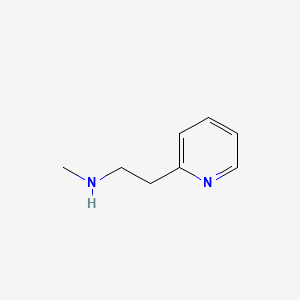
Sixteen healthy volunteers received two oral 48 mg betahistine doses (96 mg total, separated by 30 minutes) or placebo on separate days. N-back and spatial paired-associate learning were assessed during MRI; clear performance or canonical task-network effects were not established.
Betahistine was studied as an H3 antagonist/H1 agonist, but the small trial did not establish a clear cognitive benefit. [1]
Reported experiences are kept separate from measured outcomes and remain tied to their cited context.
What the research measured, for whom, and under which exposure. Findings remain attached to the study’s task or clinical endpoint.
No betahistine-induced changes were found in predefined task-related networks; exploratory whole-brain analyses showed activity changes outside those networks. [1]
Study doses and reference exposures, with route, formulation and duration.
Oral · By mouth · 1 record
Absorption, metabolism and elimination depend on the analyte, route, formulation, physiology and other exposures.
No validated elimination observation was imported in this corpus pass. [1]
Original publications, findings and available funding disclosures.
Explore the participants, roles and sources behind each relationship.
Two 48 mg oral doses versus placebo with fMRI.
Limitation Small sample and acute design.
Content updated Nov 1, 2026.