Verbal retention under interference
IncreasedD-serine preferentially improved RAVLT list 7 performance, reflecting retention over interference, in healthy adults. [3]
Human research
The substance library
D-serine is an amino acid involved in NMDA-receptor signalling. Studies explore its effects on learning and cognition.
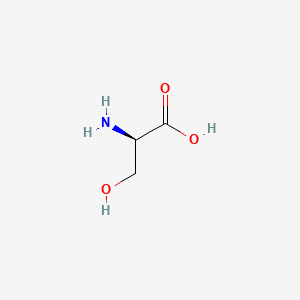
The 2.1 g crossover challenge enrolled 35 healthy adults aged 23–29 years and found a ≥200-fold serum D-serine rise at 2 hours, improved CPT-IP vigilance and selected RAVLT performance, and reduced sadness/anxiety VAS scores (PMID 25554623). The older-adult crossover trial enrolled 50 healthy participants (mean age 73) and found a Groton Maze legal-error benefit (F(3,38)=4.74, p=0.03; effect size d=1.15), with no significant effects on n-back, set-shifting, visual attention or mood (PMID 26933803; PMC4914255).
D-serine is an endogenous obligatory co-agonist at the NMDA receptor glycine site, supporting glutamatergic synaptic plasticity relevant to learning and memory. [3]
In the older-adult trial, larger plasma D-serine increases were associated with larger Groton Maze improvement (reported r2=-0.19, p=0.009; direction reflects the error-ratio outcome). [2]
Reported experiences are kept separate from measured outcomes and remain tied to their cited context.
What the research measured, for whom, and under which exposure. Findings remain attached to the study’s task or clinical endpoint.
D-serine preferentially improved RAVLT list 7 performance, reflecting retention over interference, in healthy adults. [3]
The older-adult trial found no significant D-serine effect on n-back accuracy, set-shifting errors or visual-attention errors. [2]
A single 2.1 g oral dose improved CPT-IP D-prime attention/vigilance in healthy adults. [3]
Study doses and reference exposures, with route, formulation and duration.
Oral · By mouth · 2 records
Absorption, metabolism and elimination depend on the analyte, route, formulation, physiology and other exposures.
The elimination model describes the named analyte after absorption and distribution. It does not establish felt-effect timing.
Oral · D-serine · not-established
Elimination model
This observation provides context about the measured record, but it does not support a first-order elimination curve.
Source context
Serum D-serine increased by at least 200-fold at 2 hours after the 2.1 g oral dose; this is not an elimination half-life.Read source context
No pharmacokinetic observation was supplied by this identity import. [1]
Adverse effects and interactions reported in the cited studies.
Both studies were acute randomized crossover experiments in healthy volunteers; long-term efficacy and safety were not established. [3]
The older-adult study found no significant effects on n-back, set shifting, visual attention or mood despite the Groton Maze result. [2]
The full text notes that safety of evaluating higher D-serine doses in older adults had not been assessed. [2]
Original publications, findings and available funding disclosures.
Explore the participants, roles and sources behind each relationship.
Randomized controlled crossover challenge in 35 adults aged 23-29 years.
Limitation Acute study with multiple neuropsychological endpoints.
Randomized double-blind crossover study; 50 healthy older adults.
Limitation Benefit was limited to one task; other domains and mood were null.
Content updated Oct 27, 2026.