Fifteen days of intranasal desmopressin did not significantly change verbal span, verbal retention, visual retention, visual learning or verbal learning scores versus placebo. [1]
Human research
The substance library
Desmopressin is a synthetic analogue of vasopressin. Research explores the relationship between vasopressin signalling and memory.
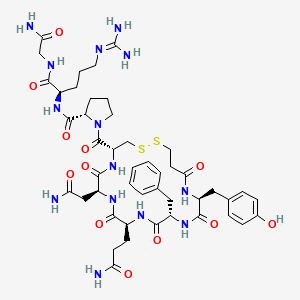
In the 40-student double-blind study, 10 participants received desmopressin 0.2 ml (20 µg) once daily intranasally for 15 days, 10 received lysine vasopressin and 20 placebo; statistical testing found no significant change in verbal or visual memory scores (PMID 3762902). In a separate double-blind study, healthy young men received 60 µg intranasal DDAVP after learning prose passages; recall after 24 hours was unchanged (PMID 8745039).
The post-trial DDAVP study interpreted the null 24-hour recall result as consistent with vasopressin effects on acquisition rather than consolidation; this is an interpretation of that experiment, not a demonstrated mechanism for desmopressin generally. [2]
What the research measured, for whom, and under which exposure. Findings remain attached to the study’s task or clinical endpoint.
Fifteen days of intranasal desmopressin did not significantly change verbal span, verbal retention, visual retention, visual learning or verbal learning scores versus placebo. [1]
A single 60 µg intranasal DDAVP dose given after prose learning did not affect recall after 24 hours. [2]
Study doses and reference exposures, with route, formulation and duration.
Intranasal · Through the nasal mucosa · 2 records
Absorption, metabolism and elimination depend on the analyte, route, formulation, physiology and other exposures.
No validated elimination observation was imported in this corpus pass. [1]
Adverse effects and interactions reported in the cited studies.
Neither linked healthy-volunteer study found a significant memory benefit. [1]
The studies are old, small and use specific intranasal protocols; they do not establish efficacy, safety or PK for unsupervised use. [2]
The linked study tested des-glycinamide-[Arg8]vasopressin (DGAVP) and oxytocin, not desmopressin; its memory findings should not be transferred to desmopressin. [3]
Original publications, findings and available funding disclosures.
Explore the participants, roles and sources behind each relationship.
20 µg/day intranasal for 15 days and single 60 µg post-trial intranasal protocols.
Limitation Small, older studies with specific protocols and healthy samples.
Content updated Nov 1, 2026.