
The substance library

Huperzine ACholinesterase inhibitor

Also known as: huperzine a · HupA · selagine · (-)-huperzine A

Huperzine A is a plant-derived, brain-penetrant reversible acetylcholinesterase inhibitor. Alzheimer trials are mixed: a U.S. phase-II prespecified endpoint was null, while smaller Chinese trials and pooled analyses report signals. Healthy enhancement evidence is sparse and includes a null adult exercise study. [hup-ad-us] [hup-ad-cn] [hup-meta]
22 sourcesContent date Nov 12, 2026CompareExplore connectionsRevision history
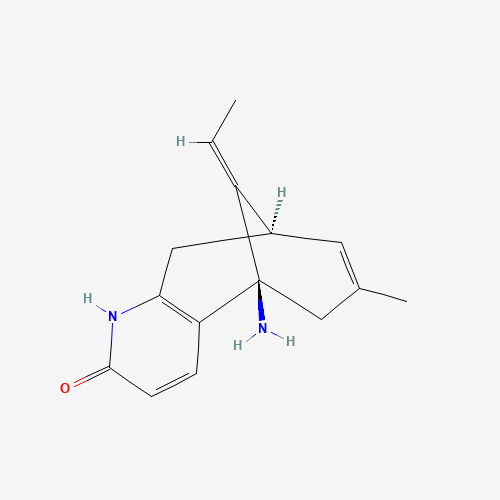
Huperzine A molecular structure
PubChem
01

Overview

Purified HupA is not dose-equivalent to unstandardized Huperzia serrata extract, which contains multiple alkaloids and may be inaccurately labeled. One small human PK study reported a terminal half-life of about 11.9 hours. [hup-chemistry] [hup-products] [hup-pk]

How it works

Reversible acetylcholinesterase inhibition

HupA inhibits AChE and can increase cholinergic signaling; this is the rationale for symptomatic AD research, not proof of disease modification. [1]

Preclinical neuroprotective pathways

NMDA antagonism, amyloid, oxidative-stress, mitochondrial and nerve-growth-factor effects are reported mainly preclinically and do not establish human neuroprotection. [3]

Brain penetration

HupA is described as brain-penetrant, but human quantitative CNS exposure and clinical translation remain uncertain. [7]

Research mechanism

Source-specific mechanism detail is preserved in the cited source. [1]

Research mechanism

Source-specific mechanism detail is preserved in the cited source. [1]

Source-specific finding from PMID 25455867

INTRODUCTION: Based on common pharmacodynamic mechanisms, recent efforts to develop second generation alternatives for organophosphate (OP) prophylaxis have expanded to include cholinesterase (ChE) inhibiting compounds traditionally approved for use in the treatment of Alzheimer's disease (AD). [16]

Source-specific finding from PMID 15916732

RESULTS: Treatment of PC12 cells with 10 micromol/L HupA for 48 h markedly increased the number of neurite-bearing cells, but caused no significant alteration in cell viability or other signs of cytotoxicity. In addition to inhibiting AChE activity, 10 micromol/L HupA also increased the mRNA and protein levels of this enzyme. In addition, following 2 h exposure of the astrocytes to 10 micromol/L HupA, there was a significant up-regulation of mRNA for NGF and P75 low-affinity NGF receptor. The protein level of NGF was also increased after 24 h treatment with HupA. CONCLUSION: Our findings demonstrate for the first time that HupA has a direct or indirect neurotrophic activity, which might be [18]

Metabolism and urinary excretion

In human liver preparations, Huperzine A showed little metabolism and negligible inhibition of the tested CYP enzymes at the concentrations studied. In 14 elderly participants, 35 ± 9% of a 0.1 mg oral dose was recovered unchanged in urine over 48 hours. In-vitro results do not exclude other interactions. [19]

02

Subjective effects

Reported experiences are kept separate from measured outcomes and remain tied to their cited context.

Variable
Human research

Selected adolescent students reported higher memory-quotient scores after four weeks; the population and design are not generalizable. [5]

Population
68 adolescents reporting memory inadequacy
Exposure context
100 µg twice daily for 4 weeks
Variable
Human research

Nausea, vomiting, diarrhea, sweating, dizziness, insomnia and bradycardia are reported in clinical and safety sources. [8]

Population
Adults exposed to HupA or Huperzia preparations
Exposure context
Purified HupA or herbal preparations
Variable
Human research

Source-specific effect evidence is preserved in the cited reference. [1]

Variable
Human research

Source-specific effect evidence is preserved in the cited reference. [3]

Variable
Human research

Source-specific effect evidence is preserved in the cited reference. [1]

03

Measured outcomes

What the research measured, for whom, and under which exposure. Findings remain attached to the study’s task or clinical endpoint.

The U.S. phase-II prespecified 200 µg twice-daily comparison was null at week 16; the higher-dose signal was secondary and not durable. [1]

Population210 people with mild-to-moderate ADExposure200 or 400 µg twice daily for 16 weeksMeasureADAS-Cog
Human research

A 202-person placebo-controlled trial reported improvements across cognitive, functional, behavioral and global measures. [2]

Population202 people with mild-to-moderate ADExposure400 µg/day for 12 weeksMeasureCognitive, functional, behavioral and global measures
Human research

A randomized crossover study found no cognitive, exercise-performance or perceived-exertion benefit after one 200 µg dose. [6]

Population15 exercise-trained adultsExposure200 µg single doseMeasureCognitive tasks and perceived exertion
Human research

Cochrane found no eligible placebo-controlled RCTs, so efficacy and safety could not be estimated. [4]

PopulationPeople with mild cognitive impairmentExposureNo eligible intervention trialMeasureSystematic-review eligibility
Limited research

Source-specific outcome evidence is preserved in the cited reference. [1]

PopulationNot establishedExposureNot establishedMeasureNot assessed
Human research

Source-specific outcome evidence is preserved in the cited reference. [1]

PopulationNot establishedExposureNot establishedMeasureNot assessed
Human research

MCI

Variable

Source-specific outcome evidence is preserved in the cited reference. [4]

PopulationNot establishedExposureNot establishedMeasureNot assessed
Human research

Source-specific outcome evidence is preserved in the cited reference. [6]

PopulationNot establishedExposureNot establishedMeasureNot assessed
Human research

Source-specific outcome evidence is preserved in the cited reference. [1]

PopulationNot establishedExposureNot establishedMeasureNot assessed
Human research

AIM: To study the efficacy of huperzine-A capsules (Hup) on memory and learning performance of adolescent students. [5]

Population34 matched pairs of junior-middle-school students with reported memory inadequacyExposureAIM: To study the efficacy of huperzine-A capsules (Hup) on memory and learning performance of adolescent students.MeasureNot assessed
Limited research
04

Doses & routes

Study doses and reference exposures, with route, formulation and duration.

Oral · By mouth · 8 records

U.S. AD phase-II primary comparison

Research exposure

200 µg/dose [1]

Ingredient / form
Purified Huperzine A · Study capsules
Route
Oral
Frequency
Twice daily
Duration
16 weeks placebo-controlled; active follow-up to week 24
Population
210 people with mild-to-moderate Alzheimer disease
Purpose
Research exposure

Prespecified ADAS-Cog endpoint was null.

U.S. AD phase-II higher arm

Research exposure

400 µg/dose [1]

Ingredient / form
Purified Huperzine A · Study capsules
Route
Oral
Frequency
Twice daily
Duration
16 weeks placebo-controlled
Population
210 people with mild-to-moderate Alzheimer disease
Purpose
Research exposure

Secondary week-11 signal did not remain significant at week 16.

Chinese AD trial

Research exposure

400 µg/day [2]

Ingredient / form
Purified Huperzine A · Study tablets
Route
Oral
Frequency
Daily
Duration
12 weeks
Population
202 people with mild-to-moderate Alzheimer disease
Purpose
Research exposure

Reported positive cognitive, functional and global results; methods and funding details are limited publicly.

Adolescent memory study

Research exposure

100 µg/dose [5]

Ingredient / form
Huperzine A capsule · Study capsules
Route
Oral
Frequency
Twice daily
Duration
4 weeks
Population
68 selected adolescents reporting memory inadequacy
Purpose
Research exposure

Selected population; not general healthy cognition evidence.

Exercise crossover

Research exposure

200 µg [6]

Ingredient / form
Huperzine A · Study capsule
Route
Oral
Frequency
Single dose
Duration
Acute crossover
Population
15 exercise-trained adults
Purpose
Research exposure

Cognition, performance and perceived exertion were null.

Human PK study

Research exposure

0.4 mg [7]

Ingredient / form
Huperzine A · Study capsule
Route
Oral
Frequency
Single dose
Duration
PK sampling period
Population
12 healthy volunteers
Purpose
Research exposure

Tmax ~58 min; terminal half-life ~716 min.

Elderly metabolism study

Research exposure

0.1 mg [19]

Ingredient / form
Huperzine A · Oral study dose
Route
Oral
Frequency
Single dose
Duration
48-hour urine collection
Population
14 elderly participants
Purpose
Research exposure

Approximately 35 ± 9% of the administered dose was recovered unchanged in urine during the measured 48-hour interval.

Controlled-release Alzheimer phase-II/III trial

Research exposure

Dose-selection study; exact dose schedule should be taken from the current trial registry [22]

Ingredient / form
Huperzine A · Controlled-release tablet
Route
Oral
Frequency
Morning administration
Duration
Primary efficacy assessment at week 24; planned open-label extension through week 52
Population
Planned mild-to-moderate Alzheimer dementia population
Purpose
Registered research exposure; not a dosing recommendation

Planned randomized double-blind placebo- and active-controlled phase-II/III study with donepezil comparator; no efficacy results are available.

05

Pharmacokinetics

Absorption, metabolism and elimination depend on the analyte, route, formulation, physiology and other exposures.

Elimination half-life · Huperzine A
Approximately 11.9 hours in one small single-dose human PK study

Timing explorer

Published timing evidence
The source reports timing terms but does not provide numeric elapsed intervals.
Onset
Tmax approximately 58 minutes after oral 0.4 mg in the cited human PK study.
Peak
Human plasma Tmax approximately 58–80 minutes across small studies.
Duration
Subjective or clinical duration is not established by the PK study.

Not established as a numeric timeline. Plasma timing and felt effects are distinct measurements. Source

Modeled elimination

The elimination model describes the named analyte after absorption and distribution. It does not establish felt-effect timing.

Oral · Purified Huperzine A capsule · study-mean

Illustrative elimination model

Huperzine A remaining over time

Single exposure

The modeled analyte is Huperzine A. The curve begins after absorption and distribution; it does not predict onset, felt effects, or an individual’s response.

Route: Oral. Formulation: Purified Huperzine A capsule. Population: 12 healthy human volunteers.

Single 0.4 mg human PK study reported terminal half-life of approximately 716 minutes (11.9 hours); estimates vary across other small studies. Read source context

Study mean: 11.9 hours.

The model uses this single study mean; no range is inferred.

The model treats this as the starting amount of Huperzine A after absorption and distribution. It does not calculate bioavailability or conversion from another substance. Leave blank to view percentages.

Huperzine A remaining (%)
Huperzine A: illustrative elimination with a 11.9 hour half-lifeA first-order elimination model of Huperzine A. 50% remains after 11.9 hours and 25% remains after 23.9 hours. Horizontal axis: elapsed hours after absorption and distribution. Vertical axis: percentage of the modeled analyte remaining. This is a mathematical illustration, not a personalized prediction.02550751000 h11.9 h23.9 h35.8 h47.7 h59.7 h
ElapsedRemaining
After 11.9 h50% remains
After 23.9 h25% remains
After 59.7 h3.125% remains

Model: fraction remaining = 2−time / half-life. Assumes a single exposure, instantaneous distribution, and a constant half-life for Huperzine A. Formation of metabolites, repeated exposure, and interactions are not modeled. Read source context

A 12-volunteer study reported approximately 716 minutes; this is not a universal individual half-life and other small studies vary. [7]

Sourced elimination observations

Huperzine A

Study mean

11.93 hours [7]

Route / formulation
Oral · Purified Huperzine A capsule
Population
12 healthy human volunteers

Single 0.4 mg human PK study reported terminal half-life of approximately 716 minutes (11.9 hours); estimates vary across other small studies.

Parent compound or reported analyte

No numeric estimate

Not established [7]

Population
Humans

Source-specific pharmacokinetic detail is preserved in the cited source.

Parent compound or reported analyte

No numeric estimate

Not established [7]

Population
Humans

Source-specific pharmacokinetic detail is preserved in the cited source.

Parent compound or reported analyte

No numeric estimate

Not established [8]

Population
Humans

Source-specific pharmacokinetic detail is preserved in the cited source.

Parent compound or reported analyte

No numeric estimate

Not established [8]

Population
Humans

Source-specific pharmacokinetic detail is preserved in the cited source.

Parent compound or reported analyte

No numeric estimate

Not established [1]

Population
Humans

Source-specific pharmacokinetic detail is preserved in the cited source.

Huperzine A

Study mean

12.092 hours [21]

Route / formulation
Oral · Immediate-release oral reference formulation
Population
Healthy Chinese male volunteers

Randomized single-dose crossover bioequivalence study; reference-formulation mean half-life was 12.092 hours with SD 1.898 hours, while two test formulations produced similar estimates.

Bioavailability
Rapid oral appearance; CNS penetration is reported but quantitative clinical brain exposure is not established. [7]
Metabolism / metabolites
Substantial unchanged urinary excretion has been reported; CYP interaction evidence is limited. [7]

Factors that change the estimate

Clinical population

AD response differed across trials

The U.S. primary endpoint was null while a Chinese trial reported broader improvements; pooled evidence is low-confidence. [1]

Related observation

Form identity

Purified HupA differs from Huperzia extract

Extracts contain multiple alkaloids and product assays frequently miss or misstate labeled ingredients. [9]

Related observation

Age and baseline state

Healthy enhancement signals are population-specific

Selected adolescents and one small adult exercise trial cannot establish benefit for healthy adults generally. [5]

Related observation

Modifier 1

Variable

Source-specific modifier evidence is preserved in the cited reference. [1]

Related observation

Modifier 2

Variable

Source-specific modifier evidence is preserved in the cited reference. [1]

Related observation

Modifier 3

Variable

Source-specific modifier evidence is preserved in the cited reference. [9]

Related observation

Modifier 4

Variable

Source-specific modifier evidence is preserved in the cited reference. [9]

Related observation

Modifier 5

Variable

Source-specific modifier evidence is preserved in the cited reference. [8]

Related observation
06

Safety & uncertainty

Adverse effects and interactions reported in the cited studies.

Warning

Cholinergic toxicity

GI upset, sweating, salivation, tremor, blurred vision, dysarthria and bradycardia are safety concerns; overdose notifications include severe cholinergic symptoms. [8]

Monitor

Long-term exposure

No chronic safe intake or health-based guidance value was established; reproductive, developmental and genotoxicity data are incomplete. [8]

Context

Product mislabeling

In a 22-product analysis, most products had at least one labeled ingredient not detected and only two declared HupA amounts were within 10% of label. [9]

Warning

Evidence integrity

AD trials are small and heterogeneous with possible publication bias; healthy-enhancement evidence is sparse and includes null findings. [3]

Monitor

Research caution

Source-specific caution detail is preserved in the cited source. [8]

Context

Research caution

Source-specific caution detail is preserved in the cited source. [8]

Warning

Research caution

Source-specific caution detail is preserved in the cited source. [9]

Monitor

Research caution

Source-specific caution detail is preserved in the cited source. [3]

Context

Registered controlled-release trial is not efficacy evidence

The current phase-II/III controlled-release trial is a prospective registered study without posted outcome results; its existence should not be interpreted as evidence that the formulation is effective or safe. [22]

Interactions in cited sources

Explore a pair of substances

Other acetylcholinesterase inhibitors

Potential additive cholinergic effects and bradycardia with donepezil, galantamine, rivastigmine or similar agents. [11]

Context
Safety guidance and pharmacology; direct clinical DDI data are limited.

Cholinergic agonists or precursors

Potential additive GI, cardiovascular and muscarinic effects. [11]

Context
General safety example, not a product-specific interaction trial.

Anticholinergics

May oppose HupA cholinergic effects; evidence is mainly mechanistic or animal. [8]

Context
Human interaction quantification is limited.

Documented or hypothesized coexposure

Source-specific interaction detail is preserved in the cited source. [8]

Context
Evidence context preserved from Deep Research

Documented or hypothesized coexposure

Source-specific interaction detail is preserved in the cited source. [8]

Context
Evidence context preserved from Deep Research

Documented or hypothesized coexposure

Source-specific interaction detail is preserved in the cited source. [8]

Context
Evidence context preserved from Deep Research

Documented or hypothesized coexposure

Source-specific interaction detail is preserved in the cited source. [8]

Context
Evidence context preserved from Deep Research

Documented or hypothesized coexposure

Source-specific interaction detail is preserved in the cited source. [8]

Context
Evidence context preserved from Deep Research
07

Research & sources

22

Original publications, findings and available funding disclosures.

08

Connected claims

Explore the participants, roles and sources behind each relationship.

clinical-efficacyAuthored relationship

Huperzine A treats Alzheimer disease.

Huperzine Aintervention
Memory performanceoutcome-domain

Clinical evidence is mixed: one U.S. phase-II primary endpoint was null while smaller trials and meta-analysis report signals.

Limitation No disease-modifying outcome is established.

clinical-efficacyAuthored relationship

Huperzine A improves memory in healthy adults.

Huperzine Aintervention
Memory performanceoutcome-domain

Selected adolescent evidence and one null adult exercise trial do not establish general enhancement.

Limitation Small, selected or acute studies.

product-identityAuthored relationship

Huperzia serrata extract is equivalent to purified HupA.

Huperzine Aactive_alkaloid
Experimental compoundextract-context

Extracts contain multiple alkaloids and labels may be inaccurate.

Limitation Standardization and assay are required.

safetyAuthored relationship

Natural origin implies safety.

Huperzine Aexposure
Acetylcholinecholinergic-system

Cholinergic toxicity and incomplete chronic data are documented.

Limitation Natural origin does not establish safety.

evidence-boundaryAuthored relationship

Improves memory and focus in healthy adults

Huperzine Aintervention
Cognitive test performancereported-outcome-context

Source-specific research report

Limitation Source-specific limitation preserved in the returned report.

evidence-boundaryAuthored relationship

Treats Alzheimer disease

Huperzine Aintervention
Cognitive test performancereported-outcome-context

Source-specific research report

Limitation Source-specific limitation preserved in the returned report.

evidence-boundaryAuthored relationship

Prevents or reverses neurodegeneration

Huperzine Aintervention
Cognitive test performancereported-outcome-context

Source-specific research report

Limitation Source-specific limitation preserved in the returned report.

evidence-boundaryAuthored relationship

Huperzia extract is equivalent to purified HupA

Huperzine Aintervention
Cognitive test performancereported-outcome-context

Source-specific research report

Limitation Source-specific limitation preserved in the returned report.

evidence-boundaryAuthored relationship

Natural origin implies safety

Huperzine Aintervention
Cognitive test performancereported-outcome-context

Source-specific research report

Limitation Source-specific limitation preserved in the returned report.

evidence-boundaryAuthored relationship

Enhances pre-workout cognition or performance

Huperzine Aintervention
Cognitive test performancereported-outcome-context

Source-specific research report

Limitation Source-specific limitation preserved in the returned report.

associated-withAuthored relationship

Huperzine A is associated with the reported episodic memory finding in this publication.

Huperzine Aintervention or exposure
Episodic memoryreported endpoint

Publication abstract; direction and population are retained on the linked observation.

Limitation Automated corpus import from an abstract; this record is not an independent meta-analysis.

Explore the relationship graph
10

Publication history

Content updated Nov 12, 2026.

Keep exploring

View graph