The substance library
PitolisantResearch compound
Pitolisant increases histamine signalling through H3 receptors. Studies examine wakefulness and cognitive performance.
 Wikipedia
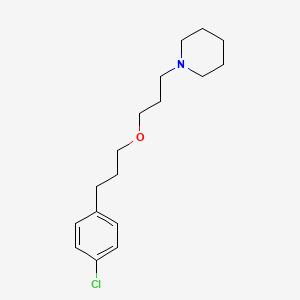
Overview
This page links PubMed evidence for pitolisant. Study populations, formulations and endpoints are retained per PMID; non-PubMed links remain provenance leads. Abstracts were retrieved for PMID(s) 22356925.
How it works
Source-specific finding from PMID 22356925
Drugs such as pitolisant, which block histamine H3 autoreceptors, constitute a newly identified class of stimulants because they increase brain histamine and enhance wakefulness in animal and human adult narcolepsy. [1]
Subjective effects
Reported experiences are kept separate from measured outcomes and remain tied to their cited context.
Measured outcomes
What the research measured, for whom, and under which exposure. Findings remain attached to the study’s task or clinical endpoint.
Pharmacokinetics
Absorption, metabolism and elimination depend on the analyte, route, formulation, physiology and other exposures.
No validated elimination observation was imported in this corpus pass. [1]
Safety & uncertainty
Adverse effects and interactions reported in the cited studies.
Source-specific finding from PMID 22356925
Adverse effects were minor (insomnia, headache, hot flushes, leg pain, and hallucinations) and transitory, except for insomnia, which persisted in 2 teenagers. [1]
Interactions in cited sources
Explore a pair of substancesResearch & sources
Original publications, findings and available funding disclosures.
Connected claims
Explore the participants, roles and sources behind each relationship.
PMID 22356925 reported: Drugs such as pitolisant, which block histamine H3 autoreceptors, constitute a newly identified class of stimulants because they increase brain histamine and enhance wakefulness in animal and human adult narcolepsy.
Source-specific result from PMID 22356925; applies to the population and design described in that abstract.
Limitation Abstract result from PMID 22356925; this single study does not establish general efficacy or safety.
Publication history
Content updated Nov 1, 2026.