 Wikipedia
 Examine
The 12-week sleep report found a lower self-reported global sleep score in the 5-HTP subgroup with poor baseline sleep. The no-supplement design and small subgroup limit inference. [7]
Human research
The substance library
Also known as: L-5-Hydroxytryptophan · 5-Hydroxy-L-tryptophan · Oxitriptan
5-HTP is an amino acid intermediate in serotonin synthesis. Small trials report signals for some sleep and mood outcomes. Effects vary by population, and combining 5-HTP with serotonergic medicines raises safety concerns.
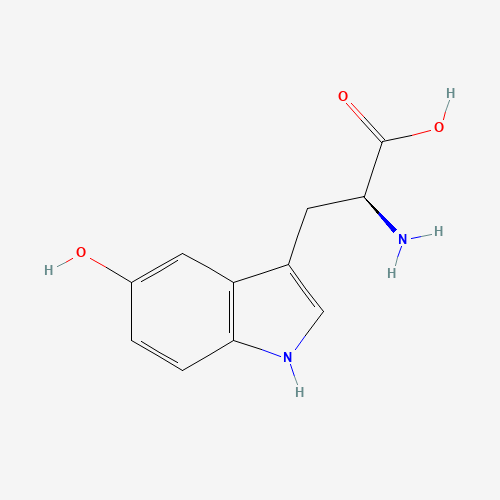
This article covers L-5-hydroxytryptophan (oxitriptan), the naturally occurring stereoisomer (PubChem). In a small trial of older adults, 5-HTP raised serum serotonin and showed a sleep signal in participants with poor sleep at baseline. The same trial found no clear between-group improvement in global cognition or mood scores. Sleep report · Cognition and mood report
Aromatic L-amino acid decarboxylase converts L-5-HTP into serotonin. Giving 5-HTP bypasses the upstream hydroxylation of tryptophan. [8]
Carbidopa reduces peripheral conversion and raises circulating unchanged 5-HTP. In the oral/IV PK study, plasma exposure to the serotonin metabolite 5-HIAA fell with carbidopa pretreatment. [12]
What the research measured, for whom, and under which exposure. Findings remain attached to the study’s task or clinical endpoint.
The 12-week sleep report found a lower self-reported global sleep score in the 5-HTP subgroup with poor baseline sleep. The no-supplement design and small subgroup limit inference. [7]
Global MoCA scores improved over time, with no clear difference in the trend between study arms. [8]
A within-group improvement at week 8 did not translate into a clear treatment-by-time difference. [8]
Serum serotonin increased in the intervention arm. This peripheral biomarker does not establish a change in serotonin in the brain. [8]
The investigator-rated Hamilton scale favored 5-HTP over placebo in a small crossover trial. [9]
No treatment effect on apathy was detected in the crossover trial. [9]
Fewer children continued to have sleep terrors after 5-HTP in the open comparison. Participants and assessors could have been influenced by treatment assignment. [5]
Weight declined in the 5-HTP arm during both six-week periods. The second period included a calorie-restricted diet recommendation. [10]
Cortisol rose after the challenge in both the panic disorder and healthy groups. This is a laboratory hormone response. [4]
Performance was poorer on the first 20 trials in the 5-HTP group. Later trials and mood measures showed no significant group difference. [3]
Average time per trial increased with 5-HTP. Accuracy was unchanged and the task did not directly measure dopamine release. [2]
9 of 11 findings in this selection lack structured estimates. Different measures, populations, instruments, comparators, or assessment times are shown separately.
Study doses and reference exposures, with route, formulation and duration.
Oral · By mouth · 7 records
Absorption, metabolism and elimination depend on the analyte, route, formulation, physiology and other exposures.
The elimination model describes the named analyte after absorption and distribution. It does not establish felt-effect timing.
Oral · Single-dose 5-HTP with or without decarboxylase inhibitor pretreatment · reported-range
Elimination model
This observation provides context about the measured record, but it does not support a first-order elimination curve.
Source context
Reported range across the single-dose oral observations. The abstract does not report separate ranges by pretreatment.Read source context
Small single-dose oral series, including observations with or without decarboxylase inhibitor pretreatment. [11]
Adverse effects and interactions reported in the cited studies.
A crossover challenge in 15 healthy men reported more nausea, vomiting and dropout at higher 5-HTP doses given with carbidopa. The trial does not estimate adverse-event rates for 5-HTP alone. [13]
A case report attributed serotonin toxicity with severe rhabdomyolysis to co-exposure to sertraline and a 5-HTP supplement. Multiple co-exposures and strenuous exercise complicate attribution. [15]
A family cluster included one case of eosinophilia–myalgia syndrome and two cases of eosinophilia. Investigators found an impurity in the shared product. This report cannot estimate incidence or establish that pure L-5-HTP caused the illness. [14]
Original publications, findings and available funding disclosures.
Explore the participants, roles and sources behind each relationship.
NCT04078724, 12 weeks against no supplementation.
Limitation Both publications report the same trial. Serum levels cannot establish a central serotonergic effect.
Four-week treatment compared with placebo.
Limitation The study was small and did not test primary major depression.
Content updated Nov 18, 2026.