The substance library

AmphetamineStimulant

Amphetamine: Source-specific evidence is preserved in the cited source.
25 sourcesContent date Oct 15, 2026CompareExplore connectionsRevision history
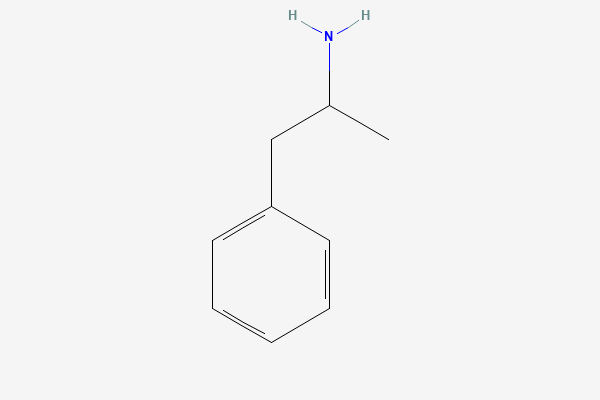
Amphetamine molecular structure
PubChem
01

Overview

Amphetamine: Source-specific evidence is preserved in the cited source.

How it works

Catecholamine signaling

Source-specific evidence is preserved in the cited source. [2]

Enantiomer-specific pharmacology

Source-specific evidence is preserved in the cited source. [2]

Prodrug distinction

Source-specific evidence is preserved in the cited source. [2]

02

Subjective effects

Reported experiences are kept separate from measured outcomes and remain tied to their cited context.

Variable
Human research

Behavior ratings and laboratory mathematics performance improved relative to placebo. [2]

Variable
Human research

During open-label optimization, decreased appetite occurred in 27.6% and upper abdominal pain in 14.3%. In the randomized phase, any treatment-emergent adverse event occurred in 21.6% on active treatment versus 14.4% on placebo. [2]

Variable
Human research

Mean increases cited for CNS stimulants are approximately 2–4 mmHg in blood pressure and 3–6 beats/minute in heart rate. [2]

Variable
Human research

Healthy participants perceived enhanced performance despite largely absent objective cognitive enhancement. [2]

Decreased
Human research

Both d-amphetamine and modafinil reduced ratings of feeling sleepy in healthy adults. [20]

Population
11 healthy adults
Exposure context
0.035–0.140 mg/kg d-amphetamine
Increased
Human research

Thirty-milligram Adderall produced substantial autonomic and subjective drug effects but only small mixed cognitive effects in 13 healthy students. [16]

Population
13 healthy college students without ADHD
Exposure context
30 mg Adderall
Decreased
Human research

Five- and 10-mg d-amphetamine abolished startle potentiation to unpleasant images in this between-subjects study. [23]

Population
Healthy adults
Exposure context
5 or 10 mg
03

Measured outcomes

What the research measured, for whom, and under which exposure. Findings remain attached to the study’s task or clinical endpoint.

Source-specific outcome evidence is preserved in the cited reference. [2]

Population107 children aged 6–12 enrolled; 97 randomizedExposureDose-optimized 10–40 mg/day; morning dose alone on laboratory daysMeasureNot assessed
Human research

Source-specific outcome evidence is preserved in the cited reference. [2]

Population320 adults aged 18–55 received randomized treatmentExposure20 or 40 mg/day in divided doses for five weeksMeasureNot assessed
Human research

Source-specific outcome evidence is preserved in the cited reference. [2]

Population71 healthy adults: placebo n=29, 10 mg n=17, 20 mg n=25ExposureSingle oral administrationMeasureNot assessed
Human research

Source-specific outcome evidence is preserved in the cited reference. [2]

Population1,374 cases and 2,748 controls, ages 16–35ExposurePrescription exposure in the preceding monthMeasureNot assessed
Human research

During 64 hours of sustained work and sleep loss, 20 mg d-amphetamine maintained or improved reaction time, logical reasoning and short-term memory versus placebo. [22]

Population41 military subjectsExposure20 mg d-amphetamine during sleep deprivationMeasureReaction time, logical reasoning, short-term memory
Human research

A 0.42 mg/kg oral d-amphetamine dose improved several attention measures and some psychomotor/perceptual-speed tasks, but movement estimation became less conservative. [21]

Population60 healthy adults across three experimentsExposure0.42 mg/kgMeasureDigit vigilance, digit-symbol, movement estimation
Human research

Twenty milligrams did not change mean MCCB scores overall; lower-performing participants improved while higher-performing participants were impaired, with regression to the mean not fully excluded. [18]

Population60 healthy adultsExposure20 mg amphetamineMeasureMATRICS Consensus Cognitive Battery
Human research

Forty milligrams d-amphetamine increased stop-signal go accuracy and vigilance; lisdexamfetamine increased processing speed, while neither affected digit span. [17]

Population24 healthy volunteersExposure40 mg d-amphetamine or 100 mg lisdexamfetamineMeasureStop-Signal, Mackworth Clock, DSST, Digit Span
Human research

Adderall effects on convergent creativity depended on baseline ability: lower performers improved, whereas higher performers were unaffected or impaired; divergent-task effects were inconclusive. [19]

Population16 healthy young adultsExposureAdderall; dose not stated in abstractMeasureConvergent and divergent creativity tasks
Human research

After 64-hour sleep deprivation, amphetamine delayed sleep and reduced total sleep, efficiency and REM sleep, with REM rebound delayed to the second recovery night. [25]

Population37 volunteersExposure20 mg d-amphetamine during sleep deprivationMeasurePolysomnography
Human research

D-amphetamine preserved self-monitoring during sleep deprivation, whereas modafinil caused overconfidence; this does not show amphetamine is safe or beneficial overall. [24]

PopulationHealthy volunteersExposure20 mg d-amphetamine during 64 h sleep deprivationMeasureSelf-monitoring of cognitive tasks
Human research
04

Doses & routes

Study doses and reference exposures, with route, formulation and duration.

Oral · By mouth · 10 records

amphetamine research exposure 1

Research exposure
Ingredient / form
amphetamine · Evekeo conventional immediate-release tablets; 1:1 racemic amphetamine sulfate
Route
oral
Population
Children aged 3 years and older
Purpose
Research exposure; not a dosing recommendation.

Source-specific evidence is preserved in the cited source.

amphetamine research exposure 2

Research exposure
Ingredient / form
amphetamine · Evekeo conventional immediate-release tablets
Route
oral
Purpose
Research exposure; not a dosing recommendation.

Source-specific evidence is preserved in the cited source.

Sleep-loss sustained-work study

Research exposure

20 mg [22]

Ingredient / form
D-amphetamine · Oral study dose
Route
Oral
Frequency
At 23:30, 05:30 and 15:30 during 64 h work
Duration
64 hours sleep deprivation
Population
Military subjects
Purpose
Fatigue and cognition research

Comparator arm; modafinil was 300 mg.

Driving-related cognition

Research exposure

0.42 mg/kg [21]

Ingredient / form
D-amphetamine · Oral study dose
Route
Oral
Frequency
Single dose
Duration
Acute
Population
Healthy non-fatigued adults
Purpose
Attention and psychomotor research

Separate experiments also tested methamphetamine.

Healthy adults dose-response

Research exposure

0.035–0.14 mg/kg [20]

Ingredient / form
D-amphetamine · Oral study dose
Route
Oral
Frequency
Single dose
Duration
Up to 5-hour assessment
Population
11 healthy adults
Purpose
Behavioral and subjective effects

Three d-amphetamine dose levels.

Emotion-potentiated startle

Research exposure

5–10 mg [23]

Ingredient / form
D-amphetamine · Oral study dose
Route
Oral
Frequency
Single dose
Duration
Acute
Population
Healthy adults
Purpose
Affective startle research

Placebo-controlled between-subjects design.

MCCB study

Research exposure

20 mg [18]

Ingredient / form
Amphetamine · Oral study dose
Route
Oral
Frequency
Single dose
Duration
Acute crossover
Population
60 healthy adults
Purpose
Cognitive-domain research

Effects varied inversely with baseline performance.

Social cognition study

Research exposure

40 mg [17]

Ingredient / form
D-amphetamine · Oral study dose
Route
Oral
Frequency
Single dose
Duration
Acute crossover
Population
24 healthy volunteers
Purpose
Social cognition and cognition research

Lisdexamfetamine 100 mg was the equimolar comparator.

Adderall pilot

Research exposure

30 mg [16]

Ingredient / form
Mixed amphetamine salts (Adderall) · Oral study dose
Route
Oral
Frequency
Single dose
Duration
Acute crossover
Population
13 healthy college students without ADHD
Purpose
Neurocognitive/autonomic research

Small pilot; large subjective/autonomic effects.

Sleep-deprivation self-monitoring

Research exposure

20 mg [24]

Ingredient / form
D-amphetamine · Oral study dose
Route
Oral
Frequency
During 64 h sleep deprivation
Duration
64 hours
Population
Healthy volunteers
Purpose
Self-monitoring research

Compared with modafinil 300 mg and placebo.

05

Pharmacokinetics

Absorption, metabolism and elimination depend on the analyte, route, formulation, physiology and other exposures.

Timing explorer

Published timing evidence
The source reports timing terms but does not provide numeric elapsed intervals.

Not established as a numeric timeline. Plasma timing and felt effects are distinct measurements. Source

Modeled elimination

The elimination model describes the named analyte after absorption and distribution. It does not establish felt-effect timing.

AR19 versus reference racemic amphetamine sulfate · not-established

Not modeled

Elimination model

An elimination model is not established for this observation.

Source-bound record

This observation provides context about the measured record, but it does not support a first-order elimination curve.

Measured analyte
Immediate-release racemate absorption and formulation comparison
Formulation
AR19 versus reference racemic amphetamine sulfate
Population
Healthy adults; 36 participants in the bioequivalence study

Source context

Source-specific evidence is preserved in the cited source.
Read source context
Review the supporting record and source details.

Sourced elimination observations

Immediate-release racemate absorption and formulation comparison

No numeric estimate

Not established [2]

Route / formulation
AR19 versus reference racemic amphetamine sulfate
Population
Healthy adults; 36 participants in the bioequivalence study

Source-specific evidence is preserved in the cited source.

Racemate elimination half-life

No numeric estimate

Not established [2]

Route / formulation
Evekeo ODT; historical 2019 FDA label
Population
Healthy adult volunteers

Source-specific evidence is preserved in the cited source.

Food effect

No numeric estimate

Not established [2]

Route / formulation
AR19 investigational immediate-release capsule
Population
Healthy adults

Source-specific evidence is preserved in the cited source.

Nonracemic extended-release pharmacokinetics

No numeric estimate

Not established [2]

Route / formulation
Dyanavel XR; d:l ratio 3.2:1
Population
Healthy adults

Source-specific evidence is preserved in the cited source.

Metabolism and elimination

No numeric estimate

Not established [2]

Population
Humans

Source-specific evidence is preserved in the cited source.

Factors that change the estimate

Modifier 1

Variable

{"modifier":"Population and treatment selection","finding":"The pediatric racemate study excluded important psychiatric and medical comorbidities and randomized participants after dose optimization.","implication":"Its efficacy and adverse-event frequencies may not represent unselected patients beginning treatment.","sourceId":"childress-2015"} [2]

Related observation

Modifier 2

Variable

{"modifier":"Age","formulation":"Dyanavel XR","finding":"Children younger than 6 had higher exposure and more adverse reactions at the same dosage; the current indication begins at age 6.","limitation":"This product-specific age restriction must not replace the separate conventional Evekeo label.","sourceId":"dyanavel-label"} [2]

Related observation

Modifier 3

Variable

{"modifier":"Renal function, hepatic function, urinary pH, and metabolic variation","finding":"These can alter amphetamine exposure. CYP2D6 polymorphism is a possible contributor to variability.","limitation":"The label does not establish a validated genotype-based method for predicting an individual's cognitive response.","sourceId":"dyanavel-label"} [2]

Related observation

Modifier 4

Variable

{"modifier":"Baseline cognitive ability","formulation":"Mixed amphetamine salts, not racemic sulfate","finding":"Exploratory analyses suggested benefits in lower-performing participants on a minority of tasks despite no general group-level enhancement.","limitation":"Subgroup findings do not establish a dependable method for selecting healthy cognitive-enhancement responders.","sourceId":"ilieva-2013"} [2]

Related observation
06

Safety & uncertainty

Adverse effects and interactions reported in the cited studies.

Warning

Research caution

Source-specific evidence is preserved in the cited source. [2]

Monitor

Research caution

Source-specific evidence is preserved in the cited source. [2]

Context

Research caution

Source-specific evidence is preserved in the cited source. [2]

Warning

Research caution

Source-specific evidence is preserved in the cited source. [2]

Monitor

Research caution

Source-specific evidence is preserved in the cited source. [2]

Context

Research caution

Source-specific evidence is preserved in the cited source. [2]

Warning

Research caution

Source-specific evidence is preserved in the cited source. [2]

Monitor

Baseline-dependent impairment

MCCB and creativity studies found improvement in lower performers but impairment or no benefit in higher performers. [18]

Context

Sleep and recovery disruption

Amphetamine delayed sleep, reduced total sleep/REM and altered recovery after prolonged wakefulness. [25]

Warning

Autonomic and subjective effects

Adderall produced large autonomic and subjective effects despite minimal mixed neurocognitive benefit in a small healthy-student pilot. [16]

Monitor

Driving-relevant risk

The 0.42 mg/kg study found less conservative movement estimation despite low-level attention enhancement. [21]

Interactions in cited sources

Explore a pair of substances

Documented or hypothesized coexposure

Source-specific evidence is preserved in the cited source. [2]

Context
Evidence context preserved from Deep Research

Documented or hypothesized coexposure

Source-specific evidence is preserved in the cited source. [2]

Context
Evidence context preserved from Deep Research

Documented or hypothesized coexposure

Source-specific evidence is preserved in the cited source. [2]

Context
Evidence context preserved from Deep Research

Documented or hypothesized coexposure

Source-specific evidence is preserved in the cited source. [2]

Context
Evidence context preserved from Deep Research

Documented or hypothesized coexposure

Source-specific evidence is preserved in the cited source. [2]

Context
Evidence context preserved from Deep Research

Documented or hypothesized coexposure

Source-specific evidence is preserved in the cited source. [2]

Context
Evidence context preserved from Deep Research
07

Research & sources

25

Original publications, findings and available funding disclosures.

Reports elsewhere

This link leaves BHWiki for an outside experience index. It is not a finding, a dose, or a source for the claims above. The report text is not stored here.

08

Connected claims

Explore the participants, roles and sources behind each relationship.

evidence-boundaryAuthored relationship

All products called amphetamine are racemic and interchangeable.

Amphetamineintervention
Metacognitive performancereported-outcome-context

Source-specific research report

Limitation Source-specific limitation preserved in the returned report.

evidence-boundaryAuthored relationship

A ten-hour laboratory effect proves racemic amphetamine lasts longer or works better than mixed salts.

Amphetamineintervention
Metacognitive performancereported-outcome-context

Source-specific research report

Limitation Source-specific limitation preserved in the returned report.

evidence-boundaryAuthored relationship

Feeling cognitively enhanced demonstrates improved cognitive ability.

Amphetamineintervention
Metacognitive performancereported-outcome-context

Source-specific research report

Limitation Source-specific limitation preserved in the returned report.

evidence-boundaryAuthored relationship

AR19 manipulation resistance demonstrates reduced addiction or makes amphetamine nonaddictive.

Amphetamineintervention
Metacognitive performancereported-outcome-context

Source-specific research report

Limitation Source-specific limitation preserved in the returned report.

evidence-boundaryAuthored relationship

The recent hypersomnolence trial established mixed salts as noninferior to modafinil.

Amphetamineintervention
Metacognitive performancereported-outcome-context

Source-specific research report

Limitation Source-specific limitation preserved in the returned report.

associated-withAuthored relationship

Amphetamine can improve selected attention or vigilance tasks during sleep loss, but effects are task- and context-specific.

Amphetamineintervention or exposure
Attentionreported endpoint

Publication abstract and/or retrieved PMC text; this is not a pooled efficacy estimate.

Limitation Publication-level association; direction and generalizability depend on the cited study.

associated-withAuthored relationship

Amphetamine effects on MCCB performance vary inversely with baseline ability.

Amphetamineintervention or exposure
Metacognitive performancereported endpoint

Publication abstract and/or retrieved PMC text; this is not a pooled efficacy estimate.

Limitation Publication-level association; direction and generalizability depend on the cited study.

associated-withAuthored relationship

Adderall has large autonomic/subjective effects with minimal mixed neurocognitive benefit in healthy students.

Amphetamineintervention or exposure
Arousalreported endpoint

Publication abstract and/or retrieved PMC text; this is not a pooled efficacy estimate.

Limitation Publication-level association; direction and generalizability depend on the cited study.

associated-withAuthored relationship

Amphetamine disrupts recovery sleep after prolonged wakefulness.

Amphetamineintervention or exposure
Sleepreported endpoint

Publication abstract and/or retrieved PMC text; this is not a pooled efficacy estimate.

Limitation Publication-level association; direction and generalizability depend on the cited study.

Explore the relationship graph
10

Publication history

Content updated Oct 15, 2026.

Keep exploring

View graph