Press Ctrl+S to jump to search, or / to focus search
The substance library
GABAAmino acid supplement
Also known as: Gamma-aminobutyric acid · γ-Aminobutyric acid · 4-aminobutanoic acid
Oral GABA is rapidly absorbed into plasma, but direct human evidence that supplemental GABA enters the brain is lacking. Small controlled trials report mixed, formulation-specific effects on stress, sleep, mood, and cognition, with several positive studies commercially funded.
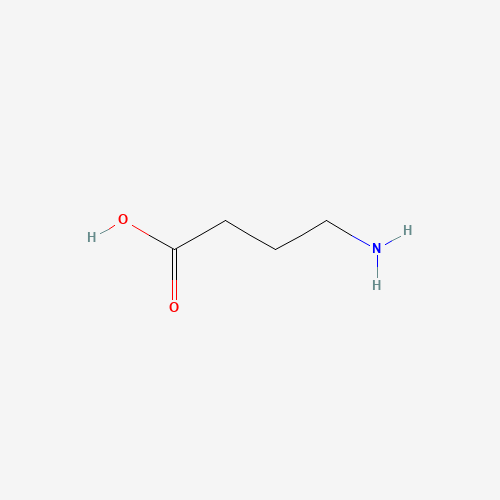
Gamma-aminobutyric acid (GABA; 4-aminobutanoic acid) is an endogenous inhibitory neurotransmitter and a non-proteinogenic amino acid also consumed in foods and supplements. This page concerns oral GABA itself, not phenibut, gabapentin, pregabalin, or GABA-receptor drugs. Human pharmacokinetic studies confirm systemic absorption, usually peaking near 30 minutes, but do not establish an elimination half-life or brain exposure.
GABA is an endogenous agonist at GABA-A receptors, pentameric ligand-gated anion channels. This receptor pharmacology does not establish central receptor engagement after oral supplementation. [5]
GABA is an agonist at the metabotropic GABA-B receptor. Receptor pharmacology is distinct from evidence that orally administered GABA reaches human brain tissue. [6]
GABA is transaminated by GABA transaminase to succinate semialdehyde, which succinate-semialdehyde dehydrogenase oxidizes to succinate. [4]
GABAergic modulation of action cascading
In a double-blind randomized study, 800 mg synthetic GABA was reported to speed stop-change responses and shorten stop-signal reaction time without changing simple GO responses, consistent with a possible role of GABAergic signaling in action selection and inhibition. [21]
02
Subjective effects
Reported experiences are kept separate from measured outcomes and remain tied to their cited context.
03
Measured outcomes
What the research measured, for whom, and under which exposure. Findings remain attached to the study’s task or clinical endpoint.
GABA attenuated the task-associated decrease in EEG alpha and beta activity around 30 minutes after ingestion; subjective tension/anxiety, arousal, and relaxation findings were not consistently significant in later systematic review extraction. [8]
PSG sleep latency showed a significant group-by-time interaction; the GABA arm fell from 13.4±15.7 to 5.7±6.2 minutes, while placebo did not significantly change. [10]
Population40 adults with insomnia symptomsExposure300 mg fermented rice-germ GABA daily for 4 weeksMeasurePolysomnography sleep latency
N3 sleep increased within the 75 mg GABA group from 8.6±6.4% to 12.9±7.6%; the report also states that sleep-latency change was not significant relative to placebo. [13]
Population54 randomized adults with insomnia; 50 completedExposure75 mg natural GABA daily for 4 weeksMeasurePolysomnography N3 sleep proportion
Acute 800 mg GABA increased visual-search time versus placebo, while visual-search accuracy, temporal attention, and visual-working-memory precision were not significantly affected. [15]
Population32 healthy young adultsExposureSingle 800 mg oral GABA doseMeasureVisual-search task
At 1500 mg/day for 95 days, the trial found no significant group-level effects on exploratory secondary outcomes, including self-reported sleep quality, after false-discovery-rate correction. [16]
Population52 adults with prediabetesExposure500 mg GABA three times daily for 95 daysMeasureSelf-reported sleep quality assessment
Total game score was higher after 200 mg fermented GABA than placebo, but the sample contained only eight analyzed participants and the study was commercially funded. [17]
Population8 analyzed healthy male university esports playersExposureSingle 200 mg fermented GABA doseMeasureMobalytics Proving Ground total score
Oral GABA was rapidly absorbed (Tmax 0.5–1.5 h; half-life about 5 h), increased insulin and fasting glucagon exposure, and lowered glycated albumin after repeated dosing without changing instantaneous blood glucose. [20]
Population12 healthy volunteersExposure2 g GABA once or 2 g three times daily for 7 daysMeasurePlasma PK, insulin, glucagon, glucose and glycated albumin assays
Compared with placebo, 800 mg GABA produced faster stop-change responses in simultaneous and delayed-change conditions and a shorter stop-signal reaction time; simple GO-response speed did not differ. The PubMed record is marked as a retracted publication, so this result should not be treated as reliable efficacy evidence. [21]
Population30 healthy adults (15 GABA, 15 placebo)ExposureSingle 800 mg oral synthetic GABA doseMeasureStop-change paradigm and stop-signal reaction time
Human research
Study-result plots
5 of 9 findings in this selection lack structured estimates. Different measures, populations, instruments, comparators, or assessment times are shown separately.
04
Doses & routes
Study doses and reference exposures, with route, formulation and duration.
Oral · By mouth · 10 records
05
Pharmacokinetics
Absorption, metabolism and elimination depend on the analyte, route, formulation, physiology and other exposures.
Timing explorer
Modeled elimination
The elimination model describes the named analyte after absorption and distribution. It does not establish felt-effect timing.
Human oral studies characterize rapid plasma appearance and decline but do not establish a validated elimination half-life. [14]
Sourced elimination observations
Bioavailability
Oral GABA is systemically absorbed; absolute bioavailability and human brain exposure are not established. [14]
Metabolism / metabolites
Endogenous GABA is transaminated to succinate semialdehyde and then oxidized to succinate; supplement-specific fractional metabolism in humans is not established. [14]
06
Safety & uncertainty
Adverse effects and interactions reported in the cited studies.
Warning
High-dose acute tolerability
Historical human studies reported transient throat burning, breathlessness, lethargy, leg weakness and modest blood-pressure reductions at high gram doses; these data do not establish opioid-like respiratory depression from ordinary oral GABA. [12]
Monitor
Controlled-release liver signal
In a six-month type-1-diabetes trial, nausea, fatigue, dizziness and AST elevations occurred; two participants discontinued for transaminase abnormalities and one had an approximately seven-fold idiosyncratic AST/ALT elevation that resolved after withdrawal. [18]
Context
Pregnancy and organ-impairment gaps
Adequate pregnancy/lactation studies and dedicated renal/hepatic impairment PK or dose-adjustment trials were not identified. Normal short-trial laboratory results do not establish safety in organ disease. [12]
Warning
Mixture pharmacovigilance limitation
Most adverse-event reports mentioning GABA involved multi-ingredient products, preventing clean attribution to GABA alone. [12]
Monitor
Open-label endocrine PK/PD study
The 2 g single/repeated-dose study was open-label, self-controlled and limited to 12 healthy volunteers; endocrine changes and lower glycated albumin do not establish diabetes treatment benefit. [20]
Context
Dose- and duration-related transient adverse effects
Repeated 2 g three-times-daily dosing produced more minor events (including sore throat, throat burning, headache and dizziness) than single dosing; four men had transient ALT/AST elevations that normalized without intervention. [20]
Warning
Retracted action-selection publication
PubMed metadata labels PMID 26227783 as a Retracted Publication. Its reported 800 mg action-selection effects should be treated as unreliable until the retraction basis is resolved. [21]
 Wikipedia
 Examine