The substance library

DextromethorphanOTC antitussive with CYP2D6-sensitive dissociative pharmacology

Also known as: DXM · DM

Dextromethorphan is a cough suppressant with dose-dependent effects on the nervous system. Studies examine its metabolism and the activity of its metabolite dextrorphan.

15 sourcesContent date Oct 16, 2026CompareExplore connectionsRevision history
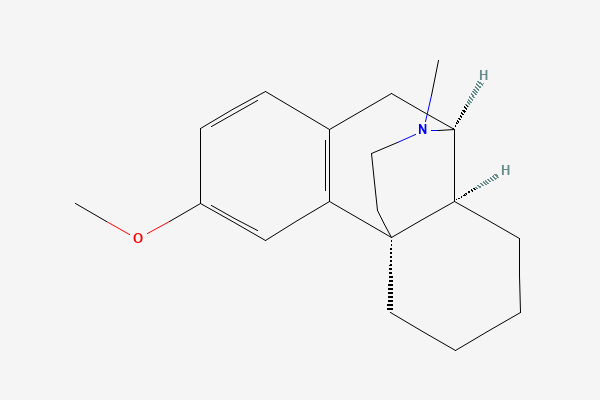
Dextromethorphan molecular structure
PubChem
01

Overview

The chemical identity here is parent dextromethorphan, C18H25NO; marketed cough products commonly use dextromethorphan hydrobromide and dose it in hydrobromide-equivalent milligrams. Dextrorphan is a distinct CYP2D6-generated metabolite and is not treated as interchangeable evidence. FDA OTC Monograph M012 lists dextromethorphan and dextromethorphan hydrobromide as oral antitussive active ingredients, while the current single-ingredient DailyMed softgel label describes temporary cough relief from minor throat and bronchial irritation associated with a cold. The OTC cough indication is separated here from off-label and nonmedical claims. Analgesic efficacy was tested directly in a randomized medication-abortion study and was not demonstrated. Controlled high-dose findings establish altered perception and subjective state, not a therapeutic psychiatric indication. Combination-product evidence is not transferred to dextromethorphan monotherapy.

How it works

CYP2D6 O-demethylation to dextrorphan

Human pharmacokinetic studies directly show CYP2D6-dependent formation of dextrorphan. In poor metabolizers, parent dextromethorphan dominates plasma exposure and dextrorphan formation is much lower; quinidine phenocopies reduced CYP2D6 activity. [6]

NMDA-receptor channel antagonism

In guinea-pig neocortical slices, dextrorphan at 1–250 micromolar and dextromethorphan at 100 micromolar blocked NMDA-linked epileptiform activity; intracellular experiments found blockade of NMDA-induced depolarization without altering intrinsic membrane properties. This is preclinical mechanism evidence, not a clinical efficacy result. [14]

Sigma-1 receptor binding

A comparative receptor-binding study reported sigma-1 Ki values of 205 nM for dextromethorphan and 144 nM for dextrorphan, while dextrorphan had greater affinity than dextromethorphan at PCP/NMDA-channel sites. The assay does not establish which target mediates therapeutic cough suppression or human subjective effects. [15]

02

Subjective effects

Reported experiences are kept separate from measured outcomes and remain tied to their cited context.

Increased
Human research

In a controlled ascending-dose study, supratherapeutic dextromethorphan increased observer-rated distance from reality and visual effects and participant-rated perceptual change, stimulation, tingling, headache, drug liking and mystical-type experience; joy and anxiety were also observed. [8]

Population
12 healthy volunteers with histories of hallucinogen use
Exposure context
Single oral doses from 100 to 800 mg/70 kg
03

Measured outcomes

What the research measured, for whom, and under which exposure. Findings remain attached to the study’s task or clinical endpoint.

In a randomized double-blind crossover study of smoking-related cough, 22 mg dextromethorphan significantly increased the citric-acid concentration required to elicit the C2 cough endpoint versus placebo at 1 and 2 hours. [7]

PopulationAdults with smoking-related coughExposure22 mg pregastric dextromethorphanMeasureCitric-acid dose-response cough challenge
Human research

The same crossover study found no significant active-versus-placebo difference in subjective cough measures, and cough-reflex sensitivity did not correlate with recorded cough counts or symptoms. [7]

PopulationAdults with smoking-related coughExposure22 mg pregastric dextromethorphanMeasureDaily symptom diary, Leicester questionnaire and manual cough counter
Human research

Capon et al. found no antitussive effect of 30 mg dextromethorphan in their capsaicin cough model and cautioned that this experimental model might be unsuitable for detecting the clinical effect. [5]

PopulationSix CYP2D6 extensive and six poor metabolizersExposure30 mg oral dextromethorphanMeasureCapsaicin-provoked cough frequency
Human research

Adjunctive dextromethorphan did not reduce worst pain or use of ibuprofen, acetaminophen or opioids versus placebo; satisfaction with pain control was lower in the dextromethorphan group. [13]

Population156 randomized medication-abortion participantsExposure60 mg then 30 mg at 2 and 5 hoursMeasureRepeated pain scores, medication-use reporting and satisfaction
Human research

Among 128 first-trimester exposures in a controlled observational cohort, major malformations occurred in 2.3% versus 2.8% in matched controls; the study did not detect an increased overall rate. [11]

PopulationPregnant women counseled by the Motherisk Program and matched controlsExposureDextromethorphan use during pregnancyMeasureProspective pregnancy follow-up
Limited research
04

Doses & routes

Study doses and reference exposures, with route, formulation and duration.

Food timing and solubility labels describe the cited route or formulation. Solubility alone does not establish whether food changes absorption.

Oral · By mouth · 5 records

U.S. OTC monograph adult antitussive dosing

Reference description

10–20 mg every 4 hours or 30 mg every 6–8 hours; maximum 120 mg in 24 hours [3]

Food effect not establishedFormulation-dependent solubility
Ingredient / form
Dextromethorphan hydrobromide-equivalent · Oral monograph-conforming product
Route
oral
Frequency
Every 4 hours or every 6–8 hours, depending on dose
Duration
Short-term symptomatic OTC use
Population
Adults and children 12 years and older
Purpose
Temporary suppression of cough due to minor throat or bronchial irritation

Absorption context The monograph specifies dose equivalence to dextromethorphan hydrobromide.

Individual marketed products can use narrower age labeling.

Current single-ingredient 15 mg softgel label

Reference description

30–30 mg [2]

Ingredient / form
Dextromethorphan HBr · 15 mg soft gelatin capsules
Route
oral
Frequency
Every 6–8 hours as needed; maximum 120 mg in 24 hours
Duration
Short-term symptomatic OTC use
Population
Adults and children 12 years and older
Purpose
Temporary relief of cough associated with minor throat and bronchial irritation from a cold

Two 15 mg capsules per dose; this product is not intended for children under 12.

CYP2D6 pharmacokinetic probe exposure

Research exposure

30–30 mg [5]

Ingredient / form
Dextromethorphan · Research oral dose
Route
oral
Frequency
single dose
Duration
single administration
Population
CYP2D6 extensive and poor metabolizers
Purpose
Pharmacokinetic and experimental antitussive study

Research exposure, not a dosing recommendation.

Controlled supratherapeutic laboratory exposures

Research exposure

100–800 mg/70 kg [8]

Ingredient / form
Dextromethorphan · Research oral dose
Route
oral
Frequency
single dose per session in an ascending run-up design
Duration
6-hour acute assessment
Population
12 healthy volunteers with histories of hallucinogen use
Purpose
Characterization of supratherapeutic subjective, behavioral and physiological effects

Supratherapeutic research exposures; not therapeutic dosing.

Off-label medication-abortion pain trial

Research exposure

60–120 mg [13]

Ingredient / form
Dextromethorphan · Oral research regimen
Route
oral
Frequency
Three doses over 5 hours
Duration
single treatment episode
Population
156 randomized medication-abortion participants
Purpose
Adjunctive analgesia research

The trial did not show reduced worst pain or analgesic use versus placebo.

05

Pharmacokinetics

Absorption, metabolism and elimination depend on the analyte, route, formulation, physiology and other exposures.

Elimination half-life · Dextromethorphan
Strongly CYP2D6-dependent; median 2.4 h in extensive and 19.1 h in poor metabolizers in one small study

Timing explorer

Published timing evidence
The source reports timing terms but does not provide numeric elapsed intervals.
Duration
Duration varies with dose, formulation and CYP2D6 status; the high-dose study observed participants for 6 h, not as a therapeutic-duration estimate.

Not established as a numeric timeline. Plasma timing and felt effects are distinct measurements. Source

Modeled elimination

The elimination model describes the named analyte after absorption and distribution. It does not establish felt-effect timing.

oral · 30 mg research dose · reported-range

Not modeled

Elimination model

An elimination model is not established for this observation.

Source-bound record

This observation provides context about the measured record, but it does not support a first-order elimination curve.

Measured analyte
Dextromethorphan
Route
oral
Formulation
30 mg research dose
Population
Six CYP2D6 extensive and six poor metabolizers

Source context

Capon et al. reported median half-lives of 2.4 h in extensive metabolizers and 19.1 h in poor metabolizers; quinidine-treated extensive metabolizers had a median of 5.6 h.
Read source context
Review the supporting record and source details.

Capon et al. studied six CYP2D6 extensive and six poor metabolizers after 30 mg oral dextromethorphan; the values are phenotype-specific medians, not a universal population range. [5]

Sourced elimination observations

Dextromethorphan

Reported range

2.4–19.1 hours [5]

Route / formulation
oral · 30 mg research dose
Population
Six CYP2D6 extensive and six poor metabolizers

Capon et al. reported median half-lives of 2.4 h in extensive metabolizers and 19.1 h in poor metabolizers; quinidine-treated extensive metabolizers had a median of 5.6 h.

Dextrorphan

Reported range

1.4–10.1 hours [5]

Route / formulation
oral · 30 mg dextromethorphan research dose
Population
Six CYP2D6 extensive and six poor metabolizers

Median dextrorphan half-life was 1.4 h in extensive metabolizers, 10.1 h in poor metabolizers and 6.6 h after quinidine in extensive metabolizers.

Dextromethorphan

No numeric estimate

Not established [12]

Route / formulation
oral · 30 mg research dose
Population
Pregnant CYP2D6 activity-score 1–2 participants studied during pregnancy and postpartum

Amaeze et al. measured metabolite/parent ratios rather than elimination half-life; a pregnancy-specific half-life cannot be inferred from that study.

Bioavailability
Absolute oral bioavailability was not established in the primary sources used. [6]
Metabolism / metabolites
CYP2D6 O-demethylation forms dextrorphan; phenotype or inhibition can shift exposure strongly toward parent dextromethorphan. Measured metabolites also include 3-hydroxymorphinan and 3-methoxymorphinan. [6]

Factors that change the estimate

CYP2D6 metabolizer phenotype

Markedly changes parent and metabolite exposure

After 30 mg, dextromethorphan AUC was about 150-fold greater in poor than extensive metabolizers, while total dextrorphan AUC was about 8.6-fold lower in poor metabolizers. [5]

Related observation

CYP2D6 inhibition by quinidine

Raises dextromethorphan exposure and slows apparent elimination

In extensive metabolizers, 50 mg quinidine increased dextromethorphan AUC about 43-fold and changed median parent half-life from 2.4 to 5.6 h. [5]

Related observation

Pregnancy

Higher CYP2D6 and CYP3A probe activity during pregnancy than postpartum

Among 47 completing CYP2D6 activity-score 1–2 participants, the urinary dextrorphan/dextromethorphan ratio was 43% higher and the urinary 3-hydroxymorphinan/dextromethorphan ratio 92% higher during pregnancy than postpartum. [12]

Related observation
06

Safety & uncertainty

Adverse effects and interactions reported in the cited studies.

Warning

Serotonin toxicity with serotonergic co-exposure

Two published cases met a serotonin-syndrome diagnosis with very high measured dextromethorphan concentrations plus therapeutic SSRI concentrations. One case also had markedly elevated chlorpheniramine, so the case series cannot define a dextromethorphan-only threshold or incidence. [9]

Monitor

Abuse, dependence and withdrawal

A case report documents six years of escalation to 1,800 mg/day with functional neglect and withdrawal including craving, diaphoresis, nausea, hypertension and tachycardia. A single case establishes possibility, not prevalence. [10]

Context

Supratherapeutic acute effects

Controlled high-dose administration produced dose-related increases in blood pressure, heart rate and emesis alongside perceptual and behavioral effects. The sample was small and selected for prior hallucinogen experience. [8]

Warning

Pregnancy evidence is reassuring but limited

The Motherisk cohort did not find a higher overall major-malformation rate, but 128 first-trimester exposures cannot exclude uncommon defects or dose-specific risks. [11]

Monitor

Current OTC pregnancy and breastfeeding precaution

The current single-ingredient U.S. OTC label includes a pregnancy/breastfeeding precaution rather than an assertion of established safety. [2]

Interactions in cited sources

Explore a pair of substances

Monoamine oxidase inhibitors

FDA OTC labeling states that dextromethorphan products should not be used during prescription MAOI treatment or for 2 weeks after stopping the MAOI. [3]

Mechanism
Clinically important monoaminergic interaction reflected in mandatory OTC labeling.
Context
U.S. OTC antitussive labeling
Severity in cited source
Label-level do-not-use interaction [3]

SSRIs and serotonin toxicity

Serotonin syndrome has been reported with supratherapeutic dextromethorphan plus therapeutic escitalopram or sertraline concentrations; one case also involved chlorpheniramine. [9]

Mechanism
Serotonergic toxicity; the case series does not establish a quantitative safe or toxic threshold.
Context
Two toxicology cases with measured drug concentrations
Severity in cited source
Potentially serious [9]

Quinidine-mediated CYP2D6 inhibition

In extensive metabolizers, quinidine greatly increased dextromethorphan exposure and prolonged parent half-life while reducing formation of dextrorphan. [5]

Mechanism
CYP2D6 inhibition
Context
Controlled human pharmacokinetic interaction study
Severity in cited source
Major pharmacokinetic modification in the studied setting [5]
07

Research & sources

15

Original publications, findings and available funding disclosures.

08

Connected claims

Explore the participants, roles and sources behind each relationship.

efficacy-claimAuthored relationship

Dextromethorphan consistently improves clinically important cough outcomes

The regulatory indication is temporary cough suppression, but Ramsay et al. found reduced experimental cough-reflex sensitivity without placebo-separated subjective benefit, while Capon et al. found no effect in a capsaicin model.

Limitation Experimental cough challenge, spontaneous cough frequency and patient-reported symptoms are not interchangeable endpoints.

off-label-efficacy-claimAuthored relationship

Dextromethorphan improves medication-abortion pain when added to usual analgesics

Painoutcome

A 156-participant randomized double-blind placebo-controlled trial found no significant reduction in worst pain or analgesic consumption.

Limitation This null result is specific to medication abortion, the tested regimen and background analgesia; it does not test every pain condition.

acute-subjective-effectAuthored relationship

Supratherapeutic dextromethorphan can produce marked dissociative and hallucinogen-like subjective effects

A controlled 12-person ascending-dose study demonstrated dose-related perceptual and distance-from-reality effects from 100–800 mg/70 kg.

Limitation Participants had prior hallucinogen experience, the sample was small and doses were supratherapeutic.

safety-claimAuthored relationship

Dextromethorphan has been proven free of teratogenic risk in pregnancy

The controlled observational cohort found no overall excess of major malformations, but the study was not large enough to establish absence of rare risk.

Limitation Observational design, modest sample size and limited power for specific uncommon defects prevent a no-risk conclusion.

Explore the relationship graph
10

Publication history

Content updated Oct 16, 2026.

Keep exploring

View graph