
The substance library

PiracetamNootropic

Also known as: Пирацетам

Piracetam — Racetam small molecule associated with Nootropil, also studied in historical fatigue-related combinations.
37 sourcesContent date Oct 4, 2026CompareExplore connectionsRevision history
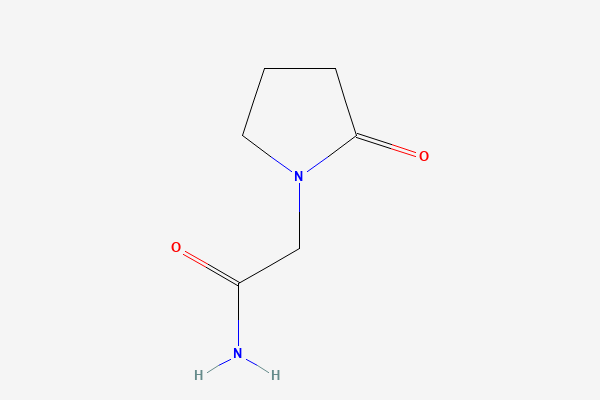
Piracetam molecular structure
PubChem
01

Overview

Piracetam — Racetam small molecule associated with Nootropil, also studied in historical fatigue-related combinations.

How it works

Source-specific finding from PMID 2149831

However, corticosterone substitution does not reinstate these effects if the aldosterone receptors are blocked by the aldosterone antagonist epoxymexrenon. [20]

Source-specific finding from PMID 8234409

for 14 days) elevates N-methyl-D-aspartate (NMDA) receptor density by about 20% and normalizes the enhanced affinity of L-glutamate for the NMDA receptor. [21]

Source-specific finding from PMID 10338103

After testing, the rats were killed and membrane fluidity and NMDA as well muscarinic cholinergic receptor densities were determined in the frontal cortex, the hippocampus, the striatum, as well as the cerebellum. [22]

Source-specific finding from PMID 6535371

Single oral dose of 600 mg/kg weight piracetam, respectively 50 mg/kg aniracetam, causes essential changes in the level and turnover of dopamine (DA) and serotonin (5-HT) in some rat cerebral structures. [24]

Source-specific finding from PMID 6311225

During investigations of 2-oxy-pyrrolidine-acetamide (piracetam, Nootrop) the influence on the cyclic adenosine monophosphate (cAMP) level was measured. [26]

Source-specific finding from PMID 1755517

The action of piracetam, a cyclic derivate of GABA and commonly used as a nootropic agent, was tested by studying the lipofuscin accumulation on the cerebellar Purkinje and hippocampal CA3 pyramidal cells in alcohol-treated and withdrawn rats. [29]

02

Subjective effects

Reported experiences are kept separate from measured outcomes and remain tied to their cited context.

Increased
Limited research

A double-blind, intra-individual cross-over comparison of the mental performance of 18 aging, non-deteriorated individuals during two 4-week periods of piracetam (1-acetamide-2-pyrrolidone) and placebo administration was performed using conventional and computerized perceptual-motor tasks. [13]

Population
Population described in the PubMed abstract
Exposure context
A double-blind, intra-individual cross-over comparison of the mental performance of 18 aging, non-deteriorated individuals during two 4-week periods of piracetam (1-acetamide-2-pyrrolidone) and placebo administration was performed using conventional and computerized perceptual-motor tasks.
03

Measured outcomes

What the research measured, for whom, and under which exposure. Findings remain attached to the study’s task or clinical endpoint.

The blockade of the memory-enhancing effects of piracetam resulting from adrenalectomy can be abolished by substitution with either corticosterone or aldosterone. [20]

PopulationPopulation not stated in the PubMed record.ExposureThe blockade of the memory-enhancing effects of piracetam resulting from adrenalectomy can be abolished by substitution with either corticosterone or aldosterone.MeasureNot assessed
Limited research

for 14 days) elevates N-methyl-D-aspartate (NMDA) receptor density by about 20% and normalizes the enhanced affinity of L-glutamate for the NMDA receptor. [21]

PopulationSubchronic treatment of aged mice with piracetam (500 mg/kg p.o.ExposureSubchronic treatment of aged mice with piracetam (500 mg/kg p.o.MeasureNot assessed
Limited research

In order to test the hypothesis that piracetam improves cognitive functions by restoring biochemical deficits of the aging brain, we investigated the effects of piracetam treatment (300 mg/kg daily for 6 weeks) on the active avoidance performance of young and aged rats. [22]

PopulationIn order to test the hypothesis that piracetam improves cognitive functions by restoring biochemical deficits of the aging brain, we investigated the effects of piracetam treatment (300 mg/kg daily for 6 weeks) on the active avoidance performance of young and aged rats.ExposureIn order to test the hypothesis that piracetam improves cognitive functions by restoring biochemical deficits of the aging brain, we investigated the effects of piracetam treatment (300 mg/kg daily for 6 weeks) on the active avoidance performance of young and aged rats.MeasureNot assessed
Limited research

Nootropyl (Piracetam) a drug reported to facilitate learning in animals was tested for its effect on man by administering it to normal volunteers. [10]

Populationgiven 3x4 capsules at 400 mg per day, in a double blind studyExposureNootropyl (Piracetam) a drug reported to facilitate learning in animals was tested for its effect on man by administering it to normal volunteers.MeasureNot assessed
Human research

The trials were identified from a search of the Specialized Register of the Cochrane Dementia and Cognitive Improvement Group on 10 November 2000 using the term spiracetam, nootropic and 2-Oxo-1-pyrrolidine. [28]

PopulationAll unconfounded trials specified as randomized in which treatment with piracetam was administered for more than a day and compared with placebo in patients with dementia of Alzheimer type, vascular dementia,or mixed vascular and Alzheimer's disease, or unclassified dementia, or cognitive impairment not fulfilling the criteria for dementia.ExposureAll unconfounded trials specified as randomized in which treatment with piracetam was administered for more than a day and compared with placebo in patients with dementia of Alzheimer type, vascular dementia,or mixed vascular and Alzheimer's disease, or unclassified dementia, or cognitive impairment not fulfilling the criteria for dementia.MeasureNot assessed
Human research

These studies had as common outcome measure a clinical global impression of change, a measure of clinically meaningful improvement. [33]

PopulationA meta-analysis has been performed including nineteen double blind, placebo controlled studies with piracetam in patients suffering from dementia or cognitive impairment in the elderly.ExposureThe results of the meta-analysis demonstrate a difference between those individuals treated with piracetam and those given placebo, both as significant odds ratio and as a favourable number needed to treat.MeasureNot assessed
Human research

Nineteen time segments were found. [37]

PopulationIn 6 subjects, 42-channel event-related EEG potential maps (ERP) were recorded during a task requiring subjects to watch single digits presented in a pseudorandom order on a screen and to press a button after all triplets of three consecutive odd or even digits.ExposureWe examined whether a single administration of piracetam produces dose-dependent effects on brain functions in healthy young men.MeasureNot assessed
Limited research
04

Doses & routes

Study doses and reference exposures, with route, formulation and duration.

Other routes · Other or unspecified · 10 records

PubMed study exposure (26248695)

Research exposure

50 mcg [17]

Ingredient / form
Piracetam · were extract; Piracar
Route
oral or as stated in abstract
Frequency
Study schedule not stated in abstract
Duration
Not stated in abstract
Population
This LC-MS-MS procedure was used to assess the bioavailability of two piracetam formulations: piracetam + l-carnitine (Piracar®; 270/330 mg tablet) and piracetam (Nootropil®; 800 mg tablet) in healthy volunteers of both sexes.
Purpose
Research exposure

Dose and schedule transcribed from PMID 26248695 abstract; formulation and population are source-specific to this study.

PubMed study exposure (6535371)

Research exposure

600 mg/kg [24]

Ingredient / form
Piracetam · Formulation as described in PMID 6535371
Route
oral or as stated in abstract
Frequency
Study schedule not stated in abstract
Duration
Not stated in abstract
Population
Population not stated in the PubMed record.
Purpose
Research exposure

Dose and schedule transcribed from PMID 6535371 abstract; formulation and population are source-specific to this study.

PubMed study exposure (8457235)

Research exposure

1.6 g [25]

Ingredient / form
Piracetam · Nootropil
Route
oral or as stated in abstract
Frequency
daily
Duration
Not stated in abstract
Population
The random administration of four different single oral doses of piracetam (Nootropil, CAS 7491-74-9)--1.6 g, 3.2 g, 4.8 g and 9.6 g--at fixed intervals of 2 weeks to 5 healthy subjects has confirmed and explicited its platelet anti-aggregant and rheological properties after doses of 4.8 g and 9.6 g.
Purpose
Research exposure

Dose and schedule transcribed from PMID 8457235 abstract; formulation and population are source-specific to this study.

PubMed study exposure (826948)

Research exposure

400 mg [10]

Ingredient / form
Piracetam · As described in the PubMed abstract
Frequency
Study exposure
Duration
Study exposure
Population
given 3x4 capsules at 400 mg per day, in a double blind study
Purpose
Research exposure

Dose extracted from the PubMed abstract; verify the full text for formulation and protocol details.

PubMed study exposure (3835497)

Research exposure

400 mg [11]

Ingredient / form
Piracetam · As described in the PubMed abstract
Frequency
Study exposure
Duration
Study exposure
Population
Population described in the PubMed abstract
Purpose
Research exposure

Dose extracted from the PubMed abstract; verify the full text for formulation and protocol details.

PubMed study exposure (3370078)

Research exposure

1,600 mg [31]

Ingredient / form
Piracetam · Formulation as described in PMID 3370078
Route
preclinical model
Frequency
single administration
Duration
Not stated in abstract
Population
The effects of two acute doses (1600 mg, 2400 mg) of 2-oxo-pyrrolidine-1-acetamide (piracetam, Normabraïn) on hypoxia resistance were screened vs placebo in a randomized, double-blind 3-way change-over design in 9 healthy male volunteers (mean age: 26.4 +/- 3.5 years; mean body weight: 74.9 +/- 8.4 kg).
Purpose
Research exposure

Dose and schedule transcribed from PMID 3370078 abstract; formulation and population are source-specific to this study.

PubMed study exposure (10555876)

Research exposure

9.6 g [14]

Ingredient / form
Piracetam · As described in the PubMed abstract
Frequency
Study exposure
Duration
Study exposure
Population
Population described in the PubMed abstract
Purpose
Research exposure

Dose extracted from the PubMed abstract; verify the full text for formulation and protocol details.

PubMed study exposure (7655763)

Research exposure

12 g [32]

Ingredient / form
Piracetam · different formulation
Route
olfactory exposure
Frequency
Study schedule not stated in abstract
Duration
Not stated in abstract
Population
The latter was induced by a fixed gas combination of 9.8% oxygen (O2) and 90.2% nitrogen (N2, found in 6,000 m altitude), which was inhaled for 23 minutes under normobraic conditions by 18 healthy volunteers.
Purpose
Research exposure

Dose and schedule transcribed from PMID 7655763 abstract; formulation and population are source-specific to this study.

PubMed study exposure (7680995)

Research exposure

2.9 g [36]

Ingredient / form
Piracetam · Formulation as described in PMID 7680995
Route
Not stated in abstract
Frequency
single dose
Duration
Not stated in abstract
Population
In 5 normal volunteers, 4 records of 16-channel resting EEG were obtained during each of 4 randomized sessions (double blind design) after a single dose of placebo or 2.9 g or 4.8 g or 9.6 g piracetam.
Purpose
Research exposure

Dose and schedule transcribed from PMID 7680995 abstract; formulation and population are source-specific to this study.

PubMed study exposure (8272204)

Research exposure

9.6 g [37]

Ingredient / form
Piracetam · Formulation as described in PMID 8272204
Route
oral or as stated in abstract
Frequency
single administration
Duration
Not stated in abstract
Population
In 6 subjects, 42-channel event-related EEG potential maps (ERP) were recorded during a task requiring subjects to watch single digits presented in a pseudorandom order on a screen and to press a button after all triplets of three consecutive odd or even digits.
Purpose
Research exposure

Dose and schedule transcribed from PMID 8272204 abstract; formulation and population are source-specific to this study.

05

Pharmacokinetics

Absorption, metabolism and elimination depend on the analyte, route, formulation, physiology and other exposures.

Elimination half-life · piracetam
4.3 hours in one hypoxia pharmacokinetic study

Timing explorer

Published timing evidence
The source reports timing terms but does not provide numeric elapsed intervals.

Not established as a numeric timeline. Plasma timing and felt effects are distinct measurements. Source

Modeled elimination

The elimination model describes the named analyte after absorption and distribution. It does not establish felt-effect timing.

intravenous and oral · 12 g IV infusion or 12 g oral syrup · not-established

Not modeled

Elimination model

An elimination model is not established for this observation.

Source-bound record

This observation provides context about the measured record, but it does not support a first-order elimination curve.

Measured analyte
piracetam
Route
intravenous and oral
Formulation
12 g IV infusion or 12 g oral syrup
Population
18 healthy volunteers under transient hypoxic hypoxidosis

Source context

The latter was induced by a fixed gas combination of 9.8% oxygen (O2) and 90.2% nitrogen (N2, found in 6,000 m altitude), which was inhaled for 23 minutes under normobraic conditions by 18 healthy volunteers.
Read source context
Review the supporting record and source details.

Mean elimination half-life after 12 g intravenous or oral piracetam in 18 healthy volunteers; formulation-specific and not a universal estimate. [32]

Sourced elimination observations

piracetam

No numeric estimate

Not established [17]

Route / formulation
oral · Piracar 270 mg piracetam/330 mg L-carnitine vs Nootropil 800 mg
Population
Healthy volunteers of both sexes

A rapid, sensitive and specific method for quantifying piracetam in human plasma using Piracetam d-8 as the internal standard (IS) is described.

piracetam

No numeric estimate

Not established [32]

Route / formulation
intravenous and oral · 12 g IV infusion or 12 g oral syrup
Population
18 healthy volunteers under transient hypoxic hypoxidosis

The latter was induced by a fixed gas combination of 9.8% oxygen (O2) and 90.2% nitrogen (N2, found in 6,000 m altitude), which was inhaled for 23 minutes under normobraic conditions by 18 healthy volunteers.

06

Safety & uncertainty

Adverse effects and interactions reported in the cited studies.

Warning

Source-specific finding from PMID 3835497

The electroencephalographic (EEG) and neuropsychological effects of single, oral doses or piracetam (800-6,400 mg) and of its association with lecithin (4,800 mg and 25 g, respectively) were investigated in two groups of healthy volunteers in placebo-controlled studies. [11]

Monitor

Source-specific finding from PMID 1755517

In addition, it was also found that alcohol withdrawal does not reverse these changes. [29]

Context

Source-specific finding from PMID 10555876

Global complexity of 47-channel resting electroencephalogram (EEG) of healthy young volunteers was studied after intake of a single dose of a nootropic drug (piracetam, Nootropil UCB Pharma) in 12 healthy volunteers. [14]

Warning

Source-specific finding from PMID 7655763

Both formulations were well tolerated. [32]

Interactions in cited sources

Explore a pair of substances
07

Research & sources

37

Original publications, findings and available funding disclosures.

Reports elsewhere

This link leaves BHWiki for an outside experience index. It is not a finding, a dose, or a source for the claims above. The report text is not stored here.

08

Connected claims

Explore the participants, roles and sources behind each relationship.

associated-withAuthored relationship

PMID 2149831 reported: The blockade of the memory-enhancing effects of piracetam resulting from adrenalectomy can be abolished by substitution with either corticosterone or aldosterone.

Piracetamintervention or exposure
Episodic memoryreported endpoint

Source-specific result from PMID 2149831; applies to the population and design described in that abstract.

Limitation Abstract result from PMID 2149831; this single study does not establish general efficacy or safety.

associated-withAuthored relationship

PMID 8234409 reported: for 14 days) elevates N-methyl-D-aspartate (NMDA) receptor density by about 20% and normalizes the enhanced affinity of L-glutamate for the NMDA receptor.

Piracetamintervention or exposure

Source-specific result from PMID 8234409; applies to the population and design described in that abstract.

Limitation Abstract result from PMID 8234409; this single study does not establish general efficacy or safety.

associated-withAuthored relationship

PMID 10338103 reported: In order to test the hypothesis that piracetam improves cognitive functions by restoring biochemical deficits of the aging brain, we investigated the effects of piracetam treatment (300 mg/kg daily for 6 weeks) on the active avoidance performance of young and aged rats.

Piracetamintervention or exposure

Source-specific result from PMID 10338103; applies to the population and design described in that abstract.

Limitation Abstract result from PMID 10338103; this single study does not establish general efficacy or safety.

associated-withAuthored relationship

PMID 870885 reported: The stimulating effect of piracetam on the respiration and glycolysis was observed in rat brain cortex slices incubated under oxygen atmosphere.

Piracetamintervention or exposure

Source-specific result from PMID 870885; applies to the population and design described in that abstract.

Limitation Abstract result from PMID 870885; this single study does not establish general efficacy or safety.

associated-withAuthored relationship

PMID 6535371 reported: When the animals were killed one hour after the administration of the drugs, piracetam significantly increased the DA level in the cerebral cortex and in the striatum, as well as the 5-HT level in the cortex, reducing the 5-HT level in the striatum, brain stem and hypothalamus.

Piracetamintervention or exposure

Source-specific result from PMID 6535371; applies to the population and design described in that abstract.

Limitation Abstract result from PMID 6535371; this single study does not establish general efficacy or safety.

associated-withAuthored relationship

PMID 8457235 reported: The effect on platelet aggregation occurs through inhibition of thromboxane synthetase or anti-thromboxane A2 activity together with a reduction in the plasma level of von Willebrand's factor (F.VIIIR:vW).

Piracetamintervention or exposure

Source-specific result from PMID 8457235; applies to the population and design described in that abstract.

Limitation Abstract result from PMID 8457235; this single study does not establish general efficacy or safety.

associated-withAuthored relationship

PMID 6311225 reported: The animals treated 16 days with piracetam showed an increase of cAMP in the frontal brain of 134% compared with untreated animals.

Piracetamintervention or exposure

Source-specific result from PMID 6311225; applies to the population and design described in that abstract.

Limitation Abstract result from PMID 6311225; this single study does not establish general efficacy or safety.

associated-withAuthored relationship

Piracetam is associated with the reported episodic memory finding in this publication.

Piracetamintervention or exposure
Episodic memoryreported endpoint

Publication abstract; direction and population are retained on the linked observation.

Limitation Automated corpus import from an abstract; this record is not an independent meta-analysis.

associated-withAuthored relationship

PMID 116285 reported: It was found, using a double-blind cross-over technique, that dyslexics significantly increased their verbal learning by 15.0% and students by 8.6% (over and above their placebo increase).

Piracetamintervention or exposure
Episodic memoryreported endpoint

Source-specific result from PMID 116285; applies to the population and design described in that abstract.

Limitation Abstract result from PMID 116285; this single study does not establish general efficacy or safety.

associated-withAuthored relationship

Piracetam is associated with the reported alertness finding in this publication.

Piracetamintervention or exposure
Subjective alertnessreported endpoint

Publication abstract; direction and population are retained on the linked observation.

Limitation Automated corpus import from an abstract; this record is not an independent meta-analysis.

associated-withAuthored relationship

Piracetam is associated with the reported episodic memory finding in this publication.

Piracetamintervention or exposure
Episodic memoryreported endpoint

Publication abstract; direction and population are retained on the linked observation.

Limitation Automated corpus import from an abstract; this record is not an independent meta-analysis.

associated-withAuthored relationship

PMID 11405971 reported: The trials were identified from a search of the Specialized Register of the Cochrane Dementia and Cognitive Improvement Group on 10 November 2000 using the term spiracetam, nootropic and 2-Oxo-1-pyrrolidine.

Piracetamintervention or exposure
Subjective alertnessreported endpoint

Source-specific result from PMID 11405971; applies to the population and design described in that abstract.

Limitation Abstract result from PMID 11405971; this single study does not establish general efficacy or safety.

associated-withAuthored relationship

PMID 11405971 reported: The trials were identified from a search of the Specialized Register of the Cochrane Dementia and Cognitive Improvement Group on 10 November 2000 using the term spiracetam, nootropic and 2-Oxo-1-pyrrolidine.

Piracetamintervention or exposure

Source-specific result from PMID 11405971; applies to the population and design described in that abstract.

Limitation Abstract result from PMID 11405971; this single study does not establish general efficacy or safety.

associated-withAuthored relationship

PMID 1755517 reported: There is a growing body of evidence indicating that chronic alcohol consumption induces morphological changes in the central nervous system (CNS) similar to those observed during brain senescence, including an increased formation of lipofuscin.

Piracetamintervention or exposure
Subjective alertnessreported endpoint

Source-specific result from PMID 1755517; applies to the population and design described in that abstract.

Limitation Abstract result from PMID 1755517; this single study does not establish general efficacy or safety.

associated-withAuthored relationship

PMID 1755517 reported: There is a growing body of evidence indicating that chronic alcohol consumption induces morphological changes in the central nervous system (CNS) similar to those observed during brain senescence, including an increased formation of lipofuscin.

Piracetamintervention or exposure

Source-specific result from PMID 1755517; applies to the population and design described in that abstract.

Limitation Abstract result from PMID 1755517; this single study does not establish general efficacy or safety.

associated-withAuthored relationship

PMID 3370078 reported: The effects of two acute doses (1600 mg, 2400 mg) of 2-oxo-pyrrolidine-1-acetamide (piracetam, Normabraïn) on hypoxia resistance were screened vs placebo in a randomized, double-blind 3-way change-over design in 9 healthy male volunteers (mean age: 26.4 +/- 3.5 years; mean body weight: 74.9 +/- 8.4 kg).

Piracetamintervention or exposure
Subjective alertnessreported endpoint

Source-specific result from PMID 3370078; applies to the population and design described in that abstract.

Limitation Abstract result from PMID 3370078; this single study does not establish general efficacy or safety.

associated-withAuthored relationship

PMID 3370078 reported: The effects of two acute doses (1600 mg, 2400 mg) of 2-oxo-pyrrolidine-1-acetamide (piracetam, Normabraïn) on hypoxia resistance were screened vs placebo in a randomized, double-blind 3-way change-over design in 9 healthy male volunteers (mean age: 26.4 +/- 3.5 years; mean body weight: 74.9 +/- 8.4 kg).

Piracetamintervention or exposure

Source-specific result from PMID 3370078; applies to the population and design described in that abstract.

Limitation Abstract result from PMID 3370078; this single study does not establish general efficacy or safety.

associated-withAuthored relationship

Piracetam is associated with the reported alertness finding in this publication.

Piracetamintervention or exposure
Subjective alertnessreported endpoint

Publication abstract; direction and population are retained on the linked observation.

Limitation Automated corpus import from an abstract; this record is not an independent meta-analysis.

associated-withAuthored relationship

Piracetam is associated with the reported cognitive performance finding in this publication.

Piracetamintervention or exposure

Publication abstract; direction and population are retained on the linked observation.

Limitation Automated corpus import from an abstract; this record is not an independent meta-analysis.

associated-withAuthored relationship

PMID 7655763 reported: The latter was induced by a fixed gas combination of 9.8% oxygen (O2) and 90.2% nitrogen (N2, found in 6,000 m altitude), which was inhaled for 23 minutes under normobraic conditions by 18 healthy volunteers.

Piracetamintervention or exposure
Subjective alertnessreported endpoint

Source-specific result from PMID 7655763; applies to the population and design described in that abstract.

Limitation Abstract result from PMID 7655763; this single study does not establish general efficacy or safety.

associated-withAuthored relationship

PMID 7655763 reported: The latter was induced by a fixed gas combination of 9.8% oxygen (O2) and 90.2% nitrogen (N2, found in 6,000 m altitude), which was inhaled for 23 minutes under normobraic conditions by 18 healthy volunteers.

Piracetamintervention or exposure

Source-specific result from PMID 7655763; applies to the population and design described in that abstract.

Limitation Abstract result from PMID 7655763; this single study does not establish general efficacy or safety.

associated-withAuthored relationship

PMID 12006732 reported: These studies had as common outcome measure a clinical global impression of change, a measure of clinically meaningful improvement.

Piracetamintervention or exposure
Subjective alertnessreported endpoint

Source-specific result from PMID 12006732; applies to the population and design described in that abstract.

Limitation Abstract result from PMID 12006732; this single study does not establish general efficacy or safety.

associated-withAuthored relationship

PMID 12006732 reported: These studies had as common outcome measure a clinical global impression of change, a measure of clinically meaningful improvement.

Piracetamintervention or exposure

Source-specific result from PMID 12006732; applies to the population and design described in that abstract.

Limitation Abstract result from PMID 12006732; this single study does not establish general efficacy or safety.

associated-withAuthored relationship

PMID 7680995 reported: The dimensionality decreased from placebo (median = 5.89) to low dose (median = 5.72) to high dose (median = 5.59), significant in a Friedman ANOVA at P < 0.02, with significant differences between placebo vs.

Piracetamintervention or exposure
Subjective alertnessreported endpoint

Source-specific result from PMID 7680995; applies to the population and design described in that abstract.

Limitation Abstract result from PMID 7680995; this single study does not establish general efficacy or safety.

associated-withAuthored relationship

PMID 7680995 reported: The dimensionality decreased from placebo (median = 5.89) to low dose (median = 5.72) to high dose (median = 5.59), significant in a Friedman ANOVA at P < 0.02, with significant differences between placebo vs.

Piracetamintervention or exposure

Source-specific result from PMID 7680995; applies to the population and design described in that abstract.

Limitation Abstract result from PMID 7680995; this single study does not establish general efficacy or safety.

associated-withAuthored relationship

PMID 8272204 reported: Nineteen time segments were found.

Piracetamintervention or exposure
Subjective alertnessreported endpoint

Source-specific result from PMID 8272204; applies to the population and design described in that abstract.

Limitation Abstract result from PMID 8272204; this single study does not establish general efficacy or safety.

associated-withAuthored relationship

PMID 8272204 reported: Nineteen time segments were found.

Piracetamintervention or exposure

Source-specific result from PMID 8272204; applies to the population and design described in that abstract.

Limitation Abstract result from PMID 8272204; this single study does not establish general efficacy or safety.

Explore the relationship graph
09

Publication history

Content updated Oct 4, 2026.

Keep exploring

View graph