Daily oral aniracetam 50 mg/kg for 50 days did not significantly alter spatial learning, associative learning, motor learning, odor discrimination, locomotion, anxiety or repetitive behavior in naïve adult C57BL/6J mice. [7]
Limited research
The substance library
Aniracetam is a racetam compound studied for its effects on glutamate signalling, learning and memory.
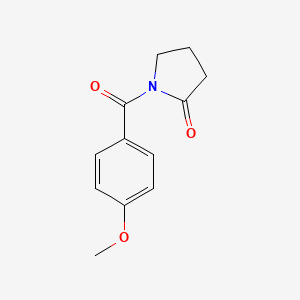
Aniracetam is a racetam compound studied for its effects on glutamate signalling, learning and memory.
Aniracetam metabolites, especially 2-pyrrolidinone, potentiated AMPA receptor currents; KN-93 inhibition implicates CaMKII in the long-lasting effect. [5]
Haloperidol, mecamylamine and ketanserin blocked or attenuated mouse anxiolytic effects, implicating D2, nicotinic acetylcholine and 5-HT2A receptors. [4]
Reported experiences are kept separate from measured outcomes and remain tied to their cited context.
What the research measured, for whom, and under which exposure. Findings remain attached to the study’s task or clinical endpoint.
Daily oral aniracetam 50 mg/kg for 50 days did not significantly alter spatial learning, associative learning, motor learning, odor discrimination, locomotion, anxiety or repetitive behavior in naïve adult C57BL/6J mice. [7]
Aniracetam 100 mg/kg reversed passive-avoidance impairment after 96 hours of sleep deprivation at 2- and 24-hour retention tests. [2]
2-Pyrrolidinone potentiated GluR1,3 and GluR1,2,3 AMPA currents, with maximal effect around 100 μM and persistence after washout; effects were CaMKII-sensitive. [5]
Study doses and reference exposures, with route, formulation and duration.
Other routes · Other or unspecified · 2 records
Absorption, metabolism and elimination depend on the analyte, route, formulation, physiology and other exposures.
No pharmacokinetic observation was supplied by this identity import. [1]
Adverse effects and interactions reported in the cited studies.
All cited biological findings are from animal models or in-vitro receptor systems; human efficacy and safety are not established. [4]
The effective 100 mg/kg rat dose and micromolar metabolite concentrations cannot be converted to a safe human dose. [2]
Original publications, findings and available funding disclosures.
Explore the participants, roles and sources behind each relationship.
Publication abstract and/or retrieved PMC text; this is not a pooled efficacy estimate.
Limitation Publication-level association; direction and generalizability depend on the cited study.
Publication abstract and/or retrieved PMC text; this is not a pooled efficacy estimate.
Limitation Publication-level association; direction and generalizability depend on the cited study.
Publication abstract and/or retrieved PMC text; this is not a pooled efficacy estimate.
Limitation Publication-level association; direction and generalizability depend on the cited study.
Content updated Oct 27, 2026.