The substance library

Salvinorin AThe compound, not the leaf.

Also known as: Salvinorin

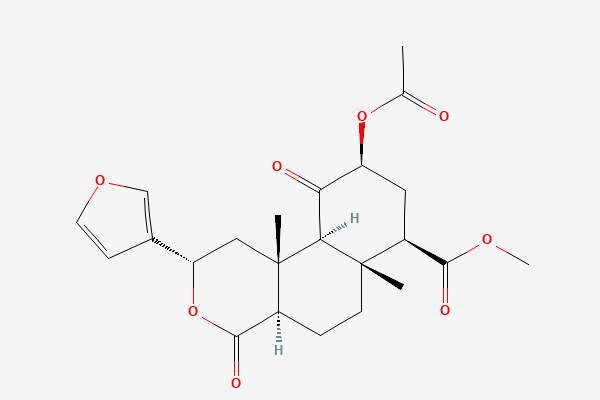
Salvinorin A, PubChem CID 128563, is described as a selective nonnitrogenous kappa-opioid agonist and the principal constituent of Salvia divinorum. Inhaled microgram-per-kilogram doses in two small studies produced effects that peaked within about 2 minutes.
3 sourcesContent date Oct 3, 2026CompareExplore connectionsRevision history
Salvinorin A molecular structure
PubChem
01

Overview

This article is the pure compound. It is not a page about the plant or about smoking leaf. Neither inspected abstract reports an elimination half-life. Narrative themes from sessions are not reprinted here.

How it works

Kappa-opioid agonism

The cited human study describes salvinorin A as a potent selective nonnitrogenous kappa-opioid agonist. [1]

02

Subjective effects

Reported experiences are kept separate from measured outcomes and remain tied to their cited context.

Increased
Human research

The eight-person study reported intense subjective effects and dose-related dissociative effects, with some questionnaire overlap with classic hallucinogens. Participants described the effects as qualitatively different from other drugs they had used. Recall and recognition memory were impaired during the session. No persisting adverse effects were found at the 1-month follow-up. [2]

Population
8 healthy adults who had used hallucinogens
Exposure context
Inhaled salvinorin A, 0.375–21 µg/kg
03

Doses & routes

Study doses and reference exposures, with route, formulation and duration.

Smoking · By smoking · 2 records

Ascending inhaled doses, four participants

Research exposure

0.375–21 µg/kg [1]

Ingredient / form
Salvinorin A · Inhaled study doses
Route
Inhaled
Frequency
Up to 16 ascending doses plus 4 placebos
Duration
Acute laboratory sessions under supportive conditions
Population
4 healthy adults who had used hallucinogens
Purpose
Human psychopharmacology and dose effects

Drug strength peaked at 2 minutes. Heart rate and blood pressure did not increase significantly.

Ascending inhaled doses, eight participants

Research exposure

0.375–21 µg/kg [2]

Ingredient / form
Salvinorin A · Inhaled study doses
Route
Inhaled
Frequency
Up to 16 ascending doses
Duration
Double-blind placebo-controlled sessions, with 1-month follow-up
Population
8 healthy adults who had used hallucinogens
Purpose
Dose-related subjective, dissociative, and memory effects

Effects peaked at 2 minutes and dissipated rapidly. High doses often reached maximal drug strength or unresponsiveness.

04

Pharmacokinetics

Absorption, metabolism and elimination depend on the analyte, route, formulation, physiology and other exposures.

Timing explorer

Published timing evidence
The source reports timing terms but does not provide numeric elapsed intervals.
Peak
Drug strength peaked at 2 minutes, the first measured time point.
Duration
Definite subjective effects were no longer present at about 20 minutes.

Not established as a numeric timeline. Plasma timing and felt effects are distinct measurements. Source

Modeled elimination

The elimination model describes the named analyte after absorption and distribution. It does not establish felt-effect timing.

Inhaled · Pure compound in ascending study doses · not-established

Not modeled

Elimination model

An elimination model is not established for this observation.

Source-bound record

This observation provides context about the measured record, but it does not support a first-order elimination curve.

Measured analyte
Salvinorin A
Route
Inhaled
Formulation
Pure compound in ascending study doses
Population
Healthy adults who had used hallucinogens

Source context

Subjective timing is reported. Elimination half-life is not.
Read source context
Review the supporting record and source details.

Neither inspected abstract reports an elimination half-life for salvinorin A. [1]

Sourced elimination observations

Salvinorin A

No numeric estimate

Not established [1]

Route / formulation
Inhaled · Pure compound in ascending study doses
Population
Healthy adults who had used hallucinogens

Subjective timing is reported. Elimination half-life is not.

05

Safety & uncertainty

Adverse effects and interactions reported in the cited studies.

Warning

High doses and responsiveness

In the eight-person study, high doses often produced maximal drug strength or unresponsiveness. Effects in that study peaked at 2 minutes. [2]

Monitor

Short monitored sessions

The four-person study found no significant increase in heart rate or blood pressure and no definite subjective effects by about 20 minutes. Those observations are limited to that protocol. [1]

Interactions in cited sources

Explore a pair of substances
06

Research & sources

3

Original publications, findings and available funding disclosures.

Reports elsewhere

This link leaves BHWiki for an outside experience index. It is not a finding, a dose, or a source for the claims above. The report text is not stored here.

07

Connected claims

Explore the participants, roles and sources behind each relationship.

receptor-agonismAuthored relationship

Salvinorin A is described as a potent selective nonnitrogenous kappa-opioid agonist and the principal constituent of Salvia divinorum.

Human psychopharmacology study of the pure inhaled compound

Limitation The receptor description is stated in the study abstract. This article does not add a binding constant. The pure compound is distinct from the plant.

Explore the relationship graph
08

Publication history

Content updated Oct 3, 2026.

Keep exploring

View graph