The substance library

Polygala tenuifoliaBT-11 root-extract evidence with limited human trials.

Also known as: Yuan Zhi · Yuanzhi · Polygalae Radix

Polygala tenuifolia is a plant whose root extract BT-11 has been studied for memory. Small human trials report improvements on some recall and cognitive tests.

6 sourcesContent date Nov 5, 2026CompareExplore connectionsRevision history
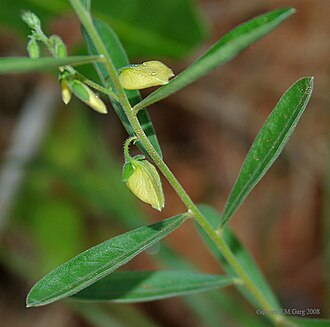
Polygala tenuifolia
J.M.Garg · CC BY 3.0
01

Overview

Polygalae Radix is a dried-root medicinal material associated with P. tenuifolia and, in some pharmacopoeial contexts, P. sibirica. BT-11 is a named root extract and should not be treated as a chemically defined molecule or as interchangeable with generic root powder, other extracts, or isolated constituents. Human evidence remains limited to small, overlapping studies and one short-term safety trial.

How it works

Acetylcholinesterase and neuroprotective findings

The BT-11 clinical abstract describes earlier rat and in-vitro findings including acetylcholinesterase inhibition and enhanced brain glucose utilization. These mechanistic observations do not establish a human clinical effect. [2]

Multicomponent botanical pharmacology

Polygalae Radix reviews describe saponins, xanthones, oligosaccharide esters, and other constituents with preclinical pharmacology; the evidence does not define one active molecule or a human PK profile for the whole root. [6]

02

Subjective effects

Reported experiences are kept separate from measured outcomes and remain tied to their cited context.

Increased
Human research

In healthy adults, BT-11 produced a greater increase in K-CVLT immediate recall than placebo; recognition improved within the BT-11 group, while several K-CVLT subtests improved in both groups. [2]

Population
Healthy adults in a randomized, double-blind, placebo-controlled parallel-group study.
Exposure context
Oral BT-11 or matching placebo capsules three times daily for 4 weeks; exact dose was not established from the accessible abstract.
Increased
Human research

BT-11 significantly reduced errors on the Self-Ordered Pointing Test, whereas placebo did not. [2]

Population
Healthy adults in the same 4-week BT-11 trial.
Exposure context
Oral BT-11 or placebo capsules three times daily for 4 weeks; exact dose was not established from the accessible abstract.
03

Measured outcomes

What the research measured, for whom, and under which exposure. Findings remain attached to the study’s task or clinical endpoint.

In 53 older adults, total CERAD scores increased more in the BT-11 group (n=28) than placebo (n=25); word-list recognition, constructional recall and praxis, and modified Boston Naming Test scores were reported as improved. The abstract does not establish a significant between-group MMSE benefit. [3]

PopulationOlder adults; 28 BT-11 and 25 placebo participants.ExposureRandomized, double-blind, placebo-controlled oral BT-11 root-extract study; dose and duration were not established from the primary abstract.MeasureCERAD Assessment Packet; Mini-Mental State Examination
Human research

In a 12-week randomized safety study, 11 adverse reactions occurred in 10 BT-11 participants and 7 in 6 placebo participants; no statistically significant group differences were reported, and no significant differences were found in laboratory tests, vital signs, weight, or ECG. [4]

Population121 participants aged 9–19 years; 61 BT-11 and 60 placebo.ExposureOral BT-11 root-extract powder 300 mg/day for 12 weeks versus matching placebo.MeasureAdverse-reaction assessment, hematology, blood chemistry, urinalysis, vital signs, body weight, ECG
Human research

A systematic review of 16 RCTs (1,103 Alzheimer’s disease participants) found pooled adjunctive Polygala tenuifolia plus Acorus tatarinowii with conventional drugs favored MMSE, ADL, and ADAS-cog, but evidence certainty was low or very low and Polygala’s independent effect could not be separated. [5]

PopulationMild-to-moderate Alzheimer’s disease populations across 16 RCTs.ExposurePolygala tenuifolia plus Acorus tatarinowii, alone or adjunctive to conventional medication, for 3–6 months in included trials.MeasureMMSE, ADL, ADAS-cog
Human research
04

Doses & routes

Study doses and reference exposures, with route, formulation and duration.

Oral · By mouth · 1 record

PMID 30576772 study exposure: BT-11 300 mg/day

Research exposure

300 mg/day [4]

Ingredient / form
BT-11 Polygala tenuifolia root extract powder · Root extract powder
Route
oral
Frequency
once daily
Duration
12 weeks
Population
121 participants aged 9–19 years; 61 BT-11 and 60 placebo
Purpose
Research exposure; not a general-use recommendation

Randomized placebo-controlled safety study; dose and duration are study-specific.

05

Pharmacokinetics

Absorption, metabolism and elimination depend on the analyte, route, formulation, physiology and other exposures.

No human elimination study for the whole root or BT-11 extract was identified. [6]

06

Safety & uncertainty

Adverse effects and interactions reported in the cited studies.

Warning

Gastrointestinal and throat irritation

A review of Polygalae Radix reports throat irritation from raw material and gastrointestinal toxicity with long-term or excessive exposure, with saponins discussed as contributors; processing is commonly used to reduce irritation. [6]

Monitor

Limited duration and population safety

The 12-week safety RCT was restricted to participants aged 9–19 years and a specific BT-11 powder; it does not establish long-term safety, adult safety at higher doses, or safety of unstandardized products. [4]

Interactions in cited sources

Explore a pair of substances
07

Research & sources

6

Original publications, findings and available funding disclosures.

08

Connected claims

Explore the participants, roles and sources behind each relationship.

associated-withAuthored relationship

BT-11 was associated with source-specific memory-test improvements in healthy adults.

Polygala tenuifolianamed root extract exposure
Episodic memoryreported endpoint

Four-week randomized healthy-adult study; several measures also improved with placebo.

Limitation Small single study with abstract-only numerical reporting and no independent replication identified.

associated-withAuthored relationship

Polygala tenuifolia plus Acorus tatarinowii may improve Alzheimer’s disease outcomes when added to conventional medication, with low or very low certainty.

Polygala tenuifoliaone component of combination exposure

Systematic review of 16 RCTs; combination effects cannot be attributed to Polygala alone.

Limitation Multi-herb intervention, high or unclear risk of bias, and low/very low certainty.

Explore the relationship graph
09

Publication history

Content updated Nov 5, 2026.

Keep exploring

View graph