The substance library

CurcuminPlant compound

Curcumin is a yellow polyphenol from turmeric. Human trials of specific formulations examine attention, memory and mood, with mixed results.

8 sourcesContent date Oct 27, 2026CompareExplore connectionsRevision history
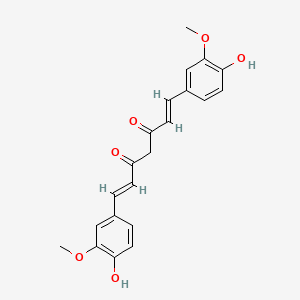
Curcumin molecular structure
PubChem
01

Overview

Curcuminoid delivery matters: poor solubility, rapid intestinal/hepatic metabolism, and low systemic bioavailability vary substantially by formulation. A review of commercial products reported up to 45.9-fold relative bioavailability for a hydrophilic carrier versus standard 95% curcuminoids, but this is a pharmacokinetic comparison and does not establish clinical benefit. PMID 25856323 PMC4536942

How it works

Limited oral bioavailability

Curcuminoids have poor water solubility, rapid intestinal/hepatic metabolism, and conjugation; formulation changes can alter exposure. [7]

DHA-synthesis pathway modulation

In rat brain and liver, curcumin increased FADS2 and elongase-2-related DHA synthesis when combined with ALA. [6]

Multi-pathway depression hypothesis

The depression trial introduction and biomarker analysis involve monoaminergic, inflammatory, oxidative/nitrosative, HPA-axis, leptin, endothelin-1, thromboxane B2, and substance-P pathways; these are mechanistic correlates, not proof of causality. [3]

02

Subjective effects

Reported experiences are kept separate from measured outcomes and remain tied to their cited context.

Increased
Human research

Acute and chronic Longvida treatment improved working-memory performance in this older-adult trial. [2]

Population
60 healthy adults aged 60–85
Exposure context
400 mg Longvida
03

Measured outcomes

What the research measured, for whom, and under which exposure. Findings remain attached to the study’s task or clinical endpoint.

In a 12-month 1500 mg/day Biocurcumax trial (n=96), a significant time-by-treatment interaction was driven by placebo decline at 6 months; no between-group differences appeared for other clinical or cognitive measures. [8]

Population96 community-dwelling older adultsExposure1500 mg/day Biocurcumax for 12 monthsMeasureMontreal Cognitive Assessment and cognitive battery
Human research

In a secondary analysis of 50 participants from the depression trial, curcumin was associated with higher urinary thromboxane B2 and substance P versus placebo; multiple comparisons increase type-I-error risk. [5]

Population50 participants with major depressive disorderExposure500 mg twice daily for 8 weeksMeasureUrinary, salivary, and blood biomarkers
Limited research

A 1.5% curcumin diet in rodents impaired long-term fear-memory consolidation and reconsolidation while short-term memory remained intact. [4]

PopulationRodent Pavlovian fear-memory modelExposure1.5% dietary curcuminMeasureAuditory fear conditioning
Limited research

In rats receiving ALA plus curcumin, brain DHA increased and FADS2/Elovl2-related synthesis pathways were elevated; ALA or curcumin alone did not reproduce the same DHA increase. [6]

PopulationMale Sprague-Dawley ratsExposure250 or 500 ppm dietary curcumin with 2.7% ALAMeasureBrain lipid analysis and immunoblotting
Limited research

One hour after a 400 mg Longvida dose, sustained-attention performance improved versus placebo in healthy older adults; chronic treatment also improved selected cognitive and mood measures. [2]

Population60 healthy adults aged 60–85Exposure400 mg Longvida, acute and 4-week protocolsMeasureSustained-attention and working-memory tasks
Human research

In 56 participants with major depressive disorder, 500 mg twice daily for 8 weeks was more effective than placebo from weeks 4–8 on IDS-SR30 total and mood scores; the authors described the support as partial. [3]

Population56 people with major depressive disorderExposure500 mg twice daily for 8 weeksMeasureIDS-SR30; STAI secondary outcome
Limited research
04

Doses & routes

Study doses and reference exposures, with route, formulation and duration.

Oral · By mouth · 5 records

Longvida older-adult cognition trial

Research exposure

400 mg [2]

Ingredient / form
Solid-lipid curcumin (Longvida) · Longvida solid-lipid formulation
Route
Oral
Frequency
Single dose and daily chronic treatment
Duration
Acute 1 or 3 hours; chronic 4 weeks; acute-on-chronic follow-up
Population
60 healthy adults aged 60–85
Purpose
Cognition, mood, and blood biomarkers

Dose context was not described in the retrieved abstract.

Biocurcumax older-adult trial

Research exposure

1,500 mg/day [8]

Ingredient / form
Biocurcumax curcumin formulation · Biocurcumax
Route
Oral
Frequency
Daily
Duration
12 months
Population
96 community-dwelling older adults
Purpose
Prevention of cognitive decline

Dose context was not described in the retrieved abstract.

Major-depression trial

Research exposure

500 mg per dose [3]

Ingredient / form
Patented curcumin extract · Patented curcumin extract; exact product name not stated in abstract
Route
Oral
Frequency
Twice daily
Duration
8 weeks
Population
56 people with major depressive disorder
Purpose
Depressive symptoms and anxiety

Dose context was not described in the retrieved abstract.

Rodent fear-memory diet

Research exposure

1.5 percent of diet [4]

Ingredient / form
Curcumin · Enriched diet
Route
Oral dietary exposure
Frequency
Dietary exposure
Duration
Study-specific
Population
Rodent Pavlovian fear-memory model
Purpose
Fear-memory consolidation and reconsolidation

Dose context was not described in the retrieved abstract.

Rodent DHA-synthesis study

Research exposure

250–500 ppm [6]

Ingredient / form
Curcumin · Diet with or without ALA
Route
Oral dietary exposure
Frequency
Ad libitum
Duration
3.5 weeks
Population
Male Sprague-Dawley rats
Purpose
Brain DHA synthesis and anxiety-like behavior

Dose context was not described in the retrieved abstract.

05

Pharmacokinetics

Absorption, metabolism and elimination depend on the analyte, route, formulation, physiology and other exposures.

Timing explorer

Published timing evidence
The source reports timing terms but does not provide numeric elapsed intervals.

Not established as a numeric timeline. Plasma timing and felt effects are distinct measurements. Source

Modeled elimination

The elimination model describes the named analyte after absorption and distribution. It does not establish felt-effect timing.

Oral · Commercial formulations compared in review · not-established

Not modeled

Elimination model

An elimination model is not established for this observation.

Source-bound record

This observation provides context about the measured record, but it does not support a first-order elimination curve.

Measured analyte
Curcuminoids
Route
Oral
Formulation
Commercial formulations compared in review
Population
Human bioavailability studies summarized by review

Source context

Hydrophilic-carrier dispersed formula in the reviewed comparison; total formula mass and individual curcuminoid behavior affect interpretation.
Read source context
Review the supporting record and source details.

No pharmacokinetic observation was supplied by this identity import. [1]

Sourced elimination observations

Curcuminoids

No numeric estimate

Not established [7]

Route / formulation
Oral · Commercial formulations compared in review
Population
Human bioavailability studies summarized by review

Hydrophilic-carrier dispersed formula in the reviewed comparison; total formula mass and individual curcuminoid behavior affect interpretation.

Factors that change the estimate

Formulation

Bioavailability varies

Poor solubility and rapid metabolism are major constraints; delivery systems such as hydrophilic carriers or cyclodextrin complexes changed exposure in comparative studies. [7]

Related observation

Population and indication

Outcome varies

Cognitive signals were observed in healthy older adults, while antidepressant findings came from people with major depressive disorder; these are not interchangeable contexts. [2]

Related observation
06

Safety & uncertainty

Adverse effects and interactions reported in the cited studies.

Warning

Formulation-specific evidence

Results for Longvida, Biocurcumax, and a patented extract cannot be transferred to generic turmeric or another curcumin product. [2]

Monitor

Mixed human results

The 12-month older-adult study found a MoCA interaction but no differences on other clinical or cognitive measures; human efficacy remains limited and context-specific. [8]

Context

Preclinical findings are not clinical treatment evidence

Fear-memory and DHA-synthesis findings came from rodents, and the fear-memory study reported memory impairment rather than enhancement. [4]

Warning

Biomarker analysis is exploratory

The biomarker paper used multiple comparisons and explicitly notes increased type-I-error risk; larger studies are needed. [5]

Interactions in cited sources

Explore a pair of substances
07

Research & sources

8

Original publications, findings and available funding disclosures.

08

Connected claims

Explore the participants, roles and sources behind each relationship.

measured-outcomeAuthored relationship

Selected cognitive measures improved with specific curcumin formulations in older adults.

Curcuminintervention
Attentionendpoint

400 mg Longvida trial in 60 healthy adults aged 60–85.

Limitation Single formulation and older-adult sample.

measured-outcomeAuthored relationship

Curcumin provided partial antidepressant support in an 8-week randomized trial.

500 mg twice daily in 56 people with major depressive disorder; benefit emerged in weeks 4–8.

Limitation Small trial and formulation-specific result.

Explore the relationship graph
09

Publication history

Content updated Oct 27, 2026.

Keep exploring

View graph