Press Ctrl+S to jump to search, or / to focus search
The substance library
CholineNutrient
Also known as: Choline ion · Choline cation · Bilineurine
Choline is an essential nutrient required for phospholipid, acetylcholine, and methyl-group metabolism. Controlled depletion can cause reversible liver or muscle injury, whereas evidence for benefits above nutritional adequacy—especially cognition and cardiometabolic outcomes—is formulation- and context-dependent.
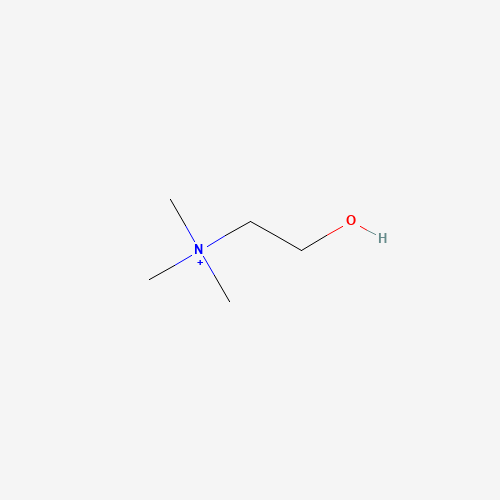
Choline (PubChem CID 305; C5H14NO+, 104.17 g/mol) is a permanently charged quaternary ammonium nutrient. Foods supply free choline plus phosphocholine, glycerophosphocholine, phosphatidylcholine, and sphingomyelin; selected NIH values include beef liver 356 mg/3 oz, one large egg 147 mg, and roasted soybeans 107 mg/½ cup. Choline supports phospholipid synthesis, acetylcholine production, and betaine-dependent one-carbon metabolism. Dietary choline, choline salts, and phosphatidylcholine are exposure forms, whereas citicoline (CDP-choline) and alpha-GPC are separate choline-containing compounds with separate BHWiki slugs; efficacy should not be transferred between them. Gut microbes can convert susceptible choline substrates to trimethylamine and subsequently TMAO. Sources: pubchem-choline; nih-ods-choline; efsa-2016-choline-drvs.
Free choline can be phosphorylated by choline kinase and enter the CDP-choline/Kennedy pathway; PCYT1A catalyzes a regulatory cytidylyltransferase step leading toward phosphatidylcholine, a major membrane and lipoprotein phospholipid. [4]
PEMT provides a hepatic de novo phosphatidylcholine-synthesis route from phosphatidylethanolamine. Estrogen-responsive PEMT activity is one reason endogenous choline-related phospholipid synthesis and dietary requirement can differ by sex and reproductive state. [5]
Choline is a direct substrate for choline acetyltransferase, which forms acetylcholine from choline and acetyl-CoA; this biochemical precursor role does not by itself establish cognitive enhancement from supplemental choline. [4]
Choline oxidation supplies betaine-related one-carbon metabolism. Betaine can donate a methyl group through BHMT to remethylate homocysteine to methionine, linking choline status with methyl-group metabolism. [4]
Gut microbes can metabolize susceptible choline-containing substrates to trimethylamine; host oxidation, principally involving FMO3, generates TMAO. Human TMAO production varies with choline source, formulation, microbiota, and host context. [16]
Analytical quantification by isotope-dilution LC-MS/MS
Human choline/TMAO studies commonly use chromatographic mass-spectrometric methods, including stable-isotope dilution LC-MS/MS, to distinguish choline, TMAO, betaine, dimethylglycine, and labeled isotopologues in plasma or urine. [14]
Source-specific finding from PMID 19262950
OBJECTIVE: The loss of cortical and hippocampal synapses is a universal hallmark of Alzheimer's disease, and probably underlies its effects on cognition. [21]
Source-specific finding from PMID 8372096
Chronic administration of uridine alters dopaminergic activity and related behavior. [24]
Source-specific finding from PMID 24286859
Rising neurodegenerative and depressive disease prevalence combined with the lack of effective pharmaceutical treatments and dangerous side effects, has created an urgent need for the development of effective therapies. [25]
02
Measured outcomes
What the research measured, for whom, and under which exposure. Findings remain attached to the study’s task or clinical endpoint.
During dietary choline depletion, fatty liver or muscle damage developed in 77% of men, 80% of postmenopausal women, and 44% of premenopausal women; organ function normalized with choline repletion. [5]
Population57 healthy adults: 26 men, 16 premenopausal women, and 15 postmenopausal women.Exposure<50 mg choline per 70 kg body weight per day for up to 42 days after a 10-day higher-choline baseline diet.MeasureLiver magnetic-resonance imaging plus serum markers of hepatic and skeletal-muscle injury.
Adding choline chloride to long-term TPN increased liver CT density, consistent with reduced steatosis, and lowered several hepatic aminotransferase measures; steatosis recurred after supplementation stopped. [6]
Population15 patients receiving at least 80% of nutritional requirements through long-term TPN.Exposure2 g/day choline chloride added to TPN for 24 weeks.MeasureLiver computed-tomography density
Infants whose mothers consumed 930 rather than 480 mg/day total choline during the third trimester had faster mean saccadic reaction time when results were averaged across four infant assessment ages. [8]
Population24 infants from a controlled-feeding pregnancy trial; 26 women had been randomized to the two choline-intake groups.ExposureMaternal 480 or 930 mg/day total choline from approximately 27 weeks gestation until delivery.MeasureInfant visual-attention/saccadic reaction-time paradigm.
Children in the maternal 930 mg/day group had higher Sustained Attention Task scores and showed less decline in signal detections across the session than children in the 480 mg/day group. [9]
Population20 children retained from the pregnancy controlled-feeding cohort.ExposureMaternal total choline intake of 480 or 930 mg/day during the third trimester.MeasureSustained Attention Task
Maternal phosphatidylcholine supplementation from 18 weeks gestation through 90 days postpartum did not significantly improve the measured long-term episodic-memory outcome. [11]
Population99 infants tested from a trial in which 140 pregnant women were randomized.ExposureSupplemental phosphatidylcholine reported as 750 mg/day in the publication, with background dietary choline of approximately 360 mg/day.MeasureNot assessed
The phosphatidylcholine and placebo groups did not differ significantly in global development or language development at 10 and 12 months. [11]
Population99 infants tested from a trial in which 140 pregnant women were randomized.ExposureMaternal phosphatidylcholine supplementation beginning at 18 weeks gestation and continuing through 90 days postpartum.MeasureNot assessed
Although 50 mg/kg choline increased plasma choline, it did not improve reaction time, logical reasoning, vigilance, spatial memory, or working memory after exhaustive physical activity. [12]
Population13 healthy men, mean age approximately 28 years.Exposure50 mg/kg body weight choline before experimental test sessions.MeasureCognitive-performance battery assessing reaction time, reasoning, vigilance, spatial memory, and working memory.
Fasting plasma TMAO increased in each intervention arm containing choline bitartrate, whereas four whole eggs/day or a phosphatidylcholine supplement did not significantly raise fasting TMAO. [14]
PopulationHealthy adults with estimated glomerular filtration rate above 60.ExposureDaily choline-bitartrate-containing intervention for 28 days; the supplement-only arm used two 500 mg bitartrate tablets providing approximately 411 mg/day free choline.MeasureMass-spectrometric plasma TMAO quantification
In adults with metabolic syndrome consuming approximately 400 mg/day choline-equivalent from either eggs or choline bitartrate, plasma TMAO was not significantly different between treatments or from baseline. [15]
Population23 adults with metabolic syndrome.ExposureThree eggs/day or a choline-bitartrate supplement, each providing approximately 400 mg/day choline, for four weeks.MeasureStable-isotope-dilution liquid chromatography–tandem mass spectrometry
OBJECTIVE: The loss of cortical and hippocampal synapses is a universal hallmark of Alzheimer's disease, and probably underlies its effects on cognition. [21]
PopulationPopulation described in the PubMed abstractExposureOBJECTIVE: The loss of cortical and hippocampal synapses is a universal hallmark of Alzheimer's disease, and probably underlies its effects on cognition.MeasureNot assessed
BACKGROUND: Brain phospholipid metabolism and membrane fluidity may be involved in the pathophysiology of mood disorders. [23]
PopulationPopulation described in the PubMed abstractExposureBACKGROUND: Brain phospholipid metabolism and membrane fluidity may be involved in the pathophysiology of mood disorders.MeasureNot assessed
Rising neurodegenerative and depressive disease prevalence combined with the lack of effective pharmaceutical treatments and dangerous side effects, has created an urgent need for the development of effective therapies. [25]
PopulationPopulation described in the PubMed abstractExposureRising neurodegenerative and depressive disease prevalence combined with the lack of effective pharmaceutical treatments and dangerous side effects, has created an urgent need for the development of effective therapies.MeasureNot assessed
BACKGROUND: The medical food Souvenaid, containing the specific nutrient combination Fortasyn Connect, is designed to improve synapse formation and function in patients with Alzheimer's disease (AD). [26]
PopulationPopulation described in the PubMed abstractExposureBACKGROUND: The medical food Souvenaid, containing the specific nutrient combination Fortasyn Connect, is designed to improve synapse formation and function in patients with Alzheimer's disease (AD).MeasureNot assessed
Limited research
Study-result plots
15 of 16 findings in this selection lack structured estimates. Different measures, populations, instruments, comparators, or assessment times are shown separately.
03
Doses & routes
Study doses and reference exposures, with route, formulation and duration.
Oral · By mouth · 32 records
04
Pharmacokinetics
Absorption, metabolism and elimination depend on the analyte, route, formulation, physiology and other exposures.
Peak
Formulation- and meal-dependent; no general peak value is established.
Bioavailability
Choline is absorbed from dietary and supplemental forms, but a general absolute human bioavailability value is not established; water-soluble and lipid-soluble forms have different handling.
Metabolism
Choline enters phosphatidylcholine and sphingomyelin synthesis, acetylcholine synthesis, oxidation toward betaine and one-carbon metabolism, and—after gut microbial metabolism of susceptible choline-containing substrates—the trimethylamine/TMAO pathway.
Bioavailability
Choline is absorbed from dietary and supplemental forms, but a general absolute human bioavailability value is not established; water-soluble and lipid-soluble forms have different handling. [4]
Metabolism / metabolites
Choline enters phosphatidylcholine and sphingomyelin synthesis, acetylcholine synthesis, oxidation toward betaine and one-carbon metabolism, and—after gut microbial metabolism of susceptible choline-containing substrates—the trimethylamine/TMAO pathway. [4]
05
Safety & uncertainty
Adverse effects and interactions reported in the cited studies.
Warning
Choline deficiency can injure liver or skeletal muscle
Controlled human depletion produced fatty liver and/or biochemical muscle injury in a substantial proportion of participants, with susceptibility differing by sex and menopausal status. Deliberately inducing low-choline intake is not a safe self-experiment. [5]
Monitor
High chronic intakes can produce adverse effects
NIH ODS identifies fishy body odor, vomiting, excessive sweating and salivation, hypotension, and liver toxicity among effects associated with excessive choline intake. The U.S. adult UL is 3,500 mg/day; lower age-specific ULs apply to minors. [2]
Context
Pregnancy trial doses are not established optimal intake targets
Small controlled-feeding studies found some offspring cognitive advantages with 930 versus 480 mg/day maternal total choline, but another phosphatidylcholine trial was null. These findings do not establish a universal pregnancy dose above the U.S. or EFSA AI. [18]
Warning
TMAO effects are formulation-specific and not equivalent to proven cardiovascular harm
A 28-day trial found higher fasting TMAO and platelet reactivity with choline bitartrate but not whole eggs or phosphatidylcholine. TMAO predicts cardiovascular risk in observational cohorts, while causal inference remains contested and subject to reverse causality. [14]
Monitor
Preserve choline-equivalent versus compound mass
A salt, phospholipid, citicoline, alpha-GPC, and free choline are not interchangeable mass units. Study interpretation should retain the exact ingredient, formulation, salt or phospholipid mass, and choline-equivalent amount when reported. [14]
Context
Source-specific finding from PMID 19262950
OBJECTIVE: The loss of cortical and hippocampal synapses is a universal hallmark of Alzheimer's disease, and probably underlies its effects on cognition. [21]
Warning
Source-specific finding from PMID 24286859
Rising neurodegenerative and depressive disease prevalence combined with the lack of effective pharmaceutical treatments and dangerous side effects, has created an urgent need for the development of effective therapies. [25]
Monitor
Source-specific finding from PMID 25322923
BACKGROUND: The medical food Souvenaid, containing the specific nutrient combination Fortasyn Connect, is designed to improve synapse formation and function in patients with Alzheimer's disease (AD). [26]
Humans require an exogenous supply of choline because endogenous synthesis is insufficient for all individuals; controlled depletion can produce reversible liver or muscle dysfunction.
Supported by controlled feeding depletion/repletion in healthy adults and by reversal of hepatic abnormalities with choline chloride in long-term parenteral-nutrition patients.
Limitation Exact individual requirement varies, and available evidence is insufficient to derive an EAR for the general population.
Higher maternal choline intake during pregnancy may improve selected offspring information-processing and sustained-attention outcomes, but the human evidence is not uniformly positive.
A small controlled-feeding cohort showed faster infant processing and better sustained attention at age seven with 930 versus 480 mg/day; a larger maternal phosphatidylcholine trial found no infant cognitive benefit.
Limitation Trials differ in formulation, timing, background diet, endpoints, and sample size; 930 mg/day is not established as an optimal routine pregnancy dose.
Choline bitartrate can increase fasting plasma TMAO under some intervention conditions, and this response should not be generalized to equal-choline exposure from whole eggs or phosphatidylcholine.
In healthy adults with normal renal function, bitartrate-containing arms increased fasting TMAO over 28 days while egg-only and phosphatidylcholine arms did not; a smaller metabolic-syndrome crossover study reported no treatment difference.
Limitation Small trials and differing populations, diets, microbiomes, renal function, and formulations limit generalization.
Higher TMAO predicted major cardiovascular events in an angiography cohort, but bidirectional Mendelian-randomization analyses did not support genetically predicted TMAO as a cause of tested cardiovascular endpoints after multiple-testing correction and suggested reverse causality from diabetes or kidney disease.
Limitation Metabolite association, genetic-instrument analyses, and short-term feeding studies answer different causal questions and do not directly estimate long-term cardiovascular effects of dietary choline.
associated-withAuthored relationship
Choline is associated with the reported cognitive performance finding in this publication.