The substance library

Alpha-GPCNootropic

Also known as: L-alpha-glycerylphosphorylcholine · L-alpha-GPC · choline alfoscerate · sn-glycero-3-phosphocholine · glycerophosphocholine

Alpha-GPC: Human ADME evidence supports Alpha-GPC as an orally absorbed source of free choline and glycerophosphate, while choline is a precursor used in acetylcholine synthesis. This precursor relationship does not by itself establish increased brain acetylcholine after a given oral dose or a clinical cognitive benefit.
18 sourcesContent date Oct 10, 2026CompareExplore connectionsRevision history
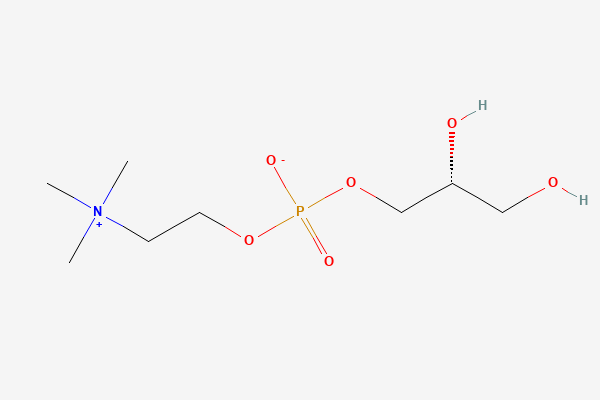
Alpha-GPC molecular structure
PubChem
01

Overview

Alpha-GPC: Human ADME evidence supports Alpha-GPC as an orally absorbed source of free choline and glycerophosphate, while choline is a precursor used in acetylcholine synthesis. This precursor relationship does not by itself establish increased brain acetylcholine after a given oral dose or a clinical cognitive benefit.

How it works

Choline precursor pathway

Human ADME evidence supports Alpha-GPC as an orally absorbed source of free choline and glycerophosphate, while choline is a precursor used in acetylcholine synthesis. This precursor relationship does not by itself establish increased brain acetylcholine after a given oral dose or a clinical cognitive benefit. [9]

Acetylcholine precursor

The physiology study frames GPC as a putative acetylcholine precursor that could influence growth hormone through acetylcholine-stimulated catecholamine pathways. [17]

02

Subjective effects

Reported experiences are kept separate from measured outcomes and remain tied to their cited context.

Increased
Human research

A small 2-week healthy-volunteer study reported a signal for higher, especially nighttime, subjective motivation after 400 mg/day; anxiety did not differ. This is a subjective endpoint, not objective cognitive enhancement. [15]

Population
39 healthy volunteers
Exposure context
400 mg/day oral Alpha-GPC for 2 weeks
Variable
Human research

Acute 315 or 630 mg doses did not significantly change visual-analog alertness, concentration, mood, or motivation versus placebo. [6]

Population
20 healthy resistance-trained men
Exposure context
Single oral 315 or 630 mg Alpha-GPC dose
Increased
Human research

A single 1,000 mg GPC dose increased plasma growth hormone at 60 minutes versus placebo. [17]

Population
Eight healthy young men
Exposure context
1,000 mg GPC
03

Measured outcomes

What the research measured, for whom, and under which exposure. Findings remain attached to the study’s task or clinical endpoint.

Cognitive and global-rating scales favored 400 mg three times daily over placebo; this is symptom-scale evidence, not disease modification. [2]

PopulationAdults with mild-to-moderate Alzheimer dementiaExposure1,200 mg/day Alpha-GPC for 180 daysMeasureAlzheimer cognitive and global clinical rating scales
Human research

A 2023 review of seven RCTs and one cohort favored Alpha-GPC on MMSE, but heterogeneity was extreme and some change-score SDs were imputed. [3]

Population861 participants across mixed cognitive-impairment studiesExposureUsually 1,200 mg/day for 90–180 daysMeasureMMSE
Human research

Seven days of 250 or 500 mg/day increased serum free choline but did not improve psychomotor vigilance or primary isometric-strength outcomes. [5]

PopulationHealthy college-aged menExposure250 or 500 mg/day for 7 daysMeasurePsychomotor vigilance test
Human research

A small crossover study found a lower-body force signal after 600 mg/day, while upper-body strength was not significant; large variance limits certainty. [4]

Population13 healthy college-aged menExposure600 mg/day for 6 daysMeasureIsometric mid-thigh pull
Human research

In a small acute crossover, both doses improved change in Stroop total score versus placebo and 630 mg reduced completion time; N-back and most Flanker outcomes were null. [6]

Population20 healthy resistance-trained menExposureSingle 315 or 630 mg doseMeasureStroop, N-back and Flanker tasks
Human research

Plasma free choline increased at 60 and 120 minutes after GPC. [17]

PopulationEight healthy young menExposure1,000 mg GPCMeasurePlasma free choline
Human research

Free fatty acids, acetoacetate and 3-hydroxybutyrate increased 120 minutes after GPC, consistent with increased hepatic fat oxidation. [17]

PopulationEight healthy young menExposure1,000 mg GPCMeasureSerum free fatty acids, acetoacetate and β-hydroxybutyrate
Human research

A 180-day choline alfoscerate trial reported improved ADAS-Cog, MMSE and other scales in mild-to-moderate Alzheimer dementia; this is a different population and formulation from acute GPC physiology. [18]

Population261 patients with mild-to-moderate Alzheimer dementiaExposure400 mg capsules three times daily for 180 daysMeasureADAS-Cog, MMSE, GDS, CGI
Human research
04

Doses & routes

Study doses and reference exposures, with route, formulation and duration.

Oral · By mouth · 7 records

Alzheimer disease placebo-controlled trial

Research exposure

1,200 mg/day [2]

Ingredient / form
Choline alfoscerate · 400 mg oral capsules
Route
Oral
Frequency
Three times daily
Duration
180 days
Population
Adults aged 60–80 years with mild to moderate Alzheimer-type dementia
Purpose
Cognitive-efficacy research exposure

This is a trial exposure, not a general dosing recommendation.

Donepezil adjunct randomized comparison

Research exposure

1,200 mg/day [7]

Ingredient / form
Choline alfoscerate · Newglia 400 mg tablets
Route
Oral
Frequency
Three times daily
Duration
24 weeks
Population
Adults aged 50–84 years with Alzheimer disease and MMSE 26 or less already taking stable donepezil
Purpose
Adjunct cognitive-efficacy research exposure

The randomized donepezil-plus-Alpha-GPC versus donepezil-only primary MMSE comparisons were not statistically significant at weeks 12 or 24.

Six-day strength crossover trial

Research exposure

600 mg/day [4]

Ingredient / form
Alpha-GPC · AlphaSize capsules with third-party certificate of analysis
Route
Oral
Frequency
Divided between morning and evening
Duration
6 days
Population
13 healthy college-aged men
Purpose
Isometric-force research exposure

Small crossover trial; a day-6 lower-body force signal was not accompanied by a significant upper-body result.

Seven-day healthy-performance dose-ranging trial

Research exposure

250–500 mg/day [5]

Ingredient / form
Alpha-GPC · Chemi Nutra capsules with active content independently verified by quantitative NMR
Route
Oral
Frequency
Once daily
Duration
7 days
Population
Healthy college-aged men
Purpose
Physical and psychomotor performance research exposure

Separate randomized Alpha-GPC arms received 250 or 500 mg/day; neither dose produced a significant Alpha-GPC advantage on IMTP, UBIST or psychomotor vigilance.

Acute healthy-cognition crossover doses

Research exposure

315–630 mg [6]

Ingredient / form
Alpha-GPC · GeniusPure; nominal 90% Alpha-GPC material, with the tested batch reported as 91.6% by third-party analysis
Route
Oral
Frequency
Single administration
Duration
Single dose
Population
20 healthy resistance-trained men
Purpose
Acute cognition and physical-performance research exposure

The 315 mg dose was delivered as 350 mg material and the 630 mg dose as 700 mg material; the study was industry funded.

EFSA-assessed proposed novel-food use level

Reference description

203.7 mg/day [9]

Ingredient / form
L-alpha-GPC · GPC 85% or Alpha Size 100P from phosphatidylcholine-enriched soy lecithin
Route
Oral
Frequency
Daily proposed food-supplement use
Duration
Not a clinical treatment regimen
Population
Proposed target population above 3 years of age, including pregnant and lactating people
Purpose
Novel-food safety assessment use level corresponding to 82.5 mg/day choline

EFSA concluded the specified novel food was safe under these proposed conditions; this exposure is not interchangeable with therapeutic trial doses and an EFSA opinion is not itself a marketing authorization.

Healthy-volunteer physiology

Research exposure

1,000 mg [17]

Ingredient / form
α-Glycerophosphocholine · Oral GPC
Route
Oral
Frequency
Single dose
Duration
Acute; samples at 60 and 120 min
Population
Eight healthy men aged ~25 years
Purpose
Acute endocrine/metabolic physiology

No cognitive testing was reported.

05

Pharmacokinetics

Absorption, metabolism and elimination depend on the analyte, route, formulation, physiology and other exposures.

Elimination half-life · Plasma free choline
Parent compound half-life not established

Timing explorer

Measured plasma timing · Plasma free choline
Oral · 1,200 mg oral Alpha-GPC

12 healthy men in a placebo-controlled crossover study summarized by EFSA

Elapsed timingEach pair of points is an independent reported range; color follows the reported phase.
hours
PeakOnset / rise
  • Onset: 45 min–45 min
  • Peak: 2 h–2 h

Plasma free choline, not parent Alpha-GPC, increased significantly from 0.75 hours and reached the reported maximum at 2 hours; these times must not be interpreted as subjective onset or parent-drug elimination.

Reported ranges retain the source context. Phase durations are not added together to construct a timeline. Source

Modeled elimination

The elimination model describes the named analyte after absorption and distribution. It does not establish felt-effect timing.

Oral · 1,200 mg Alpha-GPC film-coated tablet or soft-gel reference · not-established

Not modeled

Elimination model

An elimination model is not established for this observation.

Source-bound record

This observation provides context about the measured record, but it does not support a first-order elimination curve.

Measured analyte
Plasma free choline
Route
Oral
Formulation
1,200 mg Alpha-GPC film-coated tablet or soft-gel reference
Population
48 healthy Korean men completing a fasting crossover bioequivalence study

Source context

Baseline-corrected plasma choline was measured by LC-MS/MS. Mean AUC0-inf was 3.428 versus 3.305 microgram-hours/mL, Cmax 0.365 versus 0.380 microgram/mL, and Tmax 3.51 versus 3.85 hours across formulations. These are downstream choline metrics; intact Alpha-GPC half-life was not measured.
Read source context
Review the supporting record and source details.

Inspected human oral evidence characterized plasma free choline after Alpha-GPC rather than a validated elimination half-life for parent Alpha-GPC. [9]

Sourced elimination observations

Plasma free choline

Approximate estimate

Not established [9]

Route / formulation
Oral · Alpha-GPC study preparation
Population
Healthy adults in the controlled-diet experiment summarized by EFSA

Plasma free choline increased from about 0.75 hours and reached a reported maximum near 2 hours after 1,200 mg Alpha-GPC. This supports a downstream biomarker response, not intact-parent absorption or elimination.

Plasma free choline

No numeric estimate

Not established [14]

Route / formulation
Oral · 1,200 mg Alpha-GPC film-coated tablet or soft-gel reference
Population
48 healthy Korean men completing a fasting crossover bioequivalence study

Baseline-corrected plasma choline was measured by LC-MS/MS. Mean AUC0-inf was 3.428 versus 3.305 microgram-hours/mL, Cmax 0.365 versus 0.380 microgram/mL, and Tmax 3.51 versus 3.85 hours across formulations. These are downstream choline metrics; intact Alpha-GPC half-life was not measured.

Serum free choline

No numeric estimate

Not established [5]

Route / formulation
Oral · Alpha-GPC capsules
Population
48 healthy young men in a 7-day randomized trial

Serum free choline rose in the 250 and 500 mg/day groups, while psychomotor vigilance did not improve. A biomarker increase cannot be treated as cognitive efficacy or as a parent-compound half-life.

Bioavailability
Alpha-GPC is described as rapidly and efficiently absorbed, but an absolute human oral bioavailability percentage was not established. [9]
Metabolism / metabolites
Alpha-GPC supplies free choline and glycerophosphate; choline participates in acetylcholine and betaine pathways. [9]
06

Safety & uncertainty

Adverse effects and interactions reported in the cited studies.

Warning

Short-term tolerability

Health Canada’s review of oral exposure up to 1,200 mg/day reported transient agitation, gastrointestinal symptoms, insomnia, nausea, headache, fever and hypotension in small studies; uncommon or delayed harm remains uncertain. [11]

Monitor

Observational stroke signal

A Korean claims cohort found higher incident total, ischemic and hemorrhagic stroke among Alpha-GPC users after matching. The association is observational and vulnerable to residual confounding; it does not establish causality. [8]

Context

Pregnancy and pediatric evidence gap

Therapeutic-dose pregnancy, lactation and pediatric efficacy data were not identified. EFSA’s proposed 203.7 mg/day novel-food use level is a lower regulatory exposure and cannot be extrapolated to 1,200 mg/day trials. [9]

Warning

Organ-impairment evidence gap

No dedicated renal or hepatic impairment PK study or evidence-based dose adjustment was identified; healthy-volunteer tolerability does not establish safety in organ disease. [14]

Monitor

Small acute study

The endocrine/metabolic findings came from only eight healthy men and did not measure cognition. [17]

Interactions in cited sources

Explore a pair of substances
07

Research & sources

18

Original publications, findings and available funding disclosures.

Reports elsewhere

This link leaves BHWiki for an outside experience index. It is not a finding, a dose, or a source for the claims above. The report text is not stored here.

08

Connected claims

Explore the participants, roles and sources behind each relationship.

precursor-ofAuthored relationship

Alpha-GPC supplies downstream free choline after oral dosing.

Alpha-GPCprecursor
Choline precursormetabolic-product

Human studies measured increased plasma free choline after Alpha-GPC; intact-parent brain exposure was not established.

Limitation A plasma biomarker does not establish cognitive benefit or CNS delivery.

associated-withAuthored relationship

Alpha-GPC has a heterogeneous cognitive-impairment signal centered on 1,200 mg/day.

Alpha-GPCintervention

Older trials and a 2023 meta-analysis favored some rating scales, with extreme heterogeneity and limited modern replication.

Limitation Results do not establish disease modification or healthy-person enhancement.

associated-withAuthored relationship

A single 1,000 mg GPC dose increased choline, growth hormone and fat-oxidation markers in healthy men.

Alpha-GPCintervention or exposure
Growth hormonereported endpoint

Publication abstract and/or retrieved PMC text; this is not a pooled efficacy estimate.

Limitation Publication-level association; direction and generalizability depend on the cited study.

associated-withAuthored relationship

Choline alfoscerate improved several cognitive scales in mild-to-moderate Alzheimer dementia over 180 days.

Alpha-GPCintervention or exposure

Publication abstract and/or retrieved PMC text; this is not a pooled efficacy estimate.

Limitation Publication-level association; direction and generalizability depend on the cited study.

Explore the relationship graph
10

Publication history

Content updated Oct 10, 2026.

Keep exploring

View graph