The substance library

ThiamineVitamin and mineral

Thiamine, or vitamin B1, supports enzymes involved in energy metabolism. Research explores its relationship to brain function and memory.
7 sourcesContent date Nov 1, 2026CompareExplore connectionsRevision history
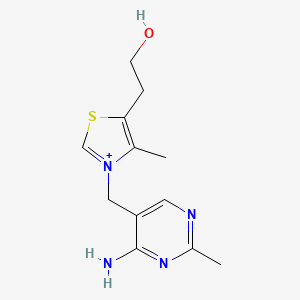
Thiamine molecular structure
PubChem
01

Overview

Thiamine, or vitamin B1, supports enzymes involved in energy metabolism. Research explores its relationship to brain function and memory.

How it works

Explicit mechanistic or disposition finding (PMID 25994133)

Chronic stress affects brain areas involved in learning and emotional responses through modulation of neurotropic factors or neurotransmitters. [3]

02

Measured outcomes

What the research measured, for whom, and under which exposure. Findings remain attached to the study’s task or clinical endpoint.

An improvement in thiamine status was associated with reports of being more clearheaded, composed and energetic. [2]

Populationtwenty young adult females took either a placebo or 50 mg thiamine, each day for 2 monthsExposureOne hundred and twenty young adult females took either a placebo or 50 mg thiamine, each day for 2 months.MeasureNot assessed
Human research

Memory

Variable

Chronic immobilization stress resulted in a significant decrease in BDNF and Ach levels in the hippocampus and impairment in spatial memory functions and decreased basal activity. However, either swimming training or thiamine intake for 30 d was proved to induce a significant increase both in BDNF and Ach in conjunction with improved performance in the T maze, marked anxiolytic effect and enhanced ambulation in the open field test, as compared to the stress group. Interestingly, swimming-exercised rats showed significantly higher levels of BDNF versus thiamine-receiving rats, while thiamine-receiving rats showed higher locomotor activity and less freezing behavior in the open field test compared to the swimming group. [3]

Population8 rats/group): control groupExposureMale Wistar rats were randomly assigned to 4 groups (8 rats/group): control group; stress group; swimming and stress group; and thiamine and stress group.MeasureNot assessed
Limited research
03

Doses & routes

Study doses and reference exposures, with route, formulation and duration.

Other routes · Other or unspecified · 2 records

PMID 9122365 study exposure: 50 mg

Research exposure

50 mg [2]

Ingredient / form
Thiamine · Study formulation as stated in the abstract
Frequency
As stated in the abstract
Duration
Study duration as stated in the abstract
Population
twenty young adult females took either a placebo or 50 mg thiamine, each day for 2 months
Purpose
Research exposure; not a general-use recommendation

One hundred and twenty young adult females took either a placebo or 50 mg thiamine, each day for 2 months

PMID 1986037 study exposure: 10 mg

Research exposure

10 mg [7]

Ingredient / form
Thiamine · Study formulation as stated in the abstract
Frequency
As stated in the abstract
Duration
Study duration as stated in the abstract
Population
For treatment, subjects were randomly assigned to either thiamin (10 mg daily) or placebo groups.
Purpose
Research exposure; not a general-use recommendation

For treatment, subjects were randomly assigned to either thiamin (10 mg daily) or placebo groups

04

Pharmacokinetics

Absorption, metabolism and elimination depend on the analyte, route, formulation, physiology and other exposures.

No pharmacokinetic observation was supplied by this identity import. [1]

05

Research & sources

7

Original publications, findings and available funding disclosures.

06

Connected claims

Explore the participants, roles and sources behind each relationship.

associated-withAuthored relationship

An improvement in thiamine status was associated with reports of being more clearheaded, composed and energetic.

Thiamineintervention or exposure

PMID 9122365 abstract result/conclusion; direction and population are retained on the linked observation.

Limitation Single publication; the abstract does not establish general efficacy or safety.

associated-withAuthored relationship

Chronic immobilization stress resulted in a significant decrease in BDNF and Ach levels in the hippocampus and impairment in spatial memory functions and decreased basal activity. However, either swimming training or thiamine intake for 30 d was proved to induce a significant increase both in BDNF and Ach in conjunction with improved performance in the T maze, marked anxiolytic effect and enhanced ambulation in the open field test, as compared to the stress group. Interestingly, swimming-exercised rats showed significantly higher levels of BDNF versus thiamine-receiving rats, while thiamine-receiving rats showed higher locomotor activity and less freezing behavior in the open field test compared to the swimming group.

Thiamineintervention or exposure
Memory performancereported endpoint

PMID 25994133 abstract result/conclusion; direction and population are retained on the linked observation.

Limitation Single publication; the abstract does not establish general efficacy or safety.

Explore the relationship graph
07

Publication history

Content updated Nov 1, 2026.

Keep exploring

View graph