The substance library

AlprazolamA labeled benzodiazepine.

Also known as: Xanax

Alprazolam is a benzodiazepine that enhances GABA-A receptor signalling. Research examines anxiety, sedation and memory.
19 sourcesContent date Oct 16, 2026CompareExplore connectionsRevision history
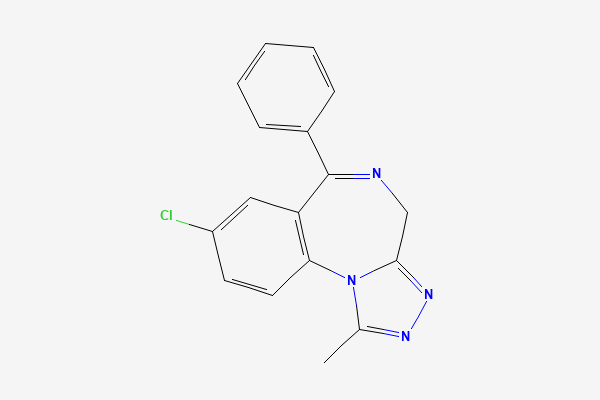
Alprazolam molecular structure
PubChem
01

Overview

Alprazolam has molecular formula C17H13ClN4, molecular weight 308.8 g/mol, and the preserved BHWiki connectivity SMILES CC1=NN=C2N1C3=C(C=C(C=C3)Cl)C(=NC2)C4=CC=CC=C4. This record describes parent alprazolam and does not merge evidence from other benzodiazepines or other CNS depressants into alprazolam treatment evidence. Other substances appear only when a trial used them as comparators or when they define a documented interaction context. Sources: pubchem.

Immediate-release alprazolam has dose-proportional plasma concentrations over the 0.5–3 mg range described in the current label, reaches maximum plasma concentration in about 1–2 hours after oral administration, and has a labeled healthy-adult mean elimination half-life of approximately 11.2 hours with substantial interindividual variation. In six fasting healthy men given 1 mg both orally and intravenously, mean oral half-life was 11.8 hours and estimated mean absorbed fraction was 0.92. The objective psychomotor impairment measured in that experiment had returned to baseline at the five-hour assessment despite a much longer plasma elimination half-life, illustrating why half-life should not be reported as subjective or functional duration. Sources: alprazolam-label; smith-kroboth-1984.

Alprazolam is metabolized principally by CYP3A4. The current label identifies 4-hydroxyalprazolam and α-hydroxyalprazolam as major active metabolites but reports plasma concentrations of each below 4% of parent in the studies underlying the immediate-release label. In a healthy-male sustained-release study spanning single oral doses of 2–10 mg, concentrations of both hydroxylated metabolites rose with dose and their combined plasma concentrations remained below 15% of unchanged alprazolam. The metabolites therefore demonstrate measurable systemic exposure but should not be assumed to dominate clinical effects. Sources: alprazolam-label; wright-1997.

Extended-release alprazolam has a deliberately slower absorption profile. The XANAX XR label reports a morning-dose Tmax of about 10 hours, approximately 90% absolute bioavailability, and about 100% relative bioavailability compared with immediate-release XANAX; parent alprazolam and its two major active metabolites show linear pharmacokinetics through 10 mg once daily. Those XR values should not be substituted for immediate-release peak timing. Sources: xanax-xr-label.

How it works

Positive allosteric modulation at the GABAA benzodiazepine site

Alprazolam binds to the benzodiazepine site associated with GABAA receptors and enhances GABA-mediated synaptic inhibition. The resulting CNS-depressant pharmacology provides a mechanistic basis for anxiolytic, sedative, amnestic, anticonvulsant, and psychomotor effects but does not by itself establish a clinical effect size for any indication. [1]

CYP3A-dependent oxidative metabolism

CYP3A4 is the principal pathway identified in current U.S. labeling for formation of 4-hydroxyalprazolam and α-hydroxyalprazolam. This pathway explains the large exposure changes produced by potent CYP3A inhibitors and the increased clearance observed with enzyme induction. [1]

Low circulating exposure to active hydroxylated metabolites

The current immediate-release label reports plasma concentrations of 4-hydroxyalprazolam and α-hydroxyalprazolam below 4% of parent concentrations. A sustained-release healthy-volunteer study likewise found that the combined concentrations of these metabolites remained below 15% of unchanged alprazolam over 2–10 mg single doses, arguing against assuming that circulating metabolites dominate the observed acute effects. [8]

Exposure–performance relationship

In sustained-release healthy-volunteer research, parent-drug AUC and Cmax rose proportionally over 2–10 mg while maximum sedation increased through 8 mg and psychomotor performance worsened as dose increased. Concentration-effect hysteresis showed that plasma concentration and effect-site response are not perfectly synchronous. [8]

02

Subjective effects

Reported experiences are kept separate from measured outcomes and remain tied to their cited context.

Increased
Human research

Sedation is a reproducible acute alprazolam effect. In the current immediate-release label's four-week GAD trials, drowsiness was reported in 41% of alprazolam-treated patients and 22% of placebo-treated patients. Controlled healthy-volunteer studies likewise detected dose-related sedation, so this adverse effect should not be equated with anxiolytic efficacy. [1]

Population
Adults with generalized anxiety disorder in placebo-controlled trials
Exposure context
Immediate-release alprazolam up to 4 mg/day in the labeled trial pool
Increased
Human research

In six fasting healthy men given 1 mg alprazolam, both oral and intravenous dosing produced sedation. Oral sedation was lower during the first hour than after the intravenous comparator but was not significantly different at later assessments. This establishes a route-dependent early sedation profile, not a general subjective duration for oral alprazolam. [7]

Population
6 healthy men aged 20–32 years
Exposure context
Single 1 mg oral tablet
Variable
Human research

In a placebo-controlled dose-ranging healthy-volunteer experiment, performance changes became more apparent as dose increased, but visual-analog ratings of drug effect did not show drug-related changes. This is a negative subjective-effect finding and should not be converted into evidence that alprazolam lacks anxiolytic effects in patients with anxiety disorders. [9]

Population
Healthy volunteers without extensive sedative-use histories
Exposure context
Single oral doses of 0.25, 0.5, and 1 mg
Variable
Human research

In elderly participants treated for four days, sedation and performance impairment were dose-related but were not greater on day 4 despite alprazolam concentrations two to three times those on day 1. The authors interpreted this as tolerance, although measured performance had not returned to baseline. [12]

Population
26 elderly participants
Exposure context
0.25 mg every 8 hours, 0.5 mg every 8 hours, or 2 mg every 12 hours for 4 days
03

Measured outcomes

What the research measured, for whom, and under which exposure. Findings remain attached to the study’s task or clinical endpoint.

In a four-week randomized placebo-controlled GAD trial, alprazolam 1.5 mg/day reduced total HAM-A scores more than placebo at the LOCF endpoint. This was a fixed-dose short-term trial and does not establish longer-term benefit. [5]

PopulationAdults meeting DSM-IV criteria for generalized anxiety disorderExposureAlprazolam 1.5 mg/day for 4 weeks after a one-week titrationMeasureHamilton Anxiety Rating Scale total score
Human research

The same GAD trial preserved a component-level null: the HAM-A somatic factor did not differ significantly between alprazolam and placebo at week 1 (P=.21) or the LOCF endpoint (P=.15), despite a significant total-score and psychic-factor effect. [5]

PopulationAdults with DSM-IV generalized anxiety disorderExposureAlprazolam 1.5 mg/dayMeasureHAM-A somatic factor
Human research

In 1,168 randomized participants across 12 centers, alprazolam showed improvement by weeks 1–2 and was superior to placebo for most outcome measures at week 8. The publication reports a broad multicenter efficacy signal but does not provide a single modern standardized effect estimate in the accessible abstract. [4]

PopulationPatients with panic disorderExposureEight weeks of double-blind alprazolam treatmentMeasureMultiple panic-disorder clinical measures
Human research

A regulatory-data analysis identified five phase 2/3 alprazolam-XR efficacy trials submitted to FDA, only one of which was clearly positive. Incorporating the unpublished evidence yielded a smaller estimated standardized benefit than the published literature alone. This is an analysis of the regulatory trial portfolio, not one new treatment trial. [6]

PopulationFDA phase 2/3 alprazolam-XR panic-disorder trial portfolioExposureExtended-release alprazolam versus placeboMeasureFDA regulatory efficacy-trial synthesis
Human research

A randomized double-blind placebo-controlled crossover study in 20 healthy volunteers found serious impairment of standardized on-road driving after 1 mg alprazolam, alongside impairment on memory and psychomotor laboratory tests and reduced subjective alertness. The experiment assessed an acute healthy-volunteer exposure rather than therapeutic functioning after adaptation to treatment. [10]

Population20 healthy volunteersExposureSingle oral 1 mg doseMeasureStandardized highway driving test and laboratory psychomotor battery
Human research

Across 0.25, 0.5, and 1 mg oral doses in healthy volunteers, dose-related changes occurred on nearly all performance tasks, but effects were statistically significant principally after 1 mg. This preserves the lower-dose nulls instead of assuming uniform impairment at every dose. [9]

PopulationHealthy volunteers without histories of extensive sedative useExposureSingle oral 0.25, 0.5, and 1 mg dosesMeasureDigit-symbol substitution, repeated acquisition, time-estimation, number-recognition, and related behavioral tasks
Human research

After 0.5 mg nightly for two weeks, the alprazolam group showed statistically significant impairment on one Paired Associates Learning parameter and selected Delayed Matching to Sample measures. The study was small, limited to young healthy men, used nighttime dosing, and tested about eight hours after the final dose. [11]

Population26 healthy men aged 20–23 years, randomized 13 alprazolam and 13 placeboExposure0.5 mg nightly for 2 weeksMeasureCambridge Neuropsychological Test Automated Battery, PAL and DMS
Human research

The same two-week study did not find a significant adverse effect on choice-reaction-time latency and did not establish a detrimental treatment-by-time effect on the reported attention measures. These nulls coexist with the study's selected visual-memory impairments. [11]

Population26 healthy young menExposure0.5 mg nightly for 2 weeksMeasureCANTAB Rapid Visual Information Processing and Choice Reaction Time
Human research

In the six-subject oral/IV crossover, perceptual-speed and digit-symbol performance were impaired at early post-dose assessments but had returned to baseline at the five-hour assessment. This objective task window is not evidence that all subjective or therapeutic effects end at five hours. [7]

Population6 fasting healthy menExposureSingle oral 1 mg doseMeasurePerceptual Speed and Digit-Symbol Substitution tests
Human research

In a controlled healthy-volunteer interaction study, alprazolam 2 mg caused prolonged impairment in tracking, information processing, and memory; ethanol produced additive decrements on some tasks, but the investigators found little evidence for a synergistic rather than additive interaction under the tested conditions. [15]

PopulationHealthy volunteersExposureAlprazolam alone and in documented ethanol interaction conditionsMeasurePsychomotor and cognitive performance battery
Human research

In a small double-blind healthy-volunteer study, the alprazolam-oxycodone combination produced more pronounced or longer-lasting behavioral impairment than either condition alone on several measures, while alprazolam alone did not increase drug-liking measures and the combination did not clearly enhance oxycodone liking. The tested doses do not quantify real-world overdose risk. [16]

Population20 healthy volunteersExposureAlprazolam 0.5 mg, oxycodone 10 mg, their combination, and placeboMeasureSubjective drug-effect ratings and psychomotor/behavioral testing
Human research
Study-result plots

9 of 11 findings in this selection lack structured estimates. Different measures, populations, instruments, comparators, or assessment times are shown separately.

Generalized anxiety disorder total symptom severity
Hamilton Anxiety Rating Scale total score · mean-difference · HAM-A points

Adults with DSM-IV generalized anxiety disorder · Comparator: Placebo · Assessment: LOCF endpoint after 4 weeks

Study estimates and reported confidence intervals for Generalized anxiety disorder total symptom severity. Linear horizontal axis.1-5.29-3.82-2.36-0.8970.566

Each point is one reported estimate. Intervals are displayed only when recorded. No pooled estimate is calculated. The dashed line marks the no-effect value (0).

Study / substanceEstimateIntervalEvidence
1. Alprazolam
rickels-gad-2005
-2.55 HAM-A points95% CI -4.72–-0.39
Panic-disorder efficacy after accounting for unpublished XANAX XR trials
FDA regulatory efficacy-trial synthesis · standardized-mean-difference · Hedges g

Participants in phase 2/3 alprazolam-XR panic-disorder efficacy trials · Comparator: Placebo · Assessment: Trial endpoints

Study estimates and reported confidence intervals for Panic-disorder efficacy after accounting for unpublished XANAX XR trials. Linear horizontal axis.1-0.0720.1140.30.4860.672

Each point is one reported estimate. Intervals are displayed only when recorded. No pooled estimate is calculated. The dashed line marks the no-effect value (0).

Study / substanceEstimateIntervalEvidence
1. Alprazolam
Unpublished trials of alprazolam XR and their influence on its apparent efficacy for panic disorder
0.33 Hedges g95% CI 0.07–0.6
04

Doses & routes

Study doses and reference exposures, with route, formulation and duration.

Food timing and solubility labels describe the cited route or formulation. Solubility alone does not establish whether food changes absorption.

Oral · By mouth · 11 records

Generalized anxiety disorder starting dose

Approved-label context

0.25–0.5 mg [1]

With or without food
Ingredient / form
Alprazolam · Immediate-release tablet
Route
Oral
Frequency
Three times daily
Duration
Acute labeled treatment; dosage may be increased every 3 to 4 days
Population
Adults with generalized anxiety disorder
Purpose
U.S.-labeled starting dose

The maximum recommended total daily dose is 4 mg in divided doses. The label directs use of the lowest effective dose and periodic reassessment of continued treatment.

Panic disorder starting dose

Approved-label context

0.5 mg [1]

With or without food
Ingredient / form
Alprazolam · Immediate-release tablet
Route
Oral
Frequency
Three times daily
Duration
Labeled treatment; increases are no more than 1 mg/day at intervals of 3 to 4 days
Population
Adults with panic disorder, with or without agoraphobia
Purpose
U.S.-labeled starting dose

Controlled trials included total daily doses from 1 to 10 mg; mean doses were about 5 to 6 mg/day in two studies. The label calls for periodic reassessment at doses above 4 mg/day.

Labeled discontinuation rate

Approved-label context

0.5–0.5 mg [1]

Ingredient / form
Alprazolam · Immediate-release tablet
Route
Oral
Frequency
Each dose reduction no more frequently than every 3 days
Duration
Individualized taper
Population
Patients discontinuing or reducing alprazolam
Purpose
Reduce risk of withdrawal reactions

Some patients require a slower taper. The label warns that abrupt discontinuation or rapid reduction can cause acute, potentially life-threatening withdrawal reactions.

Geriatric or hepatic-impairment starting dose

Approved-label context

0.25–0.25 mg [1]

Ingredient / form
Alprazolam · Immediate-release tablet
Route
Oral
Frequency
Two or three times daily
Duration
Individualized treatment
Population
Geriatric patients or patients with hepatic impairment
Purpose
U.S.-labeled reduced starting dose

Further titration depends on response and tolerability.

XANAX XR starting and recommended dose range for panic disorder

Approved-label context

0.5–6 mg/day [2]

Ingredient / form
Alprazolam · Extended-release tablet
Route
Oral
Frequency
Once daily, preferably in the morning
Duration
Labeled treatment; increases at intervals of 3 to 4 days
Population
Adults with panic disorder, with or without agoraphobia
Purpose
U.S.-labeled extended-release treatment

Dose increments should not exceed 1 mg/day. Controlled trials included 1–10 mg/day, while most responding patients were in the 3–6 mg/day range. Longer-term efficacy beyond 8 weeks has not been systematically evaluated by the label.

Generalized anxiety disorder randomized-trial exposure

Research exposure

1.5–1.5 mg/day [5]

Ingredient / form
Alprazolam · Oral tablet
Route
Oral
Frequency
Three divided doses
Duration
4 weeks, followed by a 1-week taper
Population
Adults meeting DSM-IV criteria for generalized anxiety disorder
Purpose
Placebo-controlled anxiety-treatment research

Alprazolam began at 0.5 mg/day, increased to 1.0 mg/day on day 4 and to 1.5 mg/day on day 7. The trial randomized 93 patients to alprazolam and 91 to placebo, alongside comparator arms not treated as alprazolam evidence here.

Acute driving and cognitive crossover exposure

Research exposure

1–1 mg [10]

Ingredient / form
Alprazolam · Oral tablet
Route
Oral
Frequency
Single dose
Duration
Acute assessment
Population
20 healthy volunteers
Purpose
Driving, memory, and psychomotor research

On-road driving was assessed one hour after dosing and laboratory performance later in the session.

Acute healthy-volunteer dose-ranging exposure

Research exposure

0.25–1 mg [9]

Ingredient / form
Alprazolam · Oral tablet
Route
Oral
Frequency
Single dose per active session
Duration
Performance tasks during 3 hours after dosing
Population
Healthy volunteers without histories of extensive sedative use
Purpose
Acute behavioral and performance research

Placebo sessions separated successive active-dose sessions. Statistically significant impairment was chiefly observed after 1 mg.

Oral-versus-intravenous pharmacokinetic exposure

Research exposure

1–1 mg [7]

Ingredient / form
Alprazolam · Immediate-release oral tablet
Route
Oral
Frequency
Single dose
Duration
Plasma sampling through 36 hours
Population
6 fasting healthy men aged 20–32 years
Purpose
Oral pharmacokinetics and pharmacodynamics

Each participant also received a 1 mg intravenous dose in the crossover comparison; the IV exposure is a comparator and is not an oral dosing recommendation.

Repeated low-dose healthy-volunteer exposure

Research exposure

0.5–0.5 mg/day [11]

Ingredient / form
Alprazolam · Oral tablet
Route
Oral
Frequency
Once nightly
Duration
2 weeks
Population
26 healthy male volunteers aged 20–23 years, 13 assigned alprazolam and 13 placebo
Purpose
Memory, attention, and psychomotor research

Cognitive testing after treatment occurred about 8 hours after the final dose; the nighttime schedule and low dose differ from usual divided-dose anxiety treatment.

Outpatient medication-choice exposure

Research exposure

0.5 mg [13]

Ingredient / form
Alprazolam · Oral capsule prepared for the study
Route
Oral
Frequency
As needed under the study choice procedure
Duration
2-week sampling period followed by a 4-week choice period
Population
14 outpatients with generalized anxiety or panic disorder and no current psychoactive-substance abuse
Purpose
Reinforcement and self-medication research

Daily alprazolam use ranged from zero to 4 mg during the study. This was an experimental outpatient choice procedure, not a dosing recommendation.

05

Pharmacokinetics

Absorption, metabolism and elimination depend on the analyte, route, formulation, physiology and other exposures.

Elimination half-life · Alprazolam
Mean about 11.2 hours

Timing explorer

Published timing evidence
The source reports timing terms but does not provide numeric elapsed intervals.
Peak
Immediate-release oral alprazolam reaches peak plasma concentration in about 1 to 2 hours. This is a plasma pharmacokinetic marker, not a universal time of peak anxiolysis.

Not established as a numeric timeline. Plasma timing and felt effects are distinct measurements. Source

Modeled elimination

The elimination model describes the named analyte after absorption and distribution. It does not establish felt-effect timing.

Oral · Immediate-release tablet · study-mean

Illustrative elimination model

Alprazolam remaining over time

Single exposure

The modeled analyte is Alprazolam. The curve begins after absorption and distribution; it does not predict onset, felt effects, or an individual’s response.

Route: Oral. Formulation: Immediate-release tablet. Population: Healthy adults.

Current U.S. tablet-label mean of approximately 11.2 hours. The separately reported 6.3–26.9-hour range is not a confidence interval. Read source context

Study mean: 11.2 hours.

The model uses this single study mean; no range is inferred.

The model treats this as the starting amount of Alprazolam after absorption and distribution. It does not calculate bioavailability or conversion from another substance. Leave blank to view percentages.

Alprazolam remaining (%)
Alprazolam: illustrative elimination with a 11.2 hour half-lifeA first-order elimination model of Alprazolam. 50% remains after 11.2 hours and 25% remains after 22.4 hours. Horizontal axis: elapsed hours after absorption and distribution. Vertical axis: percentage of the modeled analyte remaining. This is a mathematical illustration, not a personalized prediction.02550751000 h11.2 h22.4 h33.6 h44.8 h56 h
ElapsedRemaining
After 11.2 h50% remains
After 22.4 h25% remains
After 56 h3.125% remains

Model: fraction remaining = 2−time / half-life. Assumes a single exposure, instantaneous distribution, and a constant half-life for Alprazolam. Formation of metabolites, repeated exposure, and interactions are not modeled. Read source context

Mean plasma elimination half-life about 11.2 hours in healthy adults. The current tablet label also reports a range of 6.3 to 26.9 hours; older age, obesity, and alcoholic liver disease can shift population averages upward. [1]

Sourced elimination observations

Alprazolam

Study mean

11.2 hours [1]

Route / formulation
Oral · Immediate-release tablet
Population
Healthy adults

Current U.S. tablet-label mean of approximately 11.2 hours. The separately reported 6.3–26.9-hour range is not a confidence interval.

Alprazolam

Reported range

6.3–26.9 hours [1]

Route / formulation
Oral · Immediate-release tablet
Population
Healthy adults

Range accompanying the healthy-adult label mean; substantial interindividual variability should not be represented as a confidence interval.

Alprazolam

Study mean

11.8 hours [7]

Route / formulation
Oral · Immediate-release tablet
Population
6 fasting healthy men aged 20–32 years

After a single 1 mg oral dose, mean half-life was 11.8 hours; the same subjects had a mean 11.7-hour half-life after the 1 mg intravenous comparator. Mean orally absorbed fraction was estimated at 0.92.

Alprazolam

Study mean

16.3 hours [1]

Route / formulation
Oral · Immediate-release tablet
Population
Healthy elderly subjects

The label reports a mean of 16.3 hours with a 9.0–26.9-hour range, compared with a mean of 11.0 hours and 6.3–15.8-hour range in healthy younger adults in the cited comparison.

Alprazolam

Study mean

21.8 hours [1]

Route / formulation
Oral · Immediate-release tablet
Population
Obese subjects

Label-reported mean of 21.8 hours with a range of 9.9–40.4 hours.

Alprazolam

Study mean

19.7 hours [1]

Route / formulation
Oral · Immediate-release tablet
Population
Patients with alcoholic liver disease

Label-reported mean of 19.7 hours with a wide range of 5.8–65.3 hours; the label consequently recommends a reduced starting dose in hepatic impairment.

Alprazolam

No numeric estimate

Not established [1]

Route / formulation
Oral · Immediate-release tablet
Population
Pregnant patients

The current U.S. label does not establish a pregnancy-specific maternal elimination half-life. Pregnancy evidence in the label instead focuses on fetal and neonatal safety, including neonatal sedation and withdrawal after late-pregnancy benzodiazepine exposure.

4-hydroxyalprazolam and α-hydroxyalprazolam

No numeric estimate

Not established [1]

Route / formulation
Oral · Immediate-release tablet
Population
Humans

The label states that the two active metabolites have apparent plasma half-lives similar to alprazolam but does not provide a sufficiently specific numerical estimate here for either metabolite. Their plasma concentrations are much lower than parent concentrations.

Bioavailability
A six-subject 1 mg oral-versus-intravenous crossover estimated a mean orally absorbed fraction of 0.92 (smith-kroboth-1984). The XANAX XR label reports approximately 90% absolute bioavailability and about 100% relative bioavailability versus immediate-release XANAX (xanax-xr-label). [1]
Metabolism / metabolites
Alprazolam is about 80% protein bound, primarily to albumin, and is metabolized principally through CYP3A4 to 4-hydroxyalprazolam and α-hydroxyalprazolam. Both metabolites are pharmacologically active but circulate at much lower concentrations than parent drug; parent and metabolites are excreted primarily in urine. [1]

Factors that change the estimate

Older age

Population-average elimination can be slower, although small human studies show substantial variability

The current label reports a mean half-life of 16.3 hours in healthy elderly subjects versus 11.0 hours in a younger comparison group. A separate small randomized crossover of eight young and eight elderly healthy volunteers found broadly similar apparent half-life, Tmax, Cmax, volume of distribution, and apparent clearance, illustrating that age does not determine an individual's pharmacokinetics by itself. [1]

Related observation

Obesity

Longer mean elimination half-life in the labeled population comparison

The current label reports a mean half-life of 21.8 hours with a 9.9–40.4-hour range in a group of obese subjects. [1]

Related observation

Hepatic impairment

Reduced elimination can increase and prolong exposure

In patients with alcoholic liver disease the current label reports a mean half-life of 19.7 hours with a 5.8–65.3-hour range and recommends a reduced starting dose of 0.25 mg two or three times daily for hepatic impairment. [1]

Related observation

Pregnancy

Maternal pregnancy-specific elimination kinetics are not established by the current label; fetal and neonatal exposure is clinically relevant

The label does not supply a pregnancy-specific maternal half-life. It warns that benzodiazepine exposure late in pregnancy can produce neonatal sedation and withdrawal and states that available observational data have not established a clear drug-associated increase in major birth defects. [1]

Related observation

CYP3A inhibition

Inhibition can markedly increase alprazolam exposure and prolong elimination

Alprazolam is primarily metabolized through CYP3A. Strong inhibitors such as ketoconazole and itraconazole substantially increase exposure, and short-term ritonavir can sharply reduce alprazolam clearance. [1]

Related observation

CYP3A induction

Enzyme induction can increase clearance and shorten elimination

The label describes a carbamazepine interaction in which alprazolam oral clearance increased from 0.90 ± 0.21 to 2.13 ± 0.54 mL/min/kg and half-life fell from 17.1 ± 4.9 to 7.7 ± 1.7 hours after carbamazepine 300 mg/day for 10 days. The effect at higher carbamazepine doses was not established. [1]

Related observation

Cigarette smoking

Lower alprazolam concentrations have been reported in smokers

The current label states that alprazolam concentrations may be reduced by up to approximately 50% in smokers compared with nonsmokers; this is a population observation rather than a dose-adjustment rule. [1]

Related observation
06

Safety & uncertainty

Adverse effects and interactions reported in the cited studies.

Warning

Opioid boxed warning

Current U.S. labeling warns that concomitant benzodiazepine and opioid use can cause profound sedation, respiratory depression, coma, and death. Concomitant prescribing is to be reserved for patients for whom alternative treatment options are inadequate, with the lowest effective doses and durations and monitoring for respiratory depression and sedation. [1]

Monitor

Abuse, misuse, and addiction

The boxed warning states that alprazolam exposes users to risks of abuse, misuse, and addiction, including overdose or death, and advises assessment of risk before prescribing and monitoring during treatment. The label notes that serious outcomes are more frequent when misuse involves other medications, alcohol, or illicit substances. [1]

Context

Physical dependence and acute withdrawal

Continued alprazolam use can produce physical dependence. Abrupt discontinuation or rapid dosage reduction can precipitate acute withdrawal reactions that may be life-threatening, including seizures; risk rises with longer treatment and higher doses, but dependence and withdrawal are not limited to supratherapeutic use. [1]

Warning

Rebound and withdrawal documented in panic-disorder discontinuation studies

In one short-term discontinuation dataset summarized by Pecknold, 109 patients treated for eight weeks were tapered for four weeks and followed for two weeks; rebound panic attacks were reported in 27% and a distinct transient withdrawal syndrome in 35%. A separate longer-term naturalistic cohort found that many patients had difficulty remaining off treatment after tapering. These older studies used taper schedules that do not define an optimal modern taper for an individual patient. [14]

Monitor

Protracted withdrawal

Current labeling states that protracted withdrawal symptoms can persist beyond the initial withdrawal period and, in some cases, for weeks to more than 12 months. The label does not provide a reliable patient-level probability or duration prediction. [1]

Context

Tolerance does not remove cognitive risk

Tolerance can develop to some alprazolam effects during continued use. In a four-day elderly study, sedation and performance impairment showed evidence of tolerance despite rising plasma concentrations, but performance remained below baseline; current labeling separately cautions that little tolerance may develop to some amnestic and cognitive impairments. [12]

Warning

Driving and hazardous activities

Alprazolam can impair alertness, coordination, memory, and psychomotor performance. Patients are cautioned by the label about driving and hazardous machinery, and a placebo-controlled on-road study found substantial driving impairment after a single 1 mg dose in healthy volunteers. [10]

Monitor

Strong CYP3A inhibitors

Strong CYP3A inhibitors can markedly raise alprazolam exposure. The immediate-release label contraindicates use with strong CYP3A inhibitors such as ketoconazole and itraconazole, with a specific labeled exception and dose-management scheme for ritonavir because its net effect changes with duration of exposure. [1]

Context

Pregnancy and neonatal effects

Current labeling warns that late-pregnancy benzodiazepine exposure may cause neonatal sedation and withdrawal. Available observational data summarized in the label have not established a clear alprazolam-associated increase in major birth defects, but this does not establish absence of fetal or neonatal risk and the label does not provide pregnancy-specific maternal pharmacokinetic estimates. [1]

Warning

Lactation

Alprazolam is present in human milk. The label reports concern for sedation, poor feeding, and poor weight gain based on benzodiazepine exposure and recommends against breastfeeding during alprazolam treatment. [1]

Monitor

Respiratory impairment and additive CNS depression

The label advises caution in patients with impaired respiratory function and warns that alcohol and other CNS depressants can add to alprazolam's CNS-depressant effects. Controlled interaction studies should not be interpreted as proving safety of combinations outside their specific monitored doses and populations. [1]

Context

Reinforcement is not synonymous with diagnosed addiction

In a 14-patient outpatient choice study, 11 participants strongly preferred alprazolam over placebo, demonstrating reinforcement under the experimental procedure, but the investigators reported that most participants did not show accompanying signs of abuse or addiction. This small selected sample cannot estimate population-level misuse risk. [13]

Interactions in cited sources

Explore a pair of substances

Opioids

Current U.S. labeling warns that concomitant use can produce profound sedation, respiratory depression, coma, and death. Concomitant prescribing should be reserved for situations in which alternatives are inadequate, with minimized dose and duration and monitoring for sedation and respiratory depression. [1]

Mechanism
Additive or greater CNS and respiratory depressant pharmacodynamics
Context
Regulatory boxed-warning interaction; opioids are interaction context, not an alprazolam intervention in this record
Severity in cited source
Boxed warning [1]

Oxycodone — controlled interaction context

In 20 healthy volunteers, alprazolam 0.5 mg combined with oxycodone 10 mg produced stronger or longer behavioral impairment on several measures than either condition alone. The combination did not clearly enhance drug-liking measures. The experiment was not designed to quantify population overdose mortality or establish safety of co-use. [16]

Mechanism
Combined CNS-depressant pharmacodynamics
Context
Small monitored healthy-volunteer interaction experiment

Alcohol

Current labeling advises avoiding alcohol because CNS-depressant effects can be additive. Alcohol is represented only as an interaction context here and not as a treatment intervention. [1]

Mechanism
Additive CNS depression
Context
U.S. prescribing warning

Ethanol — controlled performance interaction context

In a controlled healthy-volunteer study, ethanol added performance decrements to alprazolam on some psychomotor and cognitive tasks, but investigators found little evidence for a synergistic rather than additive effect under the tested conditions. This negative synergy finding does not negate the clinical warning about combined CNS depression. [15]

Mechanism
Additive CNS-depressant pharmacodynamics under the tested conditions
Context
Healthy-volunteer laboratory interaction study

Other CNS depressants

The label warns that medications and substances producing CNS depression can have additive depressant effects with alprazolam. The magnitude depends on the specific coexposure and cannot be inferred from alprazolam pharmacokinetics alone. [1]

Mechanism
Pharmacodynamic CNS depression
Context
Label-based class interaction

Ketoconazole

Strong CYP3A inhibition markedly increases alprazolam exposure. The current label reports approximately a 3.98-fold increase in alprazolam AUC with ketoconazole and contraindicates the combination. [1]

Mechanism
Strong CYP3A inhibition reduces alprazolam metabolism
Context
Pharmacokinetic drug interaction
Severity in cited source
Contraindicated under current U.S. tablet labeling [1]

Itraconazole

The current label reports an approximately 2.66-fold increase in alprazolam AUC with itraconazole and contraindicates concomitant use because of strong CYP3A inhibition. [1]

Mechanism
Strong CYP3A inhibition reduces alprazolam metabolism
Context
Pharmacokinetic drug interaction
Severity in cited source
Contraindicated under current U.S. tablet labeling [1]

Fluvoxamine

The current label reports approximately a 1.96-fold increase in alprazolam AUC with fluvoxamine, consistent with reduced metabolic clearance and increased exposure. [1]

Mechanism
Metabolic inhibition involving CYP3A
Context
Pharmacokinetic interaction documented in labeling

Nefazodone

The current label reports approximately a 1.98-fold increase in alprazolam AUC with nefazodone. [1]

Mechanism
CYP3A inhibition reduces alprazolam metabolism
Context
Pharmacokinetic interaction documented in labeling

Erythromycin

The current label reports approximately a 1.61-fold increase in alprazolam AUC with erythromycin. [1]

Mechanism
CYP3A inhibition reduces alprazolam metabolism
Context
Pharmacokinetic interaction documented in labeling

Fluoxetine

In the interaction data summarized by the label, fluoxetine increased alprazolam Cmax by about 46%, reduced clearance by about 21%, prolonged half-life by about 17%, and was associated with decreased psychomotor performance. [1]

Mechanism
Reduced metabolic clearance
Context
Human pharmacokinetic and pharmacodynamic interaction

Cimetidine

The current label reports that cimetidine increased alprazolam Cmax by about 82%, reduced clearance by about 42%, and prolonged half-life by about 16%. [1]

Mechanism
Reduced metabolic clearance
Context
Human pharmacokinetic interaction

Carbamazepine

CYP3A induction can reduce alprazolam exposure. After carbamazepine 300 mg/day for 10 days, the label reports alprazolam oral clearance rising from 0.90 ± 0.21 to 2.13 ± 0.54 mL/min/kg and half-life falling from 17.1 ± 4.9 to 7.7 ± 1.7 hours. The effect at higher carbamazepine doses was not established. [1]

Mechanism
CYP3A induction increases alprazolam metabolism and clearance
Context
Human pharmacokinetic interaction

Ritonavir

Ritonavir has a time-dependent interaction with alprazolam because short exposure predominantly inhibits CYP3A while longer exposure can introduce induction. In a controlled short-course study, ritonavir reduced alprazolam clearance to 41% of control and prolonged mean half-life from 13 to 30 hours while increasing sedation and performance impairment. Current labeling therefore gives specific dose-management instructions rather than treating the interaction as a simple fixed multiplier. [17]

Mechanism
Time-dependent CYP3A inhibition and induction
Context
Controlled human pharmacokinetic interaction plus current label guidance

Ongoing opioid interaction research

ClinicalTrials.gov lists NCT06757140 as a recruiting alprazolam-oxycodone interaction study with planned drug-liking, respiratory-rate, end-tidal-carbon-dioxide, oxygen-saturation, and pharmacokinetic measures. No posted results are available from this registry record, so it does not alter established interaction conclusions. [18]

Mechanism
Pharmacodynamic and pharmacokinetic interaction under study
Context
Recruiting registered study; no posted results
07

Research & sources

19

Original publications, findings and available funding disclosures.

Reports elsewhere

This link leaves BHWiki for an outside experience index. It is not a finding, a dose, or a source for the claims above. The report text is not stored here.

08

Connected claims

Explore the participants, roles and sources behind each relationship.

concomitant-riskAuthored relationship

Current U.S. alprazolam labeling states that concomitant benzodiazepine and opioid use may result in profound sedation, respiratory depression, coma, and death.

Alprazolamsubstance
Opioidconcomitant-class

U.S. boxed warning for alprazolam tablets

Limitation This is a class-level regulatory warning and not a quantitative risk estimate for every opioid, dose, patient, or exposure pattern.

indication-specific-efficacyAuthored relationship

Alprazolam 1.5 mg/day produced a greater four-week reduction in total HAM-A score than placebo in one randomized GAD trial, while the HAM-A somatic factor was not significantly different from placebo.

Alprazolamintervention
Depressantactive-comparator-context

Adults with DSM-IV generalized anxiety disorder; four-week fixed-dose randomized trial with pregabalin as the active comparator

Limitation Short-duration, industry-funded trial; total-score benefit did not extend to every symptom-domain analysis.

indication-specific-evidenceAuthored relationship

Randomized patient trials support short-term alprazolam efficacy in panic disorder, but the extended-release FDA trial portfolio contains substantial null and unpublished evidence.

Alprazolamintervention
Benzodiazepineformulation-context

Panic-disorder evidence across immediate-release randomized treatment and FDA-reviewed extended-release efficacy trials

Limitation The two sources concern different formulations and trial portfolios and therefore should not be pooled as though they were one homogeneous study set.

measured-performance-effectAuthored relationship

Acute oral alprazolam can impair driving, memory, and psychomotor performance in healthy volunteers, with magnitude depending on dose, task, and assessment time.

Alprazolamexposure
Benzodiazepinepharmacologic-context

Healthy-volunteer controlled studies

Limitation The two-week low-dose study found selected memory impairment but no measured choice-reaction-time deficit; acute high-sensitivity driving and laboratory results should not be generalized to every dose or repeated-dosing state.

reinforcement-observedAuthored relationship

Alprazolam functioned as a reinforcer in a small double-blind outpatient medication-choice study of people with anxiety disorders.

Alprazolamexposure
Benzodiazepinesubstance-class

Fourteen patients with generalized anxiety or panic disorder and no current psychoactive-substance abuse

Limitation Eleven of fourteen participants preferred alprazolam, but most did not show accompanying signs of abuse or addiction; the study was too small and selected to estimate population misuse prevalence.

Explore the relationship graph
10

Publication history

Content updated Oct 16, 2026.

Keep exploring

View graph