Impulsivity and risk taking
VariableAcute 150 or 300 mg bupropion did not change stop-task, delay/probability-discounting or balloon-risk-task performance. [1]
Human research
The substance library
Bupropion influences dopamine and norepinephrine signalling. Research explores mood, attention and cognitive performance.
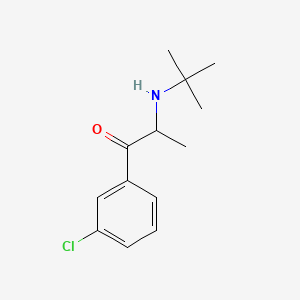
Twenty-two nonsmokers and 11 smokers completed four sessions receiving placebo, 150 or 300 mg bupropion, or 20 mg d-amphetamine. Testing 90 minutes after dosing found fewer simple-reaction-time lapses with 150 mg bupropion, no effect on stop-task, delay/probability-discounting or risk-taking measures, and increased arousal with 300 mg.
The study supports a selective acute attention signal, but it did not show parallel changes in response inhibition, discounting or risk-taking behavior. [1]
What the research measured, for whom, and under which exposure. Findings remain attached to the study’s task or clinical endpoint.
Acute 150 or 300 mg bupropion did not change stop-task, delay/probability-discounting or balloon-risk-task performance. [1]
The 300 mg bupropion condition increased ratings of arousal. [1]
Bupropion 150 mg decreased lapses on a simple reaction-time task in healthy adults. [1]
Study doses and reference exposures, with route, formulation and duration.
Oral · By mouth · 1 record
Absorption, metabolism and elimination depend on the analyte, route, formulation, physiology and other exposures.
No validated elimination observation was imported in this corpus pass. [1]
Adverse effects and interactions reported in the cited studies.
Findings come from a single short study in healthy adults and do not establish therapeutic efficacy, long-term safety or individual response. [1]
Original publications, findings and available funding disclosures.
Explore the participants, roles and sources behind each relationship.
Four-session randomized acute study with placebo, 150/300 mg bupropion and d-amphetamine.
Limitation Small acute study; PMC full text unavailable for automated retrieval.
Content updated Nov 1, 2026.