The substance library

EmoxypineHydroxypyridine studied mainly as the succinate drug Mexidol

Also known as: Methylethylpyridinol · 2-Ethyl-6-methylpyridin-3-ol · Mexidol · Mexidol Forte 250 · Emoxypine succinate · Emoxipin

Emoxypine is a hydroxypyridine compound used in distinct succinate and hydrochloride drug formulations. Clinical studies of the succinate, marketed as Mexidol, have mainly assessed recovery after ischemic stroke and cognition in chronic cerebral ischemia.

28 sourcesContent date Nov 18, 2026CompareExplore connectionsRevision history
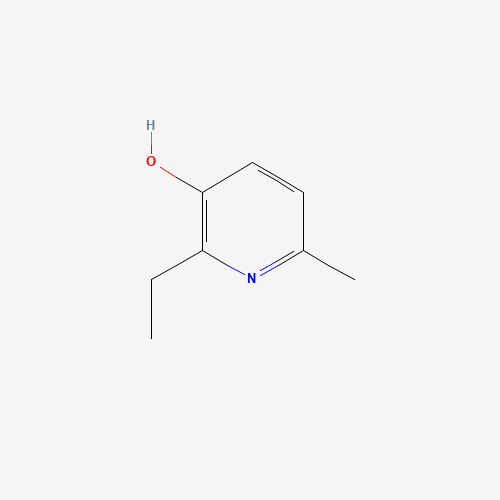
Emoxypine molecular structure
PubChem
01

Overview

The structure shown is the unsalted parent. Mexidol contains a 1:1 emoxypine succinate. Emoxipin eye drops contain methylethylpyridinol hydrochloride. Parent structure, Succinate structure, Hydrochloride eye-drop label

How it works

Glutamate-associated cell injury and lipid oxidation

In vitro, Mexidol reduced glutamate-associated injury and iron-induced lipid peroxidation. Selenium-dependent glutathione peroxidase activity increased, while catalase and glutathione S-transferase activity were unchanged in the reported assays. [23]

Neuronal survival under glutamate stress

In a cerebellar granule-cell culture, neuronal survival after glutamate was reported to improve by 8–10%. The experiment measured cell survival under induced stress. [24]

Mitochondrial measurements in experimental ischemia

A Wistar-rat experiment found dose- and salt-dependent changes in brain mitochondrial respiration. Succinate and malate groups showed reductions in mitochondrial hydrogen peroxide and apoptosis-inducing factor after focal ischemia. [17]

Parent compound and succinate in a stress model

A mouse study tested Mexidol, the isolated pyridinol component and sodium succinate under acute stress. It measured hepatic carbohydrate content and lipid peroxidation. [25]

02

Measured outcomes

What the research measured, for whom, and under which exposure. Findings remain attached to the study’s task or clinical endpoint.

Primary endpoint. The per-protocol analysis included 141 Mexidol and 138 placebo recipients. Intention-to-treat estimates were −2.32 vs −1.90 points (p=0.00384). The registry labels the primary estimate as a mean, while the abstract and Table 3 label it as a median statistic. [3]

PopulationAdults with first-ever moderate ischemic stroke who did not receive reperfusionExposure500 mg IV twice daily for 10 days, then 250 mg orally three times daily for 60 daysMeasureModified Rankin Scale (mRS)
Human research

The early disability assessment showed no clear between-group difference. [3]

PopulationAdults with first-ever moderate ischemic stroke who did not receive reperfusionExposure500 mg IV twice daily for 10 days, then 250 mg orally three times daily for 60 daysMeasureModified Rankin Scale (mRS)
Human research

Per-protocol count at end of treatment. In the intention-to-treat analysis, 57% vs 39% reached mRS 0–1 (p=0.002). [3]

PopulationAdults with first-ever moderate ischemic stroke who did not receive reperfusionExposure500 mg IV twice daily for 10 days, then 250 mg orally three times daily for 60 daysMeasureModified Rankin Scale (mRS)
Human research

Table 3 used a threshold of mRS ≥3. The intention-to-treat proportions at day 71 were 20% vs 32% (p=0.019). [3]

PopulationAdults with first-ever moderate ischemic stroke who did not receive reperfusionExposure500 mg IV twice daily for 10 days, then 250 mg orally three times daily for 60 daysMeasureModified Rankin Scale (mRS)
Human research

Medians were equal in the per-protocol analysis. The rank-based test compared the distributions of change scores. [3]

PopulationAdults with first-ever moderate ischemic stroke who did not receive reperfusionExposure500 mg IV twice daily for 10 days, then 250 mg orally three times daily for 60 daysMeasureNational Institutes of Health Stroke Scale (NIHSS)
Human research

The secondary mobility scale favored Mexidol in the per-protocol analysis. [3]

PopulationAdults with first-ever moderate ischemic stroke who did not receive reperfusionExposure500 mg IV twice daily for 10 days, then 250 mg orally three times daily for 60 daysMeasureRivermead Mobility Index
Human research

The paper counted 42 events on Mexidol and 43 on placebo. The registry lists nonserious events in 36 vs 39 participants. The sources do not reconcile those counts. [3]

PopulationAdults with first-ever moderate ischemic stroke who did not receive reperfusionExposure500 mg IV twice daily for 10 days, then 250 mg orally three times daily for 60 daysMeasureAdverse-event reports
Human research

The registry also lists 2 vs 1 deaths. The small event counts leave the comparative risk uncertain. [7]

PopulationAdults with first-ever moderate ischemic stroke who did not receive reperfusionExposure500 mg IV twice daily for 10 days, then 250 mg orally three times daily for 60 daysMeasureSerious adverse-event tabulation
Human research

The primary end-of-treatment analysis included 61 Mexidol and 63 placebo recipients. [4]

PopulationAdults with acute hemispheric ischemic strokeExposure500 mg IV daily for 10 days, then 125 mg orally three times daily for 8 weeksMeasureModified Rankin Scale (mRS)
Human research

This threshold includes participants able to manage their own affairs despite some disability. [5]

PopulationAdults with acute hemispheric ischemic strokeExposure500 mg IV daily for 10 days, then 125 mg orally three times daily for 8 weeksMeasureModified Rankin Scale (mRS)
Human research

Mean end-of-treatment neurological deficit score in the per-protocol group. [5]

PopulationAdults with acute hemispheric ischemic strokeExposure500 mg IV daily for 10 days, then 125 mg orally three times daily for 8 weeksMeasureNational Institutes of Health Stroke Scale (NIHSS)
Human research

No clear between-group difference in the Barthel Index. Registry means were 96.1 vs 93.6. [5]

PopulationAdults with acute hemispheric ischemic strokeExposure500 mg IV daily for 10 days, then 125 mg orally three times daily for 8 weeksMeasureBarthel Index
Human research

The journal reported no clear between-group difference on this cognitive measure. [5]

PopulationAdults with acute hemispheric ischemic strokeExposure500 mg IV daily for 10 days, then 125 mg orally three times daily for 8 weeksMeasureFrontal Assessment Battery
Human research

The journal reported no clear between-group difference on the cognitive screening questionnaire. [5]

PopulationAdults with acute hemispheric ischemic strokeExposure500 mg IV daily for 10 days, then 125 mg orally three times daily for 8 weeksMeasureCognitive screening questionnaire
Human research

There were no deaths in either arm. The serious adverse-event counts are too small to estimate rare harms reliably. [8]

PopulationAdults with acute hemispheric ischemic strokeExposure500 mg IV daily for 10 days, then 125 mg orally three times daily for 8 weeksMeasureSerious adverse-event tabulation
Human research

Table 3 includes 157 Mexidol and 155 placebo recipients at the final assessment. The trial was designed around cognitive score change and had no long-term disability follow-up. [6]

PopulationAdults diagnosed with chronic cerebral ischemiaExposure500 mg IV daily for 14 days, then 250 mg orally three times daily for 60 daysMeasureMontreal Cognitive Assessment (MoCA)
Human research

A secondary cognitive task measuring speed and accuracy of symbol matching. [6]

PopulationAdults diagnosed with chronic cerebral ischemiaExposure500 mg IV daily for 14 days, then 250 mg orally three times daily for 60 daysMeasureDigit Symbol Substitution Test
Human research

Fatigue was quantified with a patient-completed clinical inventory. [6]

PopulationAdults diagnosed with chronic cerebral ischemiaExposure500 mg IV daily for 14 days, then 250 mg orally three times daily for 60 daysMeasureMultidimensional Fatigue Inventory (MFI-20)
Human research

Both sources report no serious adverse events. The registry lists nonserious events in 19/159 and 32/159 participants. The source totals do not reconcile. [6]

PopulationAdults diagnosed with chronic cerebral ischemiaExposure500 mg IV daily for 14 days, then 250 mg orally three times daily for 60 daysMeasureAdverse-event reports
Human research

An open study compared 43 patients receiving add-on Mexidol with 47 receiving standard care alone. The abstract does not establish randomized allocation. [10]

PopulationOlder adults with chronic cerebral ischemia and cognitive impairment (mean age 81 years)ExposureSequential IV and oral Mexidol for 74 days alongside standard careMeasureMini-Mental State Examination (MMSE)
Limited research

The abstract reports arm-level confidence intervals for change. Open treatment allocation limits interpretation of the comparison. [10]

PopulationOlder adults with chronic cerebral ischemia and cognitive impairment (mean age 81 years)ExposureSequential IV and oral Mexidol for 74 days alongside standard careMeasureStroop word task
Limited research

The add-on group completed the task faster. The accessible abstract does not describe the estimator in enough detail to put the contrast on a mean-difference plot. [10]

PopulationOlder adults with chronic cerebral ischemia and cognitive impairment (mean age 81 years)ExposureSequential IV and oral Mexidol for 74 days alongside standard careMeasureSchulte tables
Limited research

The confidence interval for the reported difference includes zero. [10]

PopulationOlder adults with chronic cerebral ischemia and cognitive impairment (mean age 81 years)ExposureSequential IV and oral Mexidol for 74 days alongside standard careMeasureSchulte-derived mental stability index
Limited research

The comparison included 24 children in the combined therapy group and 23 in robotic rehabilitation alone. The ranges summarize multiple motor measures. [11]

PopulationChildren aged 6–8 years with spastic cerebral palsyExposureMexidol added to 6 weeks of robotic rehabilitationMeasureExoskeleton platform motor measures
Limited research

The abstract gives a range across assessments and does not identify individual test scores. [11]

PopulationChildren aged 6–8 years with spastic cerebral palsyExposureMexidol added to 6 weeks of robotic rehabilitationMeasureFunctional cognitive measures
Limited research

The dissertation abstract describes 60 analyzed in four groups of 15 after 16 early discharges. It gives pre- and post-treatment scores, with no clear statistical comparison for the Mexidol arm versus standard care. [12]

PopulationHospitalized military personnel with asthenia after combined injuriesExposure100 mg intramuscular Mexidol once dailyMeasureHamilton Anxiety Rating Scale
Limited research

The author’s abstract reports no significant difference across arms. It provides no comprehensive participant-level adverse-event table. [12]

PopulationHospitalized military personnel with asthenia after combined injuriesExposure100 mg intramuscular Mexidol once dailyMeasurePhysician Withdrawal Checklist (PWC)
Limited research

The abstract reports faster neurological improvement on the NIH scale. The full report describes the significant day-14 finding in patients admitted within six hours. [19]

PopulationAdults admitted within 24 hours of acute ischemic strokeExposure300 mg/day Mexidol, IV for 3 days then IM through day 14MeasureNIH Stroke Scale
Limited research

The reported difference applied to patients enrolled within six hours. The subgroup analysis had limited precision. [19]

PopulationAdults admitted within 24 hours of acute ischemic strokeExposure300 mg/day Mexidol, IV for 3 days then IM through day 14MeasureBarthel Index
Limited research

Three-arm trial with 111 randomized per group. The posted confidence interval applies to change within the active arm. [21]

PopulationChildren aged 6–12 years diagnosed with ADHDExposure125 mg oral Mexidol once daily for 42 daysMeasureSNAP-IV combined inattention and hyperactivity/impulsivity score
Human research

Three-arm trial with 111 randomized per group. The posted confidence interval applies to change within the active arm. [21]

PopulationChildren aged 6–12 years diagnosed with ADHDExposure125 mg oral Mexidol twice daily for 42 daysMeasureSNAP-IV combined inattention and hyperactivity/impulsivity score
Human research

The registry reports no deaths. Nonserious adverse events affected 14, 26 and 20 participants, respectively. The trial offers limited information on long-term use. [21]

PopulationChildren aged 6–12 years diagnosed with ADHDExposure125 mg oral Mexidol once or twice daily for 42 daysMeasureSerious adverse-event tabulation
Human research

The per-protocol secondary cognitive comparison did not meet the 0.05 threshold. The intention-to-treat comparison was nominally significant (p=0.044). [3]

PopulationAdults with first-ever moderate ischemic stroke who did not receive reperfusionExposure500 mg IV twice daily for 10 days, then 250 mg orally three times daily for 60 daysMeasureMontreal Cognitive Assessment (MoCA)
Human research

Both groups improved during rehabilitation. There was no clear difference at the final visit. [26]

PopulationAdults in neurological rehabilitation after stroke or traumatic brain injuryExposure500 mg IV daily for 10 days, then 250 mg orally three times daily for 8 weeksMeasureMontreal Cognitive Assessment (MoCA)
Limited research

The open-label comparison included 30 participants per arm across both diagnoses. [26]

PopulationAdults in neurological rehabilitation after stroke or traumatic brain injuryExposure500 mg IV daily for 10 days, then 250 mg orally three times daily for 8 weeksMeasureHospital Anxiety and Depression Scale (HADS)
Limited research

An intermediate assessment favored the add-on group in the pooled analysis. [26]

PopulationAdults in neurological rehabilitation after stroke or traumatic brain injuryExposure500 mg IV daily for 10 days, then 250 mg orally three times daily for 8 weeksMeasureBeck Depression Inventory
Limited research

The authors report a larger mean change with the adjunct. The main report pools both diagnoses. [26]

PopulationAdults in neurological rehabilitation after stroke or traumatic brain injuryExposure500 mg IV daily for 10 days, then 250 mg orally three times daily for 8 weeksMeasureRivermead Mobility Index
Limited research

No events were recorded in this open-label study of 60 people. [26]

PopulationAdults in neurological rehabilitation after stroke or traumatic brain injuryExposure500 mg IV daily for 10 days, then 250 mg orally three times daily for 8 weeksMeasureAdverse-event reports
Limited research
Study-result plots

33 of 38 findings in this selection lack structured estimates. Different measures, populations, instruments, comparators, or assessment times are shown separately.

Disability in EPICA
Modified Rankin Scale (mRS) · mean · mRS points

Adults with acute hemispheric ischemic stroke · Comparator: Placebo arm mean 1.46 points · Assessment: Days 67–71

Study estimates and reported confidence intervals for Disability in EPICA. Linear horizontal axis.10.9681.031.11.171.23

Each point is one reported estimate. Intervals are displayed only when recorded. No pooled estimate is calculated.

Study / substanceEstimateIntervalEvidence
1. Emoxypine
nct02793687
1.1 mRS pointsInterval not curated
Neurological deficit in EPICA
National Institutes of Health Stroke Scale (NIHSS) · mean · NIHSS points

Adults with acute hemispheric ischemic stroke · Comparator: Placebo arm mean 2.2 points · Assessment: Days 67–71

Study estimates and reported confidence intervals for Neurological deficit in EPICA. Linear horizontal axis.11.51.61.71.81.9

Each point is one reported estimate. Intervals are displayed only when recorded. No pooled estimate is calculated.

Study / substanceEstimateIntervalEvidence
1. Emoxypine
nct02793687
1.7 NIHSS pointsInterval not curated
Cognitive screening in MEMO
Montreal Cognitive Assessment (MoCA) · mean-difference · MoCA points

Adults diagnosed with chronic cerebral ischemia · Comparator: Mexidol minus matching placebo · Assessment: Final visit, around day 75

Study estimates and reported confidence intervals for Cognitive screening in MEMO. Linear horizontal axis.1-0.310.491.292.092.89

Each point is one reported estimate. Intervals are displayed only when recorded. No pooled estimate is calculated. The dashed line marks the no-effect value (0).

Study / substanceEstimateIntervalEvidence
1. Emoxypine
nct06834490
2.05 MoCA points95% CI 1.51–2.58
ADHD symptoms in MEGA · once daily
SNAP-IV combined inattention and hyperactivity/impulsivity score · mean · SNAP-IV points

Children aged 6–12 years diagnosed with ADHD · Comparator: Placebo arm mean change −3.93 points · Assessment: Week 6

Study estimates and reported confidence intervals for ADHD symptoms in MEGA · once daily. Linear horizontal axis.12-11.1-9.75-8.38-7.01-5.64

Each point is one reported estimate. Intervals are displayed only when recorded. No pooled estimate is calculated.

Study / substanceEstimateIntervalEvidence
1. Emoxypine
nct06854601
-7.31 SNAP-IV points95% CI -8.44–-6.17
2. Emoxypine
nct06854601
-9.33 SNAP-IV points95% CI -10.59–-8.07
03

Doses & routes

Study doses and reference exposures, with route, formulation and duration.

Oral · By mouth · 7 records

MIR · oral phase

Research exposure

250 mg [3]

Ingredient / form
Ethylmethylhydroxypyridine succinate · Mexidol Forte 250 film-coated tablets
Route
Oral
Frequency
Three times daily
Duration
60 days
Population
Adults with first-ever moderate ischemic stroke who did not receive reperfusion
Purpose
Adjunct to standard acute stroke care

Began after 10 days of the intravenous study phase. The control group received matching placebo.

EPICA · oral phase

Research exposure

125 mg [4]

Ingredient / form
Ethylmethylhydroxypyridine succinate · Mexidol 125 mg tablets
Route
Oral
Frequency
Three times daily
Duration
8 weeks
Population
Adults with acute hemispheric ischemic stroke
Purpose
Adjunct to standard acute stroke care

Began after 10 days of the intravenous study phase. The control group received matching placebo.

MEMO · oral phase

Research exposure

250 mg [6]

Ingredient / form
Ethylmethylhydroxypyridine succinate · Mexidol Forte 250 film-coated tablets
Route
Oral
Frequency
Three times daily
Duration
60 days
Population
Adults diagnosed with chronic cerebral ischemia
Purpose
Cognitive and functional outcomes in chronic cerebral ischemia

Began after 14 days of the intravenous study phase. The control group received matching placebo.

Urinary excretion study

Research exposure

500 mg [16]

Ingredient / form
Ethylmethylhydroxypyridine succinate · Mexidol tablets
Route
Oral
Frequency
Single dose
Duration
11.5-hour urine collection
Population
16 patients with neurosis or traumatic central nervous system injury
Purpose
Measure unchanged drug and glucuronide in urine

The study reports cumulative urinary recovery with substantial interindividual variability.

MEGA · once daily

Research exposure

125 mg [20]

Ingredient / form
Ethylmethylhydroxypyridine succinate · Mexidol 125 mg tablets
Route
Oral
Frequency
Once daily, with a matching placebo tablet at the other administration
Duration
42 days
Population
Children aged 6–12 years diagnosed with ADHD
Purpose
ADHD symptom scores

The placebo-only arm received matching tablets twice daily.

MEGA · twice daily

Research exposure

125 mg [20]

Ingredient / form
Ethylmethylhydroxypyridine succinate · Mexidol 125 mg tablets
Route
Oral
Frequency
Twice daily
Duration
42 days
Population
Children aged 6–12 years diagnosed with ADHD
Purpose
ADHD symptom scores

The placebo-only arm received matching tablets twice daily.

Mixed-etiology rehabilitation · oral phase

Research exposure

250 mg [26]

Ingredient / form
Ethylmethylhydroxypyridine succinate · Mexidol Forte 250 film-coated tablets
Route
Oral
Frequency
Three times daily
Duration
8 weeks
Population
Adults in neurological rehabilitation after stroke or traumatic brain injury
Purpose
Adjunct to standard rehabilitation

Began after the intravenous phase. The comparator received standard rehabilitation alone.

04

Pharmacokinetics

Absorption, metabolism and elimination depend on the analyte, route, formulation, physiology and other exposures.

Elimination half-life · Mexidol active ingredient, as described in the label
2.0–2.6 hours (oral Mexidol Forte 250 label)

Timing explorer

Published timing evidence
The source reports timing terms but does not provide numeric elapsed intervals.

Not established as a numeric timeline. Plasma timing and felt effects are distinct measurements. Source

Modeled elimination

The elimination model describes the named analyte after absorption and distribution. It does not establish felt-effect timing.

Oral · Mexidol Forte 250 film-coated tablets · reported-range

Illustrative elimination model

Mexidol active ingredient, as described in the label remaining over time

Single exposure

The modeled analyte is Mexidol active ingredient, as described in the label. The curve begins after absorption and distribution; it does not predict onset, felt effects, or an individual’s response.

Route: Oral. Formulation: Mexidol Forte 250 film-coated tablets.

The product label reports an oral half-life of 2.0–2.6 hours. The label also gives an oral peak concentration of 3.5–4.0 µg/mL after 400–500 mg. Read source context

Reported range: 2–2.6 hours.

2.3 hours

The midpoint is the initial illustrative choice within the reported range. It is not a measured average or a prediction.

2 hReported range2.6 h

The model treats this as the starting amount of Mexidol active ingredient, as described in the label after absorption and distribution. It does not calculate bioavailability or conversion from another substance. Leave blank to view percentages.

Mexidol active ingredient, as described in the label remaining (%)
Mexidol active ingredient, as described in the label: illustrative elimination with a 2.3 hour half-lifeA first-order elimination model of Mexidol active ingredient, as described in the label. 50% remains after 2.3 hours and 25% remains after 4.6 hours. Horizontal axis: elapsed hours after absorption and distribution. Vertical axis: percentage of the modeled analyte remaining. This is a mathematical illustration, not a personalized prediction.02550751000 h2.6 h5.2 h7.8 h10.4 h13 h
ElapsedRemaining
After 2.3 h50% remains
After 4.6 h25% remains
After 11.5 h3.125% remains

Model: fraction remaining = 2−time / half-life. Assumes a single exposure, instantaneous distribution, and a constant half-life for Mexidol active ingredient, as described in the label. Formation of metabolites, repeated exposure, and interactions are not modeled. Read source context

The Russian prescribing information reports this half-life for the oral succinate product. It does not identify the underlying cohort or assay. [13]

Sourced elimination observations

Mexidol active ingredient, as described in the label

Reported range

2–2.6 hours [13]

Route / formulation
Oral · Mexidol Forte 250 film-coated tablets

The product label reports an oral half-life of 2.0–2.6 hours. The label also gives an oral peak concentration of 3.5–4.0 µg/mL after 400–500 mg.

Mexidol and its glucuronide in urine

No numeric estimate

Not established [16]

Route / formulation
Oral · Mexidol tablets
Population
16 patients with neurosis or traumatic central nervous system injury

After a single 500 mg dose, 0.31% of the dose (parent drug) and 49.6% (glucuronide) were measured in urine over 11.5 hours. These are cumulative recovery fractions.

Metabolism / metabolites
The oral succinate label describes glucuronidation in the liver with urinary excretion mainly as metabolites. [13]
05

Safety & uncertainty

Adverse effects and interactions reported in the cited studies.

Warning

Oral succinate contraindications

The Russian Mexidol Forte 250 label lists hypersensitivity to the ingredient or excipients, acute hepatic or renal failure, pregnancy and breastfeeding among its contraindications. [13]

Monitor

Oral succinate adverse reactions

The label lists very rare reactions including somnolence, headache, gastrointestinal symptoms, rash, urticaria and angioedema. [13]

Context

Ophthalmic hydrochloride reactions

The Emoxipin eye-drop label lists local reactions such as burning, itching and short-lived conjunctival redness. [14]

Warning

Limited information on rare harms

MIR had few serious adverse events and deaths. Its published event tabulation and the registry’s nonserious event counts differ. [7]

Interactions in cited sources

Explore a pair of substances

Benzodiazepines

The Russian oral succinate label states that Mexidol Forte 250 can intensify benzodiazepine effects. It supplies no size estimate or dose-response data for this combination. [13]

Context
Mexidol Forte 250 oral product information, section 4.5.

Other medicines listed in the oral product label

The label describes possible potentiation of antidepressants, anxiolytics, antiseizure medicines and antiparkinsonian medicines. It also says its clinical and postmarketing review detected no drug–drug interaction signal. [13]

Context
Mexidol Forte 250 oral product information, section 4.5.

Concomitant medicines in MIR and EPICA

A secondary analysis of 454 patients found no significant adverse-event differences associated with the concomitant treatments assessed, which included common antihypertensive and antithrombotic medicines. [28]

Context
Reanalysis of MIR and EPICA. Co-medications were not randomized by this analysis.
06

Research & sources

28

Original publications, findings and available funding disclosures.

07

Connected claims

Explore the participants, roles and sources behind each relationship.

Clinical associationAuthored relationship

Sequential IV and oral emoxypine succinate yielded better short-term disability scores than matching placebo in MIR and EPICA.

Emoxypinestudied succinate formulation
Stroke recoverymeasured outcome

Adjunctive treatment in the acute and early recovery phases of ischemic stroke, with assessments at about two months.

Limitation Both studies used primary per-protocol analyses. MIR excluded patients who received reperfusion, and its earlier disability assessment showed no clear difference.

Experimental inhibitionAuthored relationship

Mexidol reduced iron-induced lipid peroxidation in a laboratory assay.

Emoxypinetested succinate formulation
Oxidative stressmeasured lipid oxidation

Preclinical in vitro lipid-peroxidation experiment.

Limitation The assay does not establish target engagement or clinical benefit in humans.

Explore the relationship graph
09

Publication history

Content updated Nov 18, 2026.

Keep exploring

View graph