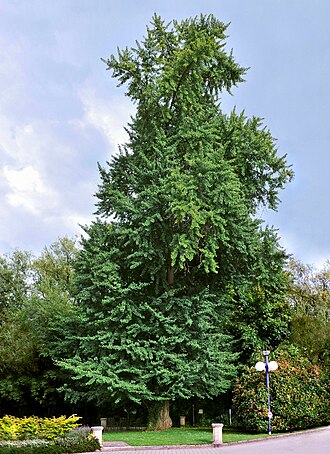
Ginkgo biloba is a tree whose leaf extracts are studied for memory and cognitive performance.
How it works
Source-specific finding from PMID 24729246
In order to clarify the mechanism through which extract of Ginkgo biloba leaves (EGb) improves cognitive function, we examined the effects of EGb on cerebral blood oxygenation in the prefrontal cortex (PFC) and on performance during a working memory task, using near-infrared spectrometry (NIRS). First, we evaluated differences in behavioral performance of the Sternberg working memory test (ST) and in the activation pattern of the PFC during ST between 15 young and 19 middle-aged healthy women. [12]
02
Measured outcomes
What the research measured, for whom, and under which exposure. Findings remain attached to the study’s task or clinical endpoint.
RESULTS: Placebo produced no significant effects on all neurocognitive tests measure P > 0.05 in normal healthy volunteers, G. biloba or R. rosea improve PVT and low to moderate working memory accuracy, The combined effect of R. rosea and G. biloba leading to more significant effect on PVT, all levels of short-term working memory accuracy and critical fusion versus flicker P < 0.01, more than of G. biloba or R. rosea when they used alone. CONCLUSION: The combined effect of R. rosea and G. biloba leading to a more significant effect on cognitive function than either G. biloba or R. rosea when they used alone. [2]
Populationenrolled to study the effect of GExposureRESULTS: Placebo produced no significant effects on all neurocognitive tests measure P > 0.05 in normal healthy volunteers, G. biloba or R. rosea improve PVT and low to moderate working memory accuracy, The combined effect of R. rosea and G. biloba leading to more significant effect on PVT, all levels of short-term working memory accuracy and critical fusion versus flicker P < 0.01, more than of G. biloba or R. rosea when they used alone. CONCLUSION: The combined effect of R. rosea and G. biloba leading to a more significant effect on cognitive function than either G. biloba or R. rosea when they used alone.MeasureNot assessed
RESULTS: No serious adverse events were noted in this study. According to time on the Trail Making Test-B, the Ginkgo Synergy(®) plus Choline arm showed improvement from baseline to 3 months follow-up (mean difference = 24.2; SE = 6.4; 95% CI: 8.6, 39.7; p = 0.01). On the Controlled Oral Word Association Trial-S, the scores significantly increased for the Ginkgo Synergy(®) plus Choline arm from baseline to 6 months follow-up (mean difference = 2.1; SE = 0.8; 95% CI: 0.2, 3.9; p < 0.05) and for the OPC Synergy(®) plus Catalyn(®) arm from baseline to 3 months follow-up (mean difference = 2.1; SE = 0.8; 95% CI: 0.2, 4.0; p < 0.05). Epidermal growth factor significantly decreased from baseline t [3]
PopulationMETHODS: This study investigated the effect of Ginkgo Synergy(®) plus Choline (n = 33) and OPC Synergy(®) plus Catalyn(®) (n = 31) versus placebo (n = 33) in a 6-month, randomized, double-blind trial on cognitive and immune functioning among English-speaking, non-smoking, healthy older adults.ExposureRESULTS: No serious adverse events were noted in this study. According to time on the Trail Making Test-B, the Ginkgo Synergy(®) plus Choline arm showed improvement from baseline to 3 months follow-up (mean difference = 24.2; SE = 6.4; 95% CI: 8.6, 39.7; p = 0.01). On the Controlled Oral Word Association Trial-S, the scores significantly increased for the Ginkgo Synergy(®) plus Choline arm from baseline to 6 months follow-up (mean difference = 2.1; SE = 0.8; 95% CI: 0.2, 3.9; p < 0.05) and for the OPC Synergy(®) plus Catalyn(®) arm from baseline to 3 months follow-up (mean difference = 2.1; SE = 0.8; 95% CI: 0.2, 4.0; p < 0.05). Epidermal growth factor significantly decreased from baseline tMeasureNot assessed
RESULTS: Effect sizes were non-significant and close to zero for memory (d = -0.04: 95%CI -0.17 to 0.07), executive function (d = -0.05: 95%CI -0.17 to 0.05) and attention (d = -0.08: 95%CI -0.21 to 0.02). Meta-regressions showed that effect sizes were not related to participant age, duration of the trial, daily dose, total dose or sample size. CONCLUSIONS: We report that G. biloba had no ascertainable positive effects on a range of targeted cognitive functions in healthy individuals. [4]
PopulationOBJECTIVE: We conducted a meta-analysis to examine whether Ginkgo biloba (G. biloba) enhances cognitive function in healthy individuals.ExposureRESULTS: Effect sizes were non-significant and close to zero for memory (d = -0.04: 95%CI -0.17 to 0.07), executive function (d = -0.05: 95%CI -0.17 to 0.05) and attention (d = -0.08: 95%CI -0.21 to 0.02). Meta-regressions showed that effect sizes were not related to participant age, duration of the trial, daily dose, total dose or sample size. CONCLUSIONS: We report that G. biloba had no ascertainable positive effects on a range of targeted cognitive functions in healthy individuals.MeasureNot assessed
A computerized test battery was used in a double-blind design to assess the cognitive effects of a nutrient compound containing Ginkgo biloba in 24 normal adults. Ten tasks (perceptual, attention and short-term memory) were presented in a standardized manner designed to maximize performance, with substantial pre-test practice employed to minimize response variability. [5]
Populationgiven either placebo or Ginkgo biloba extract capsules to consume for 14 days, after which they performed all tasks twiceExposureA computerized test battery was used in a double-blind design to assess the cognitive effects of a nutrient compound containing Ginkgo biloba in 24 normal adults. Ten tasks (perceptual, attention and short-term memory) were presented in a standardized manner designed to maximize performance, with substantial pre-test practice employed to minimize response variability.MeasureNot assessed
RESULTS: The acute dose of ginkgo significantly improved performance on the sustained-attention task and pattern-recognition memory task; however, there were no effects on working memory, planning, mental flexibility or mood. After 6 weeks of treatment, there were no significant effects of ginkgo on mood or any of the cognitive tests. CONCLUSIONS: In line with the literature, after acute administration ginkgo improved performance in tests of attention and memory. However, there were no effects after 6 weeks, suggesting that tolerance develops to the effects in young, healthy participants. [6]
PopulationRATIONALE: Acute doses of Ginkgo biloba have been shown to improve attention and memory in young, healthy participants, but there has been a lack of investigation into possible effects on executive function.ExposureRESULTS: The acute dose of ginkgo significantly improved performance on the sustained-attention task and pattern-recognition memory task; however, there were no effects on working memory, planning, mental flexibility or mood. After 6 weeks of treatment, there were no significant effects of ginkgo on mood or any of the cognitive tests. CONCLUSIONS: In line with the literature, after acute administration ginkgo improved performance in tests of attention and memory. However, there were no effects after 6 weeks, suggesting that tolerance develops to the effects in young, healthy participants.MeasureNot assessed
RESULTS: Compared with the placebo, administration of Ginkgo produced a number of significant changes on the performance measures. The most striking of these was a dose-dependent improvement of the 'speed of attention' factor following both 240 mg and 360 mg of the extract, which was evident at 2.5 h and was still present at 6 h. Additionally, there were a number of time- and dose-specific changes (both positive and negative) in performance of the other factors. CONCLUSIONS: We conclude that acute administration of Ginkgo biloba is capable of producing a sustained improvement in attention in healthy young volunteers. [7]
PopulationTwenty participants received 120 mg, 240 mg and 360 mg of a standardised extract of Ginkgo (GK501, Pharmaton, SA) or a matching placebo.ExposureRESULTS: Compared with the placebo, administration of Ginkgo produced a number of significant changes on the performance measures. The most striking of these was a dose-dependent improvement of the 'speed of attention' factor following both 240 mg and 360 mg of the extract, which was evident at 2.5 h and was still present at 6 h. Additionally, there were a number of time- and dose-specific changes (both positive and negative) in performance of the other factors. CONCLUSIONS: We conclude that acute administration of Ginkgo biloba is capable of producing a sustained improvement in attention in healthy young volunteers.MeasureNot assessed
RESULTS: Two hundred three participants (88%) completed the protocol. Analysis of the modified intent-to-treat population (all 219 participants returning for evaluation) indicated that there were no significant differences between treatment groups on any outcome measure. Analysis of the fully evaluable population (the 203 who complied with treatment and returned for evaluation) also indicated no significant differences for any outcome measure. CONCLUSIONS: The results of this 6-week study indicate that ginkgo did not facilitate performance on standard neuropsychological tests of learning, memory, attention, and concentration or naming and verbal fluency in elderly adults without cognitive i [8]
Populationrandomly assigned to receive ginkgo, 40 mg 3 times per day (n = 115), or matching placebo (n = 115)ExposureRESULTS: Two hundred three participants (88%) completed the protocol. Analysis of the modified intent-to-treat population (all 219 participants returning for evaluation) indicated that there were no significant differences between treatment groups on any outcome measure. Analysis of the fully evaluable population (the 203 who complied with treatment and returned for evaluation) also indicated no significant differences for any outcome measure. CONCLUSIONS: The results of this 6-week study indicate that ginkgo did not facilitate performance on standard neuropsychological tests of learning, memory, attention, and concentration or naming and verbal fluency in elderly adults without cognitive iMeasureNot assessed
RESULTS: It was found that the use of neither Ginkgo biloba ( n=40) nor Ginseng ( n=86) was associated with enhanced memory performance in any of the eight memory tests examined, relative to control groups either using or not using nutritional supplements. CONCLUSIONS: These findings indicate that use of Ginkgo biloba or Ginseng does not provide any quantifiable beneficial effects on memory performance in the long-term in healthy adult volunteers. [9]
PopulationSeveral previous studies have indicated that administration of Ginkgo biloba and Ginseng may improve aspects of learning and memory in healthy volunteers.ExposureRESULTS: It was found that the use of neither Ginkgo biloba ( n=40) nor Ginseng ( n=86) was associated with enhanced memory performance in any of the eight memory tests examined, relative to control groups either using or not using nutritional supplements. CONCLUSIONS: These findings indicate that use of Ginkgo biloba or Ginseng does not provide any quantifiable beneficial effects on memory performance in the long-term in healthy adult volunteers.MeasureNot assessed
It has previously been demonstrated in separate studies that single doses of Ginkgo biloba, Panax ginseng, and a combination of the two extracts can improve different aspects of cognitive performance in healthy young volunteers. The present study directly compared the effects of single doses of G. biloba, ginseng, and a product combining the two on aspects of mood and cognitive performance in the same cohort of healthy, young adult volunteers. [10]
PopulationIt has previously been demonstrated in separate studies that single doses of Ginkgo biloba, Panax ginseng, and a combination of the two extracts can improve different aspects of cognitive performance in healthy young volunteers.ExposureIt has previously been demonstrated in separate studies that single doses of Ginkgo biloba, Panax ginseng, and a combination of the two extracts can improve different aspects of cognitive performance in healthy young volunteers. The present study directly compared the effects of single doses of G. biloba, ginseng, and a product combining the two on aspects of mood and cognitive performance in the same cohort of healthy, young adult volunteers.MeasureNot assessed
Ginkgo biloba extract (EGb) from the world's oldest living tree has been reputed to ameliorate cognitive decline in the elderly and slow cognitive deterioration in patients with dementia of the Alzheimer's type. EGb remains as one of the most popular plant extracts to alleviate symptoms associated with a range of cognitive disorders such as Alzheimer's disease, vascular dementia and age-related amnesic conditions. [11]
Populationadministered a battery of validated neuropsychological tests before and after treatmentExposureGinkgo biloba extract (EGb) from the world's oldest living tree has been reputed to ameliorate cognitive decline in the elderly and slow cognitive deterioration in patients with dementia of the Alzheimer's type. EGb remains as one of the most popular plant extracts to alleviate symptoms associated with a range of cognitive disorders such as Alzheimer's disease, vascular dementia and age-related amnesic conditions.MeasureNot assessed
In order to clarify the mechanism through which extract of Ginkgo biloba leaves (EGb) improves cognitive function, we examined the effects of EGb on cerebral blood oxygenation in the prefrontal cortex (PFC) and on performance during a working memory task, using near-infrared spectrometry (NIRS). First, we evaluated differences in behavioral performance of the Sternberg working memory test (ST) and in the activation pattern of the PFC during ST between 15 young and 19 middle-aged healthy women. [12]
PopulationFirst, we evaluated differences in behavioral performance of the Sternberg working memory test (ST) and in the activation pattern of the PFC during ST between 15 young and 19 middle-aged healthy women.ExposureIn order to clarify the mechanism through which extract of Ginkgo biloba leaves (EGb) improves cognitive function, we examined the effects of EGb on cerebral blood oxygenation in the prefrontal cortex (PFC) and on performance during a working memory task, using near-infrared spectrometry (NIRS). First, we evaluated differences in behavioral performance of the Sternberg working memory test (ST) and in the activation pattern of the PFC during ST between 15 young and 19 middle-aged healthy women.MeasureNot assessed
Limited research
03
Doses & routes
Study doses and reference exposures, with route, formulation and duration.
Other routes · Other or unspecified · 4 records
04
Pharmacokinetics
Absorption, metabolism and elimination depend on the analyte, route, formulation, physiology and other exposures.
No pharmacokinetic observation was supplied by this identity import. [1]
05
Safety & uncertainty
Adverse effects and interactions reported in the cited studies.
Warning
Source-specific finding from PMID 24495355
RESULTS: No serious adverse events were noted in this study. According to time on the Trail Making Test-B, the Ginkgo Synergy(®) plus Choline arm showed improvement from baseline to 3 months follow-up (mean difference = 24.2; SE = 6.4; 95% CI: 8.6, 39.7; p = 0.01). On the Controlled Oral Word Association Trial-S, the scores significantly increased for the Ginkgo Synergy(®) plus Choline arm from baseline to 6 months follow-up (mean difference = 2.1; SE = 0.8; 95% CI: 0.2, 3.9; p < 0.05) and for the OPC Synergy(®) plus Catalyn(®) arm from baseline to 3 months follow-up (mean difference = 2.1; SE = 0.8; 95% CI: 0.2, 4.0; p < 0.05). Epidermal growth factor significantly decreased from baseline t [3]
Monitor
Source-specific finding from PMID 11026748
RESULTS: Compared with the placebo, administration of Ginkgo produced a number of significant changes on the performance measures. The most striking of these was a dose-dependent improvement of the 'speed of attention' factor following both 240 mg and 360 mg of the extract, which was evident at 2.5 h and was still present at 6 h. Additionally, there were a number of time- and dose-specific changes (both positive and negative) in performance of the other factors. CONCLUSIONS: We conclude that acute administration of Ginkgo biloba is capable of producing a sustained improvement in attention in healthy young volunteers. [7]
Context
Meta-analysis null result (PMID 23001963)
A meta-analysis of healthy individuals found effect sizes close to zero and non-significant for memory, executive function, and attention; this conflicts with isolated positive acute-study findings. [4]
Original publications, findings and available funding disclosures.
07
Connected claims
Explore the participants, roles and sources behind each relationship.
associated-withAuthored relationship
PMID 27069717 reports: RESULTS: Placebo produced no significant effects on all neurocognitive tests measure P > 0.05 in normal healthy volunteers, G. biloba or R. rosea improve PVT and low to moderate working memory accuracy, The combined effect of R. rosea and G. biloba leading to more significant effect on PVT, all levels of short-term working memory accuracy and critical fusion versus flicker P < 0.01, more than of G. biloba or R. rosea when they used alone. CONCLUSION: The combined effect of R. rosea and G. biloba leading to a more significant effect on cognitive function than either G. biloba or R. rosea when they used alone.
Publication abstract; direction and population are retained on the linked observation.
Limitation Automated corpus import from an abstract; this record is not an independent meta-analysis.
associated-withAuthored relationship
PMID 24495355 reports: RESULTS: No serious adverse events were noted in this study. According to time on the Trail Making Test-B, the Ginkgo Synergy(®) plus Choline arm showed improvement from baseline to 3 months follow-up (mean difference = 24.2; SE = 6.4; 95% CI: 8.6, 39.7; p = 0.01). On the Controlled Oral Word Association Trial-S, the scores significantly increased for the Ginkgo Synergy(®) plus Choline arm from baseline to 6 months follow-up (mean difference = 2.1; SE = 0.8; 95% CI: 0.2, 3.9; p < 0.05) and for the OPC Synergy(®) plus Catalyn(®) arm from baseline to 3 months follow-up (mean difference = 2.1; SE = 0.8; 95% CI: 0.2, 4.0; p < 0.05). Epidermal growth factor significantly decreased from baseline t
Publication abstract; direction and population are retained on the linked observation.
Limitation Automated corpus import from an abstract; this record is not an independent meta-analysis.
associated-withAuthored relationship
PMID 23001963 reports: RESULTS: Effect sizes were non-significant and close to zero for memory (d = -0.04: 95%CI -0.17 to 0.07), executive function (d = -0.05: 95%CI -0.17 to 0.05) and attention (d = -0.08: 95%CI -0.21 to 0.02). Meta-regressions showed that effect sizes were not related to participant age, duration of the trial, daily dose, total dose or sample size. CONCLUSIONS: We report that G. biloba had no ascertainable positive effects on a range of targeted cognitive functions in healthy individuals.
Publication abstract; direction and population are retained on the linked observation.
Limitation Automated corpus import from an abstract; this record is not an independent meta-analysis.
associated-withAuthored relationship
PMID 12404561 reports: A computerized test battery was used in a double-blind design to assess the cognitive effects of a nutrient compound containing Ginkgo biloba in 24 normal adults. Ten tasks (perceptual, attention and short-term memory) were presented in a standardized manner designed to maximize performance, with substantial pre-test practice employed to minimize response variability.
Publication abstract; direction and population are retained on the linked observation.
Limitation Automated corpus import from an abstract; this record is not an independent meta-analysis.
associated-withAuthored relationship
PMID 15739076 reports: RESULTS: The acute dose of ginkgo significantly improved performance on the sustained-attention task and pattern-recognition memory task; however, there were no effects on working memory, planning, mental flexibility or mood. After 6 weeks of treatment, there were no significant effects of ginkgo on mood or any of the cognitive tests. CONCLUSIONS: In line with the literature, after acute administration ginkgo improved performance in tests of attention and memory. However, there were no effects after 6 weeks, suggesting that tolerance develops to the effects in young, healthy participants.
Publication abstract; direction and population are retained on the linked observation.
Limitation Automated corpus import from an abstract; this record is not an independent meta-analysis.
associated-withAuthored relationship
PMID 11026748 reports: RESULTS: Compared with the placebo, administration of Ginkgo produced a number of significant changes on the performance measures. The most striking of these was a dose-dependent improvement of the 'speed of attention' factor following both 240 mg and 360 mg of the extract, which was evident at 2.5 h and was still present at 6 h. Additionally, there were a number of time- and dose-specific changes (both positive and negative) in performance of the other factors. CONCLUSIONS: We conclude that acute administration of Ginkgo biloba is capable of producing a sustained improvement in attention in healthy young volunteers.
Publication abstract; direction and population are retained on the linked observation.
Limitation Automated corpus import from an abstract; this record is not an independent meta-analysis.
associated-withAuthored relationship
PMID 12186600 reports: RESULTS: Two hundred three participants (88%) completed the protocol. Analysis of the modified intent-to-treat population (all 219 participants returning for evaluation) indicated that there were no significant differences between treatment groups on any outcome measure. Analysis of the fully evaluable population (the 203 who complied with treatment and returned for evaluation) also indicated no significant differences for any outcome measure. CONCLUSIONS: The results of this 6-week study indicate that ginkgo did not facilitate performance on standard neuropsychological tests of learning, memory, attention, and concentration or naming and verbal fluency in elderly adults without cognitive i
Publication abstract; direction and population are retained on the linked observation.
Limitation Automated corpus import from an abstract; this record is not an independent meta-analysis.
associated-withAuthored relationship
PMID 14647971 reports: RESULTS: It was found that the use of neither Ginkgo biloba ( n=40) nor Ginseng ( n=86) was associated with enhanced memory performance in any of the eight memory tests examined, relative to control groups either using or not using nutritional supplements. CONCLUSIONS: These findings indicate that use of Ginkgo biloba or Ginseng does not provide any quantifiable beneficial effects on memory performance in the long-term in healthy adult volunteers.
Publication abstract; direction and population are retained on the linked observation.
Limitation Automated corpus import from an abstract; this record is not an independent meta-analysis.
associated-withAuthored relationship
PMID 12020739 reports: It has previously been demonstrated in separate studies that single doses of Ginkgo biloba, Panax ginseng, and a combination of the two extracts can improve different aspects of cognitive performance in healthy young volunteers. The present study directly compared the effects of single doses of G. biloba, ginseng, and a product combining the two on aspects of mood and cognitive performance in the same cohort of healthy, young adult volunteers.
Publication abstract; direction and population are retained on the linked observation.
Limitation Automated corpus import from an abstract; this record is not an independent meta-analysis.
associated-withAuthored relationship
PMID 11466162 reports: Ginkgo biloba extract (EGb) from the world's oldest living tree has been reputed to ameliorate cognitive decline in the elderly and slow cognitive deterioration in patients with dementia of the Alzheimer's type. EGb remains as one of the most popular plant extracts to alleviate symptoms associated with a range of cognitive disorders such as Alzheimer's disease, vascular dementia and age-related amnesic conditions.
Publication abstract; direction and population are retained on the linked observation.
Limitation Automated corpus import from an abstract; this record is not an independent meta-analysis.
associated-withAuthored relationship
PMID 24729246 reports: In order to clarify the mechanism through which extract of Ginkgo biloba leaves (EGb) improves cognitive function, we examined the effects of EGb on cerebral blood oxygenation in the prefrontal cortex (PFC) and on performance during a working memory task, using near-infrared spectrometry (NIRS). First, we evaluated differences in behavioral performance of the Sternberg working memory test (ST) and in the activation pattern of the PFC during ST between 15 young and 19 middle-aged healthy women.
 Wikipedia
 Examine