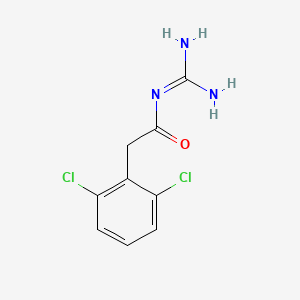
Guanfacine acts on alpha-2A adrenergic receptors. Studies explore attention, working memory and executive function.
How it works
Source-specific finding from PMID 16078088
RESULTS: Systolic blood pressure was significantly reduced by both doses of guanfacine at the end of the testing session. There were no statistically significant effects on any of the cognitive measures. Two trend effects were observed with poorer performance on digit span backward and slower 'Go' reaction times after guanfacine. CONCLUSION: This study found no improvement of prefrontal memory or executive functions after guanfacine. Negative effects on blood pressure and trend effects on digit span backward and go reaction time indicate a mild sedative effect of guanfacine at these doses, possibly via mechanisms of autoreceptor down-regulation. [2]
02
Measured outcomes
What the research measured, for whom, and under which exposure. Findings remain attached to the study’s task or clinical endpoint.
The present study compares, using a double-blind, placebo controlled design the effects of two alpha 2-agonists, clonidine (0.5, 2, and 5 micrograms/kg) and guanfacine (7 and 29 micrograms/kg) on spatial working memory, planning and attentional set-shifting, functions thought to be dependent on the "central executive" of the prefrontal cortex. Blood pressure and the subjective feeling of sedation were affected equally by clonidine and guanfacine. [1]
PopulationPopulation description was not available in the retrieved abstract.ExposureThe present study compares, using a double-blind, placebo controlled design the effects of two alpha 2-agonists, clonidine (0.5, 2, and 5 micrograms/kg) and guanfacine (7 and 29 micrograms/kg) on spatial working memory, planning and attentional set-shifting, functions thought to be dependent on the "central executive" of the prefrontal cortex. Blood pressure and the subjective feeling of sedation were affected equally by clonidine and guanfacine.MeasureNot assessed
RESULTS: Systolic blood pressure was significantly reduced by both doses of guanfacine at the end of the testing session. There were no statistically significant effects on any of the cognitive measures. Two trend effects were observed with poorer performance on digit span backward and slower 'Go' reaction times after guanfacine. CONCLUSION: This study found no improvement of prefrontal memory or executive functions after guanfacine. Negative effects on blood pressure and trend effects on digit span backward and go reaction time indicate a mild sedative effect of guanfacine at these doses, possibly via mechanisms of autoreceptor down-regulation. [2]
Populationrandomised into three groupsExposureRESULTS: Systolic blood pressure was significantly reduced by both doses of guanfacine at the end of the testing session. There were no statistically significant effects on any of the cognitive measures. Two trend effects were observed with poorer performance on digit span backward and slower 'Go' reaction times after guanfacine. CONCLUSION: This study found no improvement of prefrontal memory or executive functions after guanfacine. Negative effects on blood pressure and trend effects on digit span backward and go reaction time indicate a mild sedative effect of guanfacine at these doses, possibly via mechanisms of autoreceptor down-regulation.MeasureNot assessed
Human research
03
Doses & routes
Study doses and reference exposures, with route, formulation and duration.
Other routes · Other or unspecified · 1 record
04
Pharmacokinetics
Absorption, metabolism and elimination depend on the analyte, route, formulation, physiology and other exposures.
No validated elimination observation was imported in this corpus pass. [1]
05
Research & sources
2
Original publications, findings and available funding disclosures.
06
Connected claims
Explore the participants, roles and sources behind each relationship.
associated-withAuthored relationship
PMID 10192826 reports: The present study compares, using a double-blind, placebo controlled design the effects of two alpha 2-agonists, clonidine (0.5, 2, and 5 micrograms/kg) and guanfacine (7 and 29 micrograms/kg) on spatial working memory, planning and attentional set-shifting, functions thought to be dependent on the "central executive" of the prefrontal cortex. Blood pressure and the subjective feeling of sedation were affected equally by clonidine and guanfacine.
Publication abstract; direction and population are retained on the linked observation.
Limitation Automated corpus import from an abstract; this record is not an independent meta-analysis.
associated-withAuthored relationship
PMID 16078088 reports: RESULTS: Systolic blood pressure was significantly reduced by both doses of guanfacine at the end of the testing session. There were no statistically significant effects on any of the cognitive measures. Two trend effects were observed with poorer performance on digit span backward and slower 'Go' reaction times after guanfacine. CONCLUSION: This study found no improvement of prefrontal memory or executive functions after guanfacine. Negative effects on blood pressure and trend effects on digit span backward and go reaction time indicate a mild sedative effect of guanfacine at these doses, possibly via mechanisms of autoreceptor down-regulation.
 Wikipedia