The substance library

LysineAmino acid and derivative

Lysine is an essential amino acid. The linked research examines its relationship to stress and nervous-system function.

3 sourcesContent date Nov 1, 2026CompareExplore connectionsRevision history
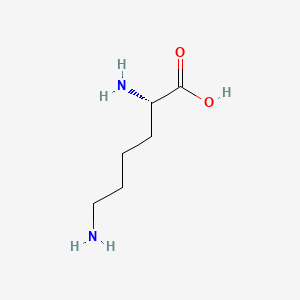
Lysine molecular structure
PubChem
01

Overview

Lysine is an essential amino acid. The linked research examines its relationship to stress and nervous-system function.

How it works

Stress-axis modulation in human trials

The linked trials measured anxiety and endocrine/autonomic responses to stress; the abstracts support changes in cortisol, chromogranin-A, ACTH, catecholamines, or skin conductance but do not identify a single molecular mechanism. [1]

Dietary fortification context

The Syrian trial tested lysine fortification of wheat in communities consuming cereal-based diets; results are nutritional-intervention findings and may not transfer to isolated high-dose lysine supplementation. [3]

02

Subjective effects

Reported experiences are kept separate from measured outcomes and remain tied to their cited context.

Decreased
Human research

In 108 healthy Japanese adults, one week of 2.64 g/day L-lysine plus 2.64 g/day L-arginine significantly reduced trait and stress-induced state anxiety and lowered basal salivary cortisol and chromogranin-A in men. [1]

Population
108 healthy Japanese adults
Exposure context
In 108 healthy Japanese adults, one week of 2.64 g/day L-lysine plus 2.64 g/day L-arginine significantly reduced trait and stress-induced state anxiety and lowered basal salivary cortisol and chromogranin-A in men.
Increased
Human research

In 29 healthy people with high trait anxiety, 3 g/day each of L-lysine and L-arginine for 10 days increased ACTH, cortisol, adrenaline, noradrenaline and galvanic skin responses during public-speaking stress versus placebo, while heart-rate and blood-pressure responses were unchanged. [2]

Population
29 healthy subjects with high trait anxiety
Exposure context
In 29 healthy people with high trait anxiety, 3 g/day each of L-lysine and L-arginine for 10 days increased ACTH, cortisol, adrenaline, noradrenaline and galvanic skin responses during public-speaking stress versus placebo, while heart-rate and blood-pressure responses were unchanged.
Increased
Human research

In a 3-month randomized trial in wheat-dependent Syrian communities, lysine-fortified wheat reduced cortisol response in women, sympathetic arousal in men, and chronic anxiety in men measured by trait-anxiety inventory. [3]

Population
Family members in economically weak Syrian communities consuming wheat as a staple
Exposure context
In a 3-month randomized trial in wheat-dependent Syrian communities, lysine-fortified wheat reduced cortisol response in women, sympathetic arousal in men, and chronic anxiety in men measured by trait-anxiety inventory.
03

Measured outcomes

What the research measured, for whom, and under which exposure. Findings remain attached to the study’s task or clinical endpoint.

In 108 healthy Japanese adults, one week of 2.64 g/day L-lysine plus 2.64 g/day L-arginine significantly reduced trait and stress-induced state anxiety and lowered basal salivary cortisol and chromogranin-A in men. [1]

Population108 healthy Japanese adultsExposureIn 108 healthy Japanese adults, one week of 2.64 g/day L-lysine plus 2.64 g/day L-arginine significantly reduced trait and stress-induced state anxiety and lowered basal salivary cortisol and chromogranin-A in men.MeasureNot assessed
Human research

In 29 healthy people with high trait anxiety, 3 g/day each of L-lysine and L-arginine for 10 days increased ACTH, cortisol, adrenaline, noradrenaline and galvanic skin responses during public-speaking stress versus placebo, while heart-rate and blood-pressure responses were unchanged. [2]

Population29 healthy subjects with high trait anxietyExposureIn 29 healthy people with high trait anxiety, 3 g/day each of L-lysine and L-arginine for 10 days increased ACTH, cortisol, adrenaline, noradrenaline and galvanic skin responses during public-speaking stress versus placebo, while heart-rate and blood-pressure responses were unchanged.MeasureNot assessed
Human research

In a 3-month randomized trial in wheat-dependent Syrian communities, lysine-fortified wheat reduced cortisol response in women, sympathetic arousal in men, and chronic anxiety in men measured by trait-anxiety inventory. [3]

PopulationFamily members in economically weak Syrian communities consuming wheat as a stapleExposureIn a 3-month randomized trial in wheat-dependent Syrian communities, lysine-fortified wheat reduced cortisol response in women, sympathetic arousal in men, and chronic anxiety in men measured by trait-anxiety inventory.MeasureNot assessed
Human research
04

Doses & routes

Study doses and reference exposures, with route, formulation and duration.

Other routes · Other or unspecified · 2 records

PubMed study exposure (17510493)

Research exposure

2.64 g [1]

Ingredient / form
Lysine · As described in the PubMed abstract
Frequency
Study exposure
Duration
Study exposure
Population
108 healthy Japanese adults
Purpose
Research exposure

Dose extracted from the PubMed abstract; verify the full text for formulation and protocol details.

PubMed study exposure (16117182)

Research exposure

3 g [2]

Ingredient / form
Lysine · As described in the PubMed abstract
Frequency
Study exposure
Duration
Study exposure
Population
29 healthy subjects with high trait anxiety
Purpose
Research exposure

Dose extracted from the PubMed abstract; verify the full text for formulation and protocol details.

05

Pharmacokinetics

Absorption, metabolism and elimination depend on the analyte, route, formulation, physiology and other exposures.

No validated elimination observation was imported in this corpus pass. [1]

06

Safety & uncertainty

Adverse effects and interactions reported in the cited studies.

Warning

Combination and population limits

The anxiety studies used lysine with arginine, and the fortification study was conducted in nutritionally vulnerable Syrian communities; these designs do not establish lysine monotherapy efficacy for the general population. [1]

Monitor

Stress-response direction differs by study

The 10-day high-trait-anxiety study increased several stress hormones during psychosocial stress despite an anxiolytic interpretation, so endocrine responses should not be summarized as uniformly reduced. [2]

Interactions in cited sources

Explore a pair of substances
07

Research & sources

3

Original publications, findings and available funding disclosures.

08

Connected claims

Explore the participants, roles and sources behind each relationship.

associated-withAuthored relationship

Lysine is associated with the reported anxiety finding in this publication.

Lysineintervention or exposure
Anxiety and jitterinessreported endpoint

Publication abstract; direction and population are retained on the linked observation.

Limitation Automated corpus import from an abstract; this record is not an independent meta-analysis.

associated-withAuthored relationship

Lysine is associated with the reported anxiety symptom severity finding in this publication.

Lysineintervention or exposure
Anxiety symptom severityreported endpoint

Publication abstract; direction and population are retained on the linked observation.

Limitation Automated corpus import from an abstract; this record is not an independent meta-analysis.

associated-withAuthored relationship

Lysine is associated with the reported anxiety finding in this publication.

Lysineintervention or exposure
Anxiety and jitterinessreported endpoint

Publication abstract; direction and population are retained on the linked observation.

Limitation Automated corpus import from an abstract; this record is not an independent meta-analysis.

associated-withAuthored relationship

Lysine is associated with the reported anxiety symptom severity finding in this publication.

Lysineintervention or exposure
Anxiety symptom severityreported endpoint

Publication abstract; direction and population are retained on the linked observation.

Limitation Automated corpus import from an abstract; this record is not an independent meta-analysis.

Explore the relationship graph
09

Publication history

Content updated Nov 1, 2026.

Keep exploring

View graph