Attachment security
IncreasedIn 26 healthy men with insecure attachment, a single intranasal dose increased ranking of secure-attachment phrases in 18 participants (69%). [6]
Human research
The substance library
Oxytocin is a peptide hormone involved in social behaviour. Studies explore social perception, emotional processing and memory.
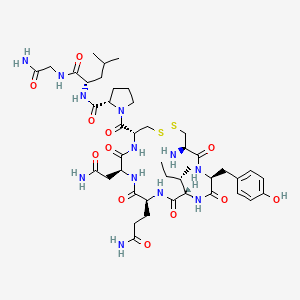
Oxytocin is a peptide hormone involved in social behaviour. Studies explore social perception, emotional processing and memory.
Linked studies report altered facial-emotion, biological-motion, attachment, and social-memory processing after intranasal oxytocin; effects vary by task and sex. [2]
In women, 24 IU oxytocin enhanced amygdala and related cortical responses to fearful faces, differing from prior male findings. [8]
Reported experiences are kept separate from measured outcomes and remain tied to their cited context.
What the research measured, for whom, and under which exposure. Findings remain attached to the study’s task or clinical endpoint.
In 26 healthy men with insecure attachment, a single intranasal dose increased ranking of secure-attachment phrases in 18 participants (69%). [6]
In 60 healthy men, 24 IU oxytocin increased positive self-attitudes during adjective self/non-self sorting versus placebo. [4]
Oxytocin did not reduce acute negative affect or attachment reactions to social rejection, although it increased desire for future interaction after inclusion. [9]
Study doses and reference exposures, with route, formulation and duration.
Intranasal · Through the nasal mucosa · 1 record
Absorption, metabolism and elimination depend on the analyte, route, formulation, physiology and other exposures.
No validated elimination observation was imported in this corpus pass. [2]
Adverse effects and interactions reported in the cited studies.
Oxytocin did not buffer acute social rejection in a 74-person study, and effects differed between positive inclusion and aversive rejection contexts. [9]
Studies were small and mostly healthy volunteers; one fMRI study found effects in women that differed from prior male data. [8]
Most linked studies used single-dose intranasal administration; this does not establish chronic use, systemic exposure, or treatment efficacy. [2]
Original publications, findings and available funding disclosures.
Explore the participants, roles and sources behind each relationship.
Small randomized studies using acute intranasal doses.
Limitation Healthy volunteer studies; no durable clinical or safety conclusion.
Content updated Nov 1, 2026.