The substance library

QuercetinFormulation-dependent flavonol evidence.

Also known as: quercetine

Quercetin is a dietary flavonol studied as an aglycone, glycoside, onion matrix, phytosome, and micellar product. Formulation changes human exposure more consistently than it changes respiratory, exercise, blood-pressure, or metabolic outcomes; clinical findings are mixed and often short-term.[S1][S4][S10][S14][S16][S17]
53 sourcesContent date Oct 10, 2026CompareExplore connectionsRevision history
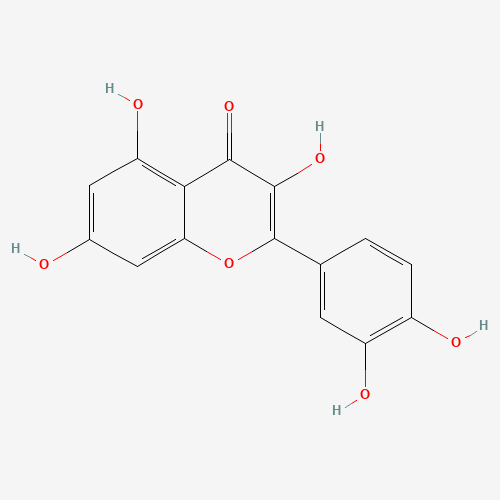
Quercetin molecular structure
PubChem
01

Overview

Quercetin is 3,3′,4′,5,7-pentahydroxyflavone (C15H10O7). Plants commonly provide sugar-bound forms such as glucosides and rutin; aglycone, glycoside, phytosome, and micellar products are not milligram-for-milligram interchangeable because absorption and circulating species differ.[S14][S16][S17][S24]

How it works

Conjugation and recycling

Glycoside hydrolysis, intestinal uptake, phase-II conjugation, biliary recycling, and microbiota metabolism determine which quercetin-related species reach plasma. [14]

Redox and inflammatory signaling

Cell and animal studies support antioxidant, NF-kB, Nrf2, mast-cell, and cytokine effects; these mechanisms do not establish human clinical efficacy. [24]

Vascular signaling

Vasorelaxation, endothelial signaling, and altered redox tone are plausible contributors to blood-pressure findings, although human vascular biomarkers were often unchanged. [6]

Metabolic signaling

Adiponectin and insulin-sensitivity changes may contribute to findings in PCOS or diabetes cohorts but have not generalized consistently across mixed populations. [10]

Enzyme and transporter hypotheses

Quercetin and metabolites can affect CYP enzymes, albumin binding, and uptake or efflux transporters in experimental systems; human probe studies show direction-specific results. [18]

Warfarin binding and metabolism hypothesis

In-vitro albumin displacement and CYP2C9 inhibition provide a possible mechanism for the isolated warfarin case, but tube findings do not quantify clinical risk. [23]

02

Subjective effects

Reported experiences are kept separate from measured outcomes and remain tied to their cited context.

Variable
Human research

In a 1002-person community trial, quercetin did not reduce overall URTI rates or symptoms; a fit subgroup aged 40 years or older had fewer sick days and lower symptom severity with 1000 mg/day. [1]

Population
Community adults; prespecified fitness and age subgroup
Exposure context
500 or 1000 mg/day for 12 weeks
Variable
Human research

A trained-cyclist study reported fewer post-exercise URTI episodes, but an ultramarathon trial found no postrace illness benefit and no counteracting immune-marker effect. [2]

Population
Trained cyclists and ultramarathon runners in separate trials
Exposure context
Quercetin around intensive exercise or a 160-km race
Variable
Human research

Three to six weeks of quercetin did not consistently change perceived exertion, cycling efficiency, running economy, or time-trial performance despite a reduction in malondialdehyde in one runner study. [4]

Population
Trained cyclists or endurance runners
Exposure context
1000 mg/day for 3–6 weeks
03

Measured outcomes

What the research measured, for whom, and under which exposure. Findings remain attached to the study’s task or clinical endpoint.

The large community RCT found no overall reduction in URTI incidence with 500 or 1000 mg/day; the positive finding was confined to a fit older subgroup. [1]

Population1002 community adultsExposure500 or 1000 mg/day for 12 weeksMeasureDaily symptom and illness records
Human research

Post-exercise illness results differed by protocol: one cycling study suggested fewer episodes, while the ultramarathon study did not reduce postrace illness. [2]

PopulationTrained cyclists and ultramarathon runnersExposureQuercetin around intensive exercise or race completionMeasureIllness surveillance
Human research

Trials found no consistent improvement in power, cycling efficiency, substrate use, VO2peak, running economy, 10-km performance, heart rate, or perceived exertion. [4]

PopulationTrained cyclists and endurance runnersExposure1000 mg/day for 3–6 weeksMeasureCycling efficiency, VO2peak, running economy, and time trial
Human research

A 730 mg/day trial lowered stage-1-hypertensive systolic and diastolic pressure by about 7 and 5 mmHg, while other onion-extract and pooled studies showed smaller or subgroup-specific effects with high heterogeneity. [6]

PopulationStage-1 hypertension, prehypertension, or overweight adults across trialsExposure150–730 mg/day for 4–6 weeksMeasureClinic blood pressure
Human research

PCOS and type-2-diabetes trials reported selected improvements in HOMA-IR, adiponectin, HbA1c, or systolic pressure, but pooled cardiometabolic evidence was largely null or heterogeneous for glucose, lipids, inflammation, and anthropometry. [10]

PopulationPCOS, type-2 diabetes, and mixed cardiometabolic trial populationsExposure500–1000 mg/day for 12–32 weeksMeasureHOMA-IR, adiponectin, HbA1c, glucose, lipid, and inflammatory assays
Human research

One adjunctive type-2-diabetes RCT reported HbA1c improvement with 500 mg/day over its protocol; this single trial does not establish a general diabetes treatment effect. [13]

PopulationAdults with type-2 diabetes receiving standard careExposure500 mg/day adjunctive quercetin for 32 weeksMeasureHbA1c assay
Human research
Study-result plots

5 of 6 findings in this selection lack structured estimates. Different measures, populations, instruments, comparators, or assessment times are shown separately.

Blood pressure
Clinic blood pressure · mean-difference · mmHg systolic

Stage-1 hypertension · Comparator: Placebo · Assessment: 28 days

Study estimates and reported confidence intervals for Blood pressure. Linear horizontal axis.1-7.84-5.67-3.5-1.330.84

Each point is one reported estimate. Intervals are displayed only when recorded. No pooled estimate is calculated. The dashed line marks the no-effect value (0).

Study / substanceEstimateIntervalEvidence
1. Quercetin
Quercetin reduces blood pressure in hypertensive subjects
-7 mmHg systolicInterval not curated
04

Doses & routes

Study doses and reference exposures, with route, formulation and duration.

Oral · By mouth · 6 records

Estimated dietary exposure

Reference description

5–100 mg/day [24]

Ingredient / form
Quercetin from foods · Food matrices; glycosides predominate
Route
Oral
Frequency
Usual diet
Duration
Habitual intake
Population
General dietary estimates
Purpose
Reference exposure, not a treatment schedule

Unusually quercetin-rich diets can provide more; food estimates are not supplement dosing guidance.

Respiratory-trial exposure

Research exposure

500–1,000 mg/day [1]

Ingredient / form
Quercetin · Study supplement; exact preparation varied by trial
Route
Oral
Frequency
Daily
Duration
12 weeks, or 3 weeks before and 2 weeks after intensive exercise
Population
Community adults or trained cyclists
Purpose
Test upper-respiratory outcomes

No overall community URTI benefit was found; one fit older subgroup signal does not define a general dose.

Exercise-trial exposure

Research exposure

1,000 mg/day [4]

Ingredient / form
Quercetin · Study supplement
Route
Oral
Frequency
Daily
Duration
3–6 weeks
Population
Trained cyclists or endurance runners
Purpose
Test exercise performance and oxidative-stress endpoints

Biomarker changes occurred without consistent performance improvement.

Blood-pressure trial exposure

Research exposure

150–730 mg/day [6]

Ingredient / form
Quercetin or quercetin-rich onion extract · Isolated quercetin or onion-skin extract
Route
Oral
Frequency
Daily
Duration
4–6 weeks
Population
Overweight adults, prehypertension, or stage-1 hypertension
Purpose
Test blood pressure and vascular endpoints

Effects were larger in selected hypertensive groups and were not uniform across studies.

Metabolic-trial exposure

Research exposure

500–1,000 mg/day [12]

Ingredient / form
Quercetin · Study supplement
Route
Oral
Frequency
Daily
Duration
12–32 weeks
Population
Women with PCOS or adults with type-2 diabetes
Purpose
Test glycemic and endocrine biomarkers

Disease-specific trials reported selected improvements, while pooled evidence remained heterogeneous.

Formulation pharmacokinetic exposure

Research exposure

100–1,000 mg [14]

Ingredient / form
Quercetin · Glycoside, onion-skin matrix, phytosome, or micellar product
Route
Oral
Frequency
Single dose or short repeated dosing
Duration
Acute sampling through 72 hours
Population
Healthy adults
Purpose
Compare exposure across formulations

Exposure comparisons do not establish superior clinical efficacy or safety.

05

Pharmacokinetics

Absorption, metabolism and elimination depend on the analyte, route, formulation, physiology and other exposures.

Elimination half-life · Quercetin and circulating conjugates
Approximately 11 hours in one glycoside crossover study

Timing explorer

Published timing evidence
The source reports timing terms but does not provide numeric elapsed intervals.
Peak
About 0.7 hours for onion and quercetin-4'-O-glucoside, and about 7 hours for rutin in one crossover study
Duration
Formulation-specific plasma persistence; micellar concentrations were followed for up to 72 hours in a pilot

Not established as a numeric timeline. Plasma timing and felt effects are distinct measurements. Source

Modeled elimination

The elimination model describes the named analyte after absorption and distribution. It does not establish felt-effect timing.

Oral · Onion, quercetin-4'-O-glucoside, or rutin · study-mean

Not modeled

Elimination model

An elimination model is not established for this observation.

Source-bound record

This observation provides context about the measured record, but it does not support a first-order elimination curve.

Measured analyte
Quercetin and circulating conjugates
Route
Oral
Formulation
Onion, quercetin-4'-O-glucoside, or rutin
Population
12 healthy adults in a crossover study

Source context

Onion and glucoside reached Cmax of about 2.3 and 2.1 micrograms/mL at about 0.7 hours, while rutin reached about 0.3 micrograms/mL at about 7 hours. The reported terminal half-life was approximately 11 hours across tested glycoside preparations; free aglycone was not the sole circulating species.
Read source context
Review the supporting record and source details.

This study-specific estimate describes measured quercetin-related plasma species and is not a universal human half-life across aglycone, glycoside, phytosome, or micellar products. [14]

Sourced elimination observations

Quercetin and circulating conjugates

Study mean

11 hours [14]

Route / formulation
Oral · Onion, quercetin-4'-O-glucoside, or rutin
Population
12 healthy adults in a crossover study

Onion and glucoside reached Cmax of about 2.3 and 2.1 micrograms/mL at about 0.7 hours, while rutin reached about 0.3 micrograms/mL at about 7 hours. The reported terminal half-life was approximately 11 hours across tested glycoside preparations; free aglycone was not the sole circulating species.

Total plasma quercetin

No numeric estimate

Not established [15]

Route / formulation
Oral · Onion-skin extract versus quercetin dihydrate
Population
Healthy adults in a randomized crossover PK study

The onion-skin matrix produced approximately 4.8-fold higher AUC and 5.4-fold higher Cmax than quercetin dihydrate at similar nominal aglycone exposure; a universal half-life was not established.

Total plasma quercetin

No numeric estimate

Not established [16]

Route / formulation
Oral · Quercetin phytosome with lecithin
Population
12 adults in a fasting crossover study

The phytosome produced markedly higher exposure than unformulated quercetin; the formulation-specific study does not provide a transferable terminal half-life.

Total plasma quercetin and metabolites

No numeric estimate

Not established [17]

Route / formulation
Oral · LipoMicel micellar quercetin
Population
10 healthy adults in a diet-controlled pilot

A 500 mg micellar product produced about 7-fold higher AUC and 7.7-fold higher Cmax than standard quercetin, with sampling extended to 72 hours; the open-label pilot does not establish a universal half-life.

Bioavailability
Glycoside, food-matrix, phytosome, and micellar preparations produce different exposure [14]
Metabolism / metabolites
Phase-II glucuronidation, sulfation, methylation, biliary recycling, and microbiota metabolism yield circulating conjugates [14]

Factors that change the estimate

Sugar moiety

Variable exposure

Glucosides generally absorbed faster and more extensively than rutin; aglycone, glucoside, and rutinoside doses are not interchangeable. [14]

Related observation

Food matrix

Higher exposure in one matrix comparison

Onion or onion-skin matrices increased AUC and Cmax relative to isolated quercetin dihydrate in a small crossover study. [15]

Related observation

Delivery system

Higher and more persistent exposure

Lecithin phytosome and micellar delivery changed AUC, Cmax, Tmax, and persistence versus unformulated quercetin. [16]

Related observation

Baseline blood pressure

Greater response in selected hypertension

One trial found larger blood-pressure reductions in stage-1 hypertension than in prehypertension; this is a subgroup result, not a universal modifier. [6]

Related observation

Analytical hydrolysis

Apparent parent concentration changes

Enzymatic hydrolysis can convert conjugates before assay and report total quercetin as apparent aglycone. [14]

Related observation

Person-to-person metabolism

Variable exposure

Age, sex, BMI, gut microbiota, phase-II enzymes, transporters, and diet are plausible contributors to PK variation; the cited studies do not support a precise individual prediction. [17]

Related observation
06

Safety & uncertainty

Adverse effects and interactions reported in the cited studies.

Warning

Short-term tolerability only

Small oral trials generally reported acceptable short-term tolerability; the 10-person micellar PK pilot reported no adverse events or gastrointestinal intolerance. [17]

Monitor

Long-term and special-population uncertainty

Long-term high-dose exposure, pregnancy, lactation, pediatric use, and substantial renal or hepatic impairment were not characterized by the cited RCT set. [1]

Context

Formulation-specific exposure

Phytosome and micellar products can produce substantially higher exposure than standard aglycone, so safety and interaction assumptions are not interchangeable. [16]

Warning

Warfarin case signal

A 79-year-old man had INR 7.5 after starting a supplement containing 250 mg quercetin plus 500 mg vitamin C; INR returned to 2.5 after discontinuation, but attribution to quercetin alone is unresolved. [22]

Monitor

Preclinical evidence boundary

In-vitro mutagenicity, antioxidant, antiviral, or enzyme findings do not establish equivalent human effects or a treatment indication. [24]

Interactions in cited sources

Explore a pair of substances

Fexofenadine

In 12 volunteers receiving quercetin 500 mg three times daily for 7 days, oral fexofenadine clearance decreased by 37%; renal clearance and half-life did not differ. [19]

Context
Controlled human pharmacokinetic study using a probe drug.

Midazolam

A single 1500 mg quercetin dose did not significantly change oral midazolam PK; after 1 week of 1500 mg/day, oral exposure tended lower with geometric AUC ratio 0.82 and 90% CI 0.61–1.10, while an intravenous substudy pointed in the opposite direction in three subjects. [18]

Context
Controlled human PK study with a small intravenous substudy.

Saquinavir

Quercetin 500 mg three times daily did not materially change plasma saquinavir AUC, Cmax, or trough concentration in 10 healthy adults; intracellular measurements were highly variable. [20]

Context
Human prospective PK interaction study.

Talinolol

Short-term quercetin produced a tendency toward lower talinolol bioavailability, contrary to a simple P-glycoprotein-inhibition prediction. [21]

Context
Human PK interaction study with uncertain transporter attribution.

Warfarin

One case report associated a quercetin-containing supplement with INR elevation from 2.5 to 7.5; the supplement also contained vitamin C and no controlled rechallenge occurred. [22]

Context
Single case report; causality possible or probable but unresolved.
07

Research & sources

53

Original publications, findings and available funding disclosures.

08

Connected claims

Explore the participants, roles and sources behind each relationship.

evidence-boundaryAuthored relationship

Quercetin is an antioxidant and anti-inflammatory treatment.

Quercetinintervention
Immune and inflammatory modulationreported-outcome-context

Mechanistically plausible and supported in preclinical systems; human clinical outcome support is insufficient.

Limitation The cited review mixes preclinical, animal, and human evidence.

evidence-boundaryAuthored relationship

Quercetin prevents colds or strengthens immunity.

Quercetinintervention
Common-cold incidencereported-outcome-context

Not supported as a general effect; selected exercise-stress or fitness subgroup findings coexist with null trials.

Limitation Respiratory evidence is heterogeneous and partly subgroup-based.

evidence-boundaryAuthored relationship

Quercetin lowers blood pressure.

Quercetinintervention
Blood pressurereported-outcome-context

Small average systolic reductions are plausible, especially in some hypertensive groups, but effects are heterogeneous and diastolic results are inconsistent.

Limitation Pooled certainty is limited by heterogeneity and short follow-up.

evidence-boundaryAuthored relationship

Quercetin improves athletic performance.

Quercetinintervention
Exercise performancereported-outcome-context

Not reliable; biomarker changes have occurred without improvements in performance, VO2peak, economy, or time trials.

Limitation Trials were small and limited to trained participants.

evidence-boundaryAuthored relationship

Quercetin treats diabetes, insulin resistance, or obesity.

Quercetinintervention
Insulin sensitivityreported-outcome-context

Selected PCOS and diabetes trials are positive, while pooled cardiometabolic evidence is largely null outside modest blood-pressure and insulin signals.

Limitation Disease-specific single trials do not establish a general treatment effect.

evidence-boundaryAuthored relationship

Quercetin treats COVID-19, cancer, or aging.

Quercetinintervention
Common-cold incidencereported-outcome-context

Not established by the cited human evidence; respiratory and COVID-19 reviews describe insufficient or low-certainty evidence.

Limitation Regulatory enforcement and rapid review do not establish efficacy.

Explore the relationship graph
10

Publication history

Content updated Oct 10, 2026.

Keep exploring

View graph