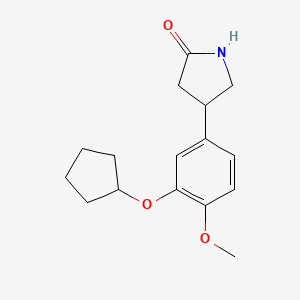
This page links PubMed evidence for rolipram. Study populations, formulations and endpoints are retained per PMID; non-PubMed links remain provenance leads. Abstracts were retrieved for PMID(s) 10633490, 22629087, 9844008.
How it works
Source-specific finding from PMID 22629087
To investigate the alterations in GABA levels by rolipram in the model of depression. [2]
Source-specific finding from PMID 10633490
Coadministration of rolipram or Ro 20-1724 with an antidepressant (either desipramine or Org 4428) for 21 d resulted in a significant induction of BDNF mRNA in hippocampus relative to administration of vehicle. [3]
02
Measured outcomes
What the research measured, for whom, and under which exposure. Findings remain attached to the study’s task or clinical endpoint.
In an attempt to improve behavioral memory, we devised a strategy to amplify the signal-to-noise ratio of the cAMP pathway, which plays a central role in hippocampal synaptic plasticity and behavioral memory. [1]
PopulationWe therefore examined the biochemical, physiological, and behavioral effects in mice of partial inhibition of a hippocampal cAMP phosphodiesterase.ExposureIn both young and aged mice, rolipram treatment before training increased long- but not short-term retention in freezing to context, a hippocampus-dependent memory task.MeasureNot assessed
Furthermore, rolipram showed a significant reduction in duration of immobility in long-term behavioral changes recorded by the FST. [2]
PopulationThe alteration of GABA content by rolipram as a phosphodiesterase enzyme type-4 inhibitor in the frontal cortex (FCx; as a brain region crucial for the control of emotion and cognition) obtained from male mice exposed to chronic mild stress (CMS)-induced anhedonia (the loss of pleasure or lack of sensitivity to pleasure stimuli) was recorded.ExposureThe alteration of GABA content by rolipram as a phosphodiesterase enzyme type-4 inhibitor in the frontal cortex (FCx; as a brain region crucial for the control of emotion and cognition) obtained from male mice exposed to chronic mild stress (CMS)-induced anhedonia (the loss of pleasure or lack of sensitivity to pleasure stimuli) was recorded.MeasureNot assessed
Coadministration of rolipram or Ro 20-1724 with an antidepressant (either desipramine or Org 4428) for 21 d resulted in a significant induction of BDNF mRNA in hippocampus relative to administration of vehicle. [3]
PopulationPopulation not stated in the PubMed record.ExposureThe influence of two selective phosphodiesterase 4 (PDE4) inhibitors, rolipram and Ro 20-1724, on the induction of BDNF mRNA by antidepressant treatment was examined.MeasureNot assessed
Limited research
03
Doses & routes
Study doses and reference exposures, with route, formulation and duration.
Oral · By mouth · 1 record
04
Pharmacokinetics
Absorption, metabolism and elimination depend on the analyte, route, formulation, physiology and other exposures.
No validated elimination observation was imported in this corpus pass. [1]
05
Research & sources
3
Original publications, findings and available funding disclosures.
06
Connected claims
Explore the participants, roles and sources behind each relationship.
associated-withAuthored relationship
PMID 9844008 reported: In an attempt to improve behavioral memory, we devised a strategy to amplify the signal-to-noise ratio of the cAMP pathway, which plays a central role in hippocampal synaptic plasticity and behavioral memory.
Source-specific result from PMID 9844008; applies to the population and design described in that abstract.
Limitation Abstract result from PMID 9844008; this single study does not establish general efficacy or safety.
associated-withAuthored relationship
PMID 22629087 reported: Furthermore, rolipram showed a significant reduction in duration of immobility in long-term behavioral changes recorded by the FST.
Source-specific result from PMID 22629087; applies to the population and design described in that abstract.
Limitation Abstract result from PMID 22629087; this single study does not establish general efficacy or safety.
associated-withAuthored relationship
PMID 10633490 reported: Coadministration of rolipram or Ro 20-1724 with an antidepressant (either desipramine or Org 4428) for 21 d resulted in a significant induction of BDNF mRNA in hippocampus relative to administration of vehicle.
 Wikipedia