
The substance library

SunifiramResearch profile

Sunifiram is an experimental compound studied in laboratory models of learning and memory.

4 sourcesContent date Nov 1, 2026CompareExplore connectionsRevision history
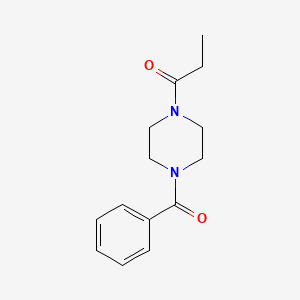
Sunifiram molecular structure
PubChem
01

Overview

Sunifiram is an experimental compound studied in laboratory models of learning and memory.

How it works

Explicit mechanistic or disposition finding (PMID 14600801)

The involvement of AMPA receptors in the mechanism of action of DM 232 and DM 235 was, therefore, investigated in vivo and in vitro. [2]

Explicit mechanistic or disposition finding (PMID 23295391)

Alzheimer's disease (AD) shows degeneration of the cholinergic system in the medial septum, thereby eliciting down-regulation of the olfactory function in patients. [3]

02

Measured outcomes

What the research measured, for whom, and under which exposure. Findings remain attached to the study’s task or clinical endpoint.

In the present study, we focused whether novel pyrrolidone nootropic drug sunifiram improves both memory impairment and depression observed in OBX mice. OBX mice were administered once a day for 7-12 days with sunifiram (0.01-1.0mg/kg p.o.) from 10 days after operation with or without gavestinel (10mg/kg i.p.), which is glycine-binding site inhibitor of N-methyl-d-aspartate receptor (NMDAR). The spatial reference memory assessed by Y-maze and short-term memory assessed by novel object recognition task were significantly improved by sunifiram treatment in OBX mice. [3]

PopulationWe have previously reported that olfactory bulbectomized (OBX) mice show hippocampus-dependent memory impairment as assessed by memory-related behavioral tasks and hippocampal long-term potentiation (LTP).ExposureWe have previously reported that olfactory bulbectomized (OBX) mice show hippocampus-dependent memory impairment as assessed by memory-related behavioral tasks and hippocampal long-term potentiation (LTP).Measureobject recognition task were significantly improved by sunifiram treatment in OBX mice
Human research

DM235 (sunifiram), a new compound structurally related to piracetam, prevented the amnesia induced by scopolamine (1.5 mg kg(-1) i.p.), after intraperitoneal (0.001-0.1 mg kg(-1)) or oral (0.01-0.1 mg kg(-1)) administration, as shown by a passive avoidance test in mice. DM235 also prevented mecamylamine (20 mg kg(-1) i.p.)-, baclofen (2 mg kg(-1) i.p.)- and clonidine (0.125 mg kg(-1) i.p.)-induced amnesia in the same test. In the Morris water maze test with rats, scopolamine (0.8 mg kg(-1) i.p.) inhibited the reduction of escape latency in both acquisition and retention/retraining tests. [4]

PopulationDM235 (sunifiram), a new compound structurally related to piracetam, prevented the amnesia induced by scopolamine (1.5 mg kg(-1) i.p.), after intraperitoneal (0.001-0.1 mg kg(-1)) or oral (0.01-0.1 mg kg(-1)) administration, as shown by a passive avoidance test in mice.ExposureDM235 (sunifiram), a new compound structurally related to piracetam, prevented the amnesia induced by scopolamine (1.5 mg kg(-1) i.p.), after intraperitoneal (0.001-0.1 mg kg(-1)) or oral (0.01-0.1 mg kg(-1)) administration, as shown by a passive avoidance test in mice.MeasureMorris water maze test with rats, scopolamine (0
Limited research
03

Doses & routes

Study doses and reference exposures, with route, formulation and duration.

Oral · By mouth · 2 records

PMID 12070754 study exposure: 0.1 mg

Research exposure

0.1 mg [4]

Ingredient / form
Sunifiram · Study formulation as stated in the abstract
Route
oral
Frequency
As stated in the abstract
Duration
Study duration as stated in the abstract
Population
DM235 (sunifiram), a new compound structurally related to piracetam, prevented the amnesia induced by scopolamine (1.5 mg kg(-1) i.p.), after intraperitoneal (0.001-0.1 mg kg(-1)) or oral (0.01-0.1 mg kg(-1)) administration, as shown by a passive avoidance test in mice.
Purpose
Research exposure; not a general-use recommendation

001-0.1 mg kg(-1)) or oral (0

PMID 12070754 study exposure: 0.8 mg

Research exposure

0.8 mg [4]

Ingredient / form
Sunifiram · Study formulation as stated in the abstract
Route
oral
Frequency
As stated in the abstract
Duration
Study duration as stated in the abstract
Population
DM235 (sunifiram), a new compound structurally related to piracetam, prevented the amnesia induced by scopolamine (1.5 mg kg(-1) i.p.), after intraperitoneal (0.001-0.1 mg kg(-1)) or oral (0.01-0.1 mg kg(-1)) administration, as shown by a passive avoidance test in mice.
Purpose
Research exposure; not a general-use recommendation

In the Morris water maze test with rats, scopolamine (0.8 mg kg(-1) i

04

Pharmacokinetics

Absorption, metabolism and elimination depend on the analyte, route, formulation, physiology and other exposures.

No pharmacokinetic observation was supplied by this identity import. [1]

05

Research & sources

4

Original publications, findings and available funding disclosures.

06

Connected claims

Explore the participants, roles and sources behind each relationship.

associated-withAuthored relationship

In the present study, we focused whether novel pyrrolidone nootropic drug sunifiram improves both memory impairment and depression observed in OBX mice. OBX mice were administered once a day for 7-12 days with sunifiram (0.01-1.0mg/kg p.o.) from 10 days after operation with or without gavestinel (10mg/kg i.p.), which is glycine-binding site inhibitor of N-methyl-d-aspartate receptor (NMDAR). The spatial reference memory assessed by Y-maze and short-term memory assessed by novel object recognition task were significantly improved by sunifiram treatment in OBX mice.

Sunifiramintervention or exposure

PMID 23295391 abstract result/conclusion; direction and population are retained on the linked observation.

Limitation Single publication; the abstract does not establish general efficacy or safety.

associated-withAuthored relationship

DM235 (sunifiram), a new compound structurally related to piracetam, prevented the amnesia induced by scopolamine (1.5 mg kg(-1) i.p.), after intraperitoneal (0.001-0.1 mg kg(-1)) or oral (0.01-0.1 mg kg(-1)) administration, as shown by a passive avoidance test in mice. DM235 also prevented mecamylamine (20 mg kg(-1) i.p.)-, baclofen (2 mg kg(-1) i.p.)- and clonidine (0.125 mg kg(-1) i.p.)-induced amnesia in the same test. In the Morris water maze test with rats, scopolamine (0.8 mg kg(-1) i.p.) inhibited the reduction of escape latency in both acquisition and retention/retraining tests.

Sunifiramintervention or exposure

PMID 12070754 abstract result/conclusion; direction and population are retained on the linked observation.

Limitation Single publication; the abstract does not establish general efficacy or safety.

Explore the relationship graph
07

Publication history

Content updated Nov 1, 2026.

Keep exploring

View graph