The substance library

CytisineResearch compound

Cytisine acts on nicotinic acetylcholine receptors. Research examines its effects on nicotine use and cognitive performance.

4 sourcesContent date Nov 1, 2026CompareExplore connectionsRevision history
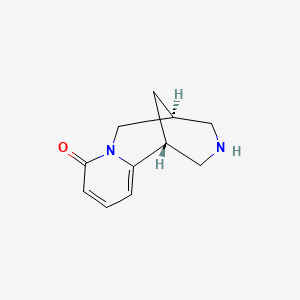
Cytisine molecular structure
PubChem
01

Overview

The strongest human evidence in this index is the 1,310-person open-label noninferiority trial: 25 days of cytisine plus brief behavioral support produced higher self-reported continuous abstinence than 8 weeks of nicotine-replacement therapy at 1 month (40% vs 31%; difference 9.3 percentage points, 95% CI 4.2–14.5), with more self-reported adverse events, mainly nausea/vomiting and sleep disorders (PMID 25517706). Animal studies report partial nicotine substitution and reversal of nicotine effects (PMID 25839895) and reduced stress-induced depression-like behaviors (PMID 27098858).

How it works

Partial α4β2 nicotinic-receptor agonism

The linked papers describe cytisine as a partial agonist at α4β2 nicotinic acetylcholine receptors; the rat study found weak partial nicotine-like effects and reversal of several nicotine effects. [2]

Stress-model molecular changes

In UCMS-exposed mice, daily intraperitoneal cytisine 1 mg/kg for two weeks reversed stress-associated decreases in hippocampal and amygdala 5-HT1A, BDNF and mTOR signaling; this is a preclinical mechanism observation. [1]

02

Subjective effects

Reported experiences are kept separate from measured outcomes and remain tied to their cited context.

Decreased
Limited research

In mice exposed to unpredictable chronic mild stress, two weeks of cytisine treatment relieved reduced open-field activity and prolonged immobility in tail-suspension and forced-swim tests. [1]

Population
UCMS-exposed mice
Exposure context
Two-week cytisine treatment; dose details require full-text methods.
Variable
Limited research

In Wistar rats, cytisine partially substituted for nicotine, did not lower intracranial self-stimulation thresholds or stimulate locomotion, and at 3 mg/kg reversed several nicotine effects. [2]

Population
Adult Wistar rats
Exposure context
Cytisine 0.3-3 mg/kg and 1-3 mg/kg paradigms
03

Measured outcomes

What the research measured, for whom, and under which exposure. Findings remain attached to the study’s task or clinical endpoint.

At one month, self-reported continuous abstinence was 40% with cytisine versus 31% with nicotine-replacement therapy (difference 9.3 percentage points; 95% CI 4.2-14.5) in 1310 adult daily smokers receiving brief behavioral support. [4]

Population1310 adult daily smokers motivated to quitExposureCytisine for 25 days versus nicotine-replacement therapy for 8 weeksMeasureSelf-reported continuous abstinence
Human research

Over six months, adverse events were reported more often with cytisine (288 events among 204 participants) than nicotine-replacement therapy (174 events among 134 participants); nausea/vomiting and sleep disorders predominated. [4]

Population1310 adult daily smokersExposureCytisine for 25 daysMeasureSelf-reported adverse events
Human research
04

Doses & routes

Study doses and reference exposures, with route, formulation and duration.

Oral · By mouth · 1 record

Cytisine in nicotine-cessation trial

Research exposure

25-day regimen [4]

Ingredient / form
Cytisine · Oral cytisine tablets
Route
Oral
Frequency
Study regimen
Duration
25 days
Population
1310 adult daily smokers in New Zealand
Purpose
Smoking cessation

The PubMed abstract reports a 25-day cytisine course but does not state tablet strengths or taper schedule.

05

Pharmacokinetics

Absorption, metabolism and elimination depend on the analyte, route, formulation, physiology and other exposures.

No validated elimination observation was imported in this corpus pass. [1]

06

Safety & uncertainty

Adverse effects and interactions reported in the cited studies.

Warning

Human adverse events in cessation trial

Cytisine produced more self-reported adverse events than nicotine-replacement therapy; nausea/vomiting and sleep disorders were the main categories reported in the abstract. [4]

Monitor

Animal-only depression evidence

Depression-like behavior and molecular changes were measured in UCMS-exposed mice; these findings do not establish antidepressant efficacy in humans. [1]

Context

No human cognitive-enhancement dataset

The linked index records do not establish improved cognition in healthy humans. [1]

Interactions in cited sources

Explore a pair of substances
07

Research & sources

4

Original publications, findings and available funding disclosures.

08

Connected claims

Explore the participants, roles and sources behind each relationship.

clinical-efficacyAuthored relationship

In a pragmatic open-label trial with brief behavioral support, cytisine improved one-month continuous smoking abstinence versus nicotine-replacement therapy.

Cytisineintervention

1310 adult daily smokers; self-reported abstinence.

Limitation Open-label design and self-reported primary outcome; this is one trial.

preclinical-effectAuthored relationship

Cytisine reduced stress-induced depression-like behaviors in mice.

Unpredictable chronic mild stress mouse model.

Limitation Animal model; no human antidepressant conclusion.

Explore the relationship graph
09

Publication history

Content updated Nov 1, 2026.

Keep exploring

View graph