Average daily pain fell from 6.3 to 4.2 in the gabapentin efficacy group and from 6.5 to 6.0 with placebo after titration to a maximum tolerated dose up to 3600 mg/day. [4]
Human research
The substance library
Gabapentin acts on alpha-2-delta subunits of voltage-gated calcium channels. Studies examine its effects on pain, seizures and nervous-system function.
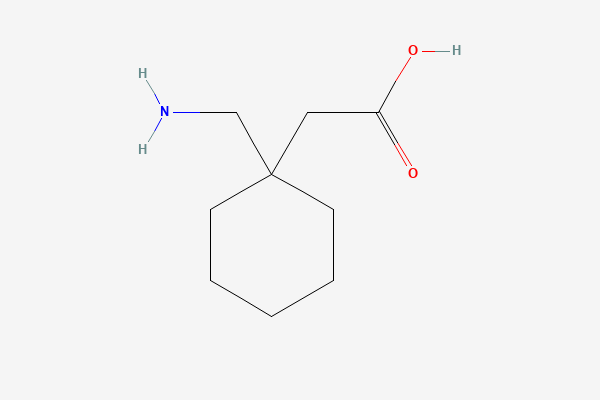
The clinically used active ingredient in the cited Neurontin and Gralise products is gabapentin itself rather than a gabapentin hydrochloride salt. Neurontin is available as immediate-release capsules, tablets, and oral solution, whereas Gralise is a once-daily gastroretentive tablet whose food-dependent absorption and delayed peak distinguish it from immediate-release products. Gabapentin absorption is capacity-limited: oral bioavailability falls as dose increases, and the Gralise label describes absorption from the proximal small bowel through a saturable L-amino transport system. Gabapentin is essentially unmetabolized and is excreted unchanged through the kidneys. The EMA Neurontin referral documents nationally authorized European uses and harmonization across Member States rather than a single centralized EU authorization. Sources: pubchem; neurontin-label-2026; gralise-label-2026; ema-neurontin-referral.
Gabapentin binds with high affinity to the α2δ subunit of voltage-activated calcium channels in vitro. The current Neurontin label explicitly states that the relationship between this binding and gabapentin's antiepileptic or analgesic clinical effects is unknown; the binding observation therefore is not treated as proof of a clinical efficacy mechanism. [2]
Reported experiences are kept separate from measured outcomes and remain tied to their cited context.
What the research measured, for whom, and under which exposure. Findings remain attached to the study’s task or clinical endpoint.
Average daily pain fell from 6.3 to 4.2 in the gabapentin efficacy group and from 6.5 to 6.0 with placebo after titration to a maximum tolerated dose up to 3600 mg/day. [4]
Both fixed-dose groups showed larger percentage reductions in average daily pain than placebo. [5]
The prespecified baseline-observation-carried-forward primary average-daily-pain endpoint did not significantly differ from placebo for either once-daily or asymmetrically divided 1800 mg/day dosing. A secondary LOCF analysis favored once-daily dosing but not divided dosing. [6]
Once-daily gastroretentive gabapentin produced a larger percentage reduction in average daily pain than placebo in an integrated analysis of two phase-3 trials. [7]
Starting gabapentin within 72 hours of acute herpes-zoster rash did not reduce pain at 12 weeks and did not prevent PHN. [8]
The label's first adult/adolescent adjunctive trial found a significantly higher proportion achieving at least a 50% reduction in seizure frequency with gabapentin. [2]
The 1200 mg/day and 600 mg/day responder-rate comparisons were not statistically significant, whereas 1800 mg/day was significantly superior to placebo, preserving an important dose-specific null result. [2]
Response ratio favored gabapentin significantly, but the conventional 50%-responder-rate endpoint did not significantly differ from placebo. [2]
Gabapentin did not measurably alter composite psychomotor or memory scores across the studied dose range, despite reducing seizure frequency and increasing drowsiness at the highest dose. [9]
Gabapentin was noninferior to placebo for standard deviation of lateral position and speed deviation but did not meet noninferiority for lane excursions; secondary sleepiness and cognitive endpoints generally supported little appreciable next-day impairment at this dose. [13]
Gabapentin reduced RLS symptoms across the reported clinical scales and reduced the periodic-leg-movement index while improving several polysomnographic sleep measures. [10]
Among 13 completers, most responded during gabapentin but not placebo treatment. [11]
Clinician- and patient-rated social-phobia symptoms favored gabapentin over placebo in this patient-treatment trial. [14]
The prespecified overall analysis found no gabapentin-placebo difference; a favorable finding in patients with baseline PAS scores of at least 20 was post hoc. [15]
13 of 14 findings in this selection lack structured estimates. Different measures, populations, instruments, comparators, or assessment times are shown separately.
Study doses and reference exposures, with route, formulation and duration.
Food timing and solubility labels describe the cited route or formulation. Solubility alone does not establish whether food changes absorption.
Oral · By mouth · 18 records
Absorption, metabolism and elimination depend on the analyte, route, formulation, physiology and other exposures.
The elimination model describes the named analyte after absorption and distribution. It does not establish felt-effect timing.
Oral · Immediate-release gabapentin · reported-range
The current Neurontin label reports an elimination half-life of 5–7 hours for immediate-release gabapentin in people with normal renal function; renal impairment can prolong elimination markedly, so this is not a universal half-life. [2]
Adverse effects and interactions reported in the cited studies.
Controlled trials found increased somnolence and dizziness with gabapentin; in adjunctive epilepsy trials at doses up to 1800 mg/day, ataxia was reported in 13% versus 6% with placebo. The label warns that a patient's ability to drive or operate complex machinery should not be presumed unimpaired solely from self-assessment. [2]
The antiepileptic-drug class warning is based on pooled placebo-controlled trials of 11 antiepileptic drugs, not a gabapentin-only estimate. The label reports an adjusted relative risk of 1.8 (95% CI 1.2–2.7), with suicidal behavior or ideation in 0.43% of antiepileptic-drug recipients versus 0.24% of placebo recipients, approximately one additional case per 530 treated patients. [2]
Serious, life-threatening, and fatal respiratory depression has been reported when gabapentin is used with CNS depressants including opioids and in patients with underlying respiratory impairment. The label advises low-dose initiation where appropriate and monitoring for sedation and respiratory depression. [2]
Abrupt or rapid discontinuation can increase seizure risk and can produce withdrawal reactions. The Neurontin label recommends tapering over at least one week unless safety considerations require faster withdrawal; postmarketing withdrawal symptoms have often appeared within 48 hours after discontinuation. [2]
Postmarketing reports and published literature describe gabapentin misuse and abuse, particularly in people with polysubstance-use histories and sometimes at supratherapeutic or off-label doses. Dependence and withdrawal have also been reported. The MHRA strengthened gabapentinoid warnings in 2026 to emphasize addiction, dependence, withdrawal reactions, and tolerance. [18]
Because gabapentin is eliminated unchanged through the kidneys, impaired renal function can markedly prolong exposure. Dose adjustment is required for reduced creatinine clearance, and immediate-release Neurontin has specific post-hemodialysis supplemental dosing. [2]
The Neurontin label warns about DRESS or multiorgan hypersensitivity as well as anaphylaxis and angioedema; these reactions can occur without the full classic constellation of rash, fever, or lymphadenopathy. [2]
Original publications, findings and available funding disclosures.
This link leaves BHWiki for an outside experience index. It is not a finding, a dose, or a source for the claims above. The report text is not stored here.
Explore the participants, roles and sources behind each relationship.
Current U.S. prescribing information
Limitation The binding observation is mechanistic pharmacology and should not be converted into a clinical-effect magnitude.
A social-phobia randomized trial favored gabapentin, whereas the overall panic-disorder randomized analysis was null and its positive severe-subgroup result was post hoc.
Limitation The trials enrolled patients with specific anxiety disorders; neither was a healthy-volunteer anxiolysis trial.
U.S. Gralise prescribing information
Limitation This is a product-specific labeling statement, not evidence that the active parent molecule differs chemically.
Current U.S. parent-gabapentin labels compared with parent-gabapentin RLS trials
Limitation Regulatory indications are jurisdiction- and formulation-specific; this claim addresses the cited current U.S. parent-gabapentin labels only.
Content updated Oct 16, 2026.