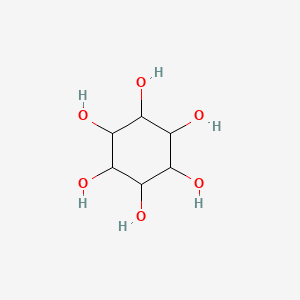
Inositol is a sugar-like compound involved in cell signalling. Research here explores its links to dopamine signalling and mood-related conditions.
How it works
Source-specific finding from PMID 11267629
A large body of evidence suggests that the neuropathology of obsessive-compulsive disorder (OCD) lies in the complex neurotransmitter network of the cortico-striatal-thalamo-cortical (CSTC) circuit, where dopamine (DA), serotonin (5HT), glutamate (Glu), and gamma-amino butyric acid (GABA) dysfunction have been implicated in the disorder. Chronic inositol has been found to be effective in specific disorders that respond to selective serotonin reuptake inhibitors (SSRIs), including OCD, panic, and depression. [2]
02
Measured outcomes
What the research measured, for whom, and under which exposure. Findings remain attached to the study’s task or clinical endpoint.
A large body of evidence suggests that the neuropathology of obsessive-compulsive disorder (OCD) lies in the complex neurotransmitter network of the cortico-striatal-thalamo-cortical (CSTC) circuit, where dopamine (DA), serotonin (5HT), glutamate (Glu), and gamma-amino butyric acid (GABA) dysfunction have been implicated in the disorder. Chronic inositol has been found to be effective in specific disorders that respond to selective serotonin reuptake inhibitors (SSRIs), including OCD, panic, and depression. [2]
PopulationSince nigro-striatal DA tracts are subject to 5HT(2) heteroreceptor regulation, one possible mechanism of inositol in OCD may involve its effects on inositol-dependent receptors, especially the 5HT(2) receptor, and a resulting effect on DA pathways in the striatum.ExposureA large body of evidence suggests that the neuropathology of obsessive-compulsive disorder (OCD) lies in the complex neurotransmitter network of the cortico-striatal-thalamo-cortical (CSTC) circuit, where dopamine (DA), serotonin (5HT), glutamate (Glu), and gamma-amino butyric acid (GABA) dysfunction have been implicated in the disorder. Chronic inositol has been found to be effective in specific disorders that respond to selective serotonin reuptake inhibitors (SSRIs), including OCD, panic, and depression.MeasureNot assessed
Limited research
03
Pharmacokinetics
Absorption, metabolism and elimination depend on the analyte, route, formulation, physiology and other exposures.
No pharmacokinetic observation was supplied by this identity import. [1]
04
Safety & uncertainty
Adverse effects and interactions reported in the cited studies.
Warning
Source-specific finding from PMID 11267629
A large body of evidence suggests that the neuropathology of obsessive-compulsive disorder (OCD) lies in the complex neurotransmitter network of the cortico-striatal-thalamo-cortical (CSTC) circuit, where dopamine (DA), serotonin (5HT), glutamate (Glu), and gamma-amino butyric acid (GABA) dysfunction have been implicated in the disorder. Chronic inositol has been found to be effective in specific disorders that respond to selective serotonin reuptake inhibitors (SSRIs), including OCD, panic, and depression. [2]
Original publications, findings and available funding disclosures.
06
Connected claims
Explore the participants, roles and sources behind each relationship.
associated-withAuthored relationship
PMID 11267629 reports: A large body of evidence suggests that the neuropathology of obsessive-compulsive disorder (OCD) lies in the complex neurotransmitter network of the cortico-striatal-thalamo-cortical (CSTC) circuit, where dopamine (DA), serotonin (5HT), glutamate (Glu), and gamma-amino butyric acid (GABA) dysfunction have been implicated in the disorder. Chronic inositol has been found to be effective in specific disorders that respond to selective serotonin reuptake inhibitors (SSRIs), including OCD, panic, and depression.
 Wikipedia