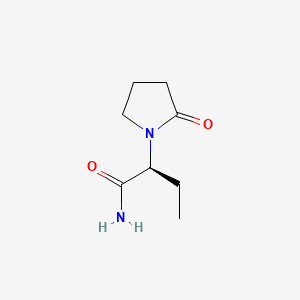
RESULTS: A two-way-ANOVA was implemented to observe the interaction between conditions (placebo or LEV 500 mg) and moments (pre- and post-ingestion of LEV or placebo). The data were analyzed by the SPSS statistical package (p<0.05). For the neuropsychological parameter, the Trail Making Test (A) was the only test that showed significant difference for condition in the task execution time (p=0.026). Regarding the reaction time in the behavioral parameter, an interaction between both factors (p=0.034) was identified through a two-way-ANOVA (condition versus moment). Electrophysiological measures showed a significant interaction for electrodes: F7, F3, and FZ. CONCLUSIONS: The findings showed [1]
PopulationMETHODS: Twelve healthy subjects (5 men and 7 women; mean age, 30.08 years, standard deviation, 4.71) were recruited for this study.ExposureRESULTS: A two-way-ANOVA was implemented to observe the interaction between conditions (placebo or LEV 500 mg) and moments (pre- and post-ingestion of LEV or placebo). The data were analyzed by the SPSS statistical package (p<0.05). For the neuropsychological parameter, the Trail Making Test (A) was the only test that showed significant difference for condition in the task execution time (p=0.026). Regarding the reaction time in the behavioral parameter, an interaction between both factors (p=0.034) was identified through a two-way-ANOVA (condition versus moment). Electrophysiological measures showed a significant interaction for electrodes: F7, F3, and FZ. CONCLUSIONS: The findings showed MeasureNot assessed
Human research
03
Doses & routes
Study doses and reference exposures, with route, formulation and duration.
Other routes · Other or unspecified · 1 record
04
Pharmacokinetics
Absorption, metabolism and elimination depend on the analyte, route, formulation, physiology and other exposures.
No validated elimination observation was imported in this corpus pass. [1]
05
Safety & uncertainty
Adverse effects and interactions reported in the cited studies.
Warning
Source-specific finding from PMID 25912541
RESULTS: A two-way-ANOVA was implemented to observe the interaction between conditions (placebo or LEV 500 mg) and moments (pre- and post-ingestion of LEV or placebo). The data were analyzed by the SPSS statistical package (p<0.05). For the neuropsychological parameter, the Trail Making Test (A) was the only test that showed significant difference for condition in the task execution time (p=0.026). Regarding the reaction time in the behavioral parameter, an interaction between both factors (p=0.034) was identified through a two-way-ANOVA (condition versus moment). Electrophysiological measures showed a significant interaction for electrodes: F7, F3, and FZ. CONCLUSIONS: The findings showed [1]
Original publications, findings and available funding disclosures.
07
Connected claims
Explore the participants, roles and sources behind each relationship.
associated-withAuthored relationship
PMID 25912541 reports: RESULTS: A two-way-ANOVA was implemented to observe the interaction between conditions (placebo or LEV 500 mg) and moments (pre- and post-ingestion of LEV or placebo). The data were analyzed by the SPSS statistical package (p<0.05). For the neuropsychological parameter, the Trail Making Test (A) was the only test that showed significant difference for condition in the task execution time (p=0.026). Regarding the reaction time in the behavioral parameter, an interaction between both factors (p=0.034) was identified through a two-way-ANOVA (condition versus moment). Electrophysiological measures showed a significant interaction for electrodes: F7, F3, and FZ. CONCLUSIONS: The findings showed