Pivotal trials improved MWT and clinician global ratings; 400 mg did not consistently outperform 200 mg. [1]
Human research
The substance library
Also known as: Provigil
S. for narcolepsy, residual OSA sleepiness and diagnosed shift-work disorder.
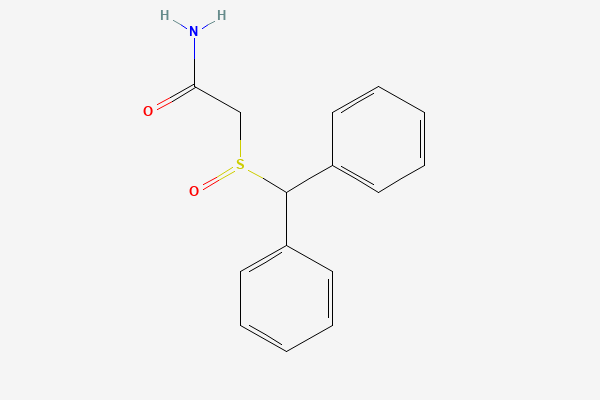
The U.S. label uses 200 mg once daily for narcolepsy and OSA or about one hour before a diagnosed night shift; it treats residual sleepiness, not airway obstruction or ordinary fatigue. [dr-modafinil-link-1]
The exact clinical mechanism remains incompletely established; dopamine-transporter binding and in-vitro/animal findings should not be treated as a complete human cognitive mechanism. [1]
Reported experiences are kept separate from measured outcomes and remain tied to their cited context.
Modafinil improves objective and subjective wakefulness in narcolepsy, OSA residual sleepiness and diagnosed SWD; it does not normalize all performance under sleep loss. [1]
Healthy-volunteer trials show selective small benefits mixed with many null outcomes and occasional slowing; this is not a general cognitive-enhancement result. [2]
Three 300 mg doses during 64 hours of sustained work improved mood, fatigue, sleepiness, reaction time, logical reasoning, and short-term memory versus placebo in military subjects. [31]
What the research measured, for whom, and under which exposure. Findings remain attached to the study’s task or clinical endpoint.
Pivotal trials improved MWT and clinician global ratings; 400 mg did not consistently outperform 200 mg. [1]
Pooled RCTs improved MWT and ESS in patients already receiving primary OSA treatment; meta-analysis estimates are class-pooled. [7]
A diagnosed-SWD trial improved MSLT, PVT lapses and CGI-C, but residual sleepiness and impaired performance remained. [9]
After 41.5 hours awake, 200 and 400 mg improved alertness/performance versus placebo; doses did not differ significantly and were broadly comparable with caffeine. [5]
In 60 healthy young men, single 100 or 200 mg modafinil improved selected digit-span, visual-pattern, spatial-planning and stop-signal tasks but slowed some other tasks. [3]
In 160 healthy students, modafinil did not improve global cognitive performance, digit span or block design; a small Stroop improvement was observed. [25]
Study doses and reference exposures, with route, formulation and duration.
Oral · By mouth · 8 records
200 mg [1]
400 mg/day tolerated in trials but no consistent extra benefit over 200 mg.
200 mg [1]
Does not treat airway obstruction; adequate primary therapy remains necessary.
200 mg [1]
Applies to diagnosed SWD rather than ordinary shift-work fatigue.
200 or 400 mg single dose [5]
Comparable overall with 600 mg caffeine; not evidence for replacing sleep.
100–200 mg [3]
Single-dose laboratory exposure; not a cognitive-enhancement recommendation.
300–300 mg per dose [31]
Operational research exposure with recovery-sleep assessment.
100–100 mg per dose [32]
Controlled operational study; not general prescribing guidance.
255–510 mg/day [34]
No significant AISRS benefit versus placebo.
Absorption, metabolism and elimination depend on the analyte, route, formulation, physiology and other exposures.
Not established as a numeric timeline. Plasma timing and felt effects are distinct measurements. Source
The elimination model describes the named analyte after absorption and distribution. It does not establish felt-effect timing.
Oral · Immediate-release tablet · approximate
Elimination model
This observation provides context about the measured record, but it does not support a first-order elimination curve.
Source context
Effective multiple-dose half-life is approximately 15 hours; R-modafinil persists about three times longer than S-modafinil. Food delays Tmax by about one hour without materially changing overall exposure.Read source context ↗
Label and human PK evidence; racemate contains a shorter-lived S-enantiomer. [1]
15 hours [1]
Effective multiple-dose half-life is approximately 15 hours; R-modafinil persists about three times longer than S-modafinil. Food delays Tmax by about one hour without materially changing overall exposure.
Advanced cirrhosis lowers clearance by about 60% and approximately doubles steady-state concentration; the label recommends half dosing in severe hepatic impairment. [1]
Related observationThe label documents lower exposure to steroidal contraceptives, cyclosporine, midazolam and triazolam. [1]
Related observationAdverse effects and interactions reported in the cited studies.
The label reports hospitalization-requiring rash, SJS/TEN and DRESS; discontinue at the first sign of clinically significant rash unless clearly unrelated. [1]
Anxiety, agitation, insomnia, mania, hallucinations, suicidal ideation, BP/heart-rate effects and rare serious events require clinical monitoring. [1]
Pregnancy registry and observational findings are incomplete and mixed; the label retains caution and does not establish fetal safety. [6]
CYP3A4/5 induction lowers steroidal contraceptive exposure; alternative or concomitant contraception is advised during treatment and for one month after stopping in the U.S. label. [1]
The label recommends additional PT/INR monitoring. [1]
Inhibition can increase exposure to phenytoin, diazepam, propranolol, omeprazole and clomipramine. [1]
Original publications, findings and available funding disclosures.
use, C-IV — Full Prescribing Information. Apotex Corp.; DailyMed/National Library of Medicine. 2026; SPL v21, effective July 21, 2026. [Direct regulator URL](
Source R1 supports the section-specific finding cited in this article.
Limitations Study-specific population, formulation, design and disclosure limits remain as described in the report.
Funding: not applicable to a research study. Sponsorship/status: product labeler Apotex; official US SPL hosted by DailyMed. Conflicts: not an investigator-authored publication. Conflict status: official regulatory source with manufacturer provenance.
Conflicts of interest: not an investigator-authored publication. Conflict status: official regulatory source with manufacturer provenance.
Roberts, Andrew Jones, Harry Sumnall, Suzanne H. Gage, Catharine Montgomery. 2020. [PubMed](
Source R2 supports the section-specific finding cited in this article.
Limitations Study-specific population, formulation, design and disclosure limits remain as described in the report.
Funding: not identified in accessible manuscript/record; unknown. Sponsorship: unknown/not identified. Conflicts: authors declared no conflicts. Conflict status: no declared author COI; funding incompletely identified.
Conflicts of interest: authors declared no conflicts. Conflict status: no declared author COI; funding incompletely identified.
Danielle C. Turner, Trevor W. Robbins, Luke Clark, Adam R. Aron, Jonathan Dowson, Barbara J. Sahakian. 2003. [PubMed](
Source R3 supports the section-specific finding cited in this article.
Limitations Study-specific population, formulation, design and disclosure limits remain as described in the report.
Funding: PubMed indexes non-US-government research support; exact funder not specified in accessible record. Sponsorship: unknown. Conflicts: unknown/not stated. Conflict status: incomplete disclosure metadata.
Conflicts of interest: unknown/not stated. Conflict status: incomplete disclosure metadata.
Randall, Aparna Viswanath, Punam Bharania, Sarah M. Elsabagh, David E. Hartley, John M. Shneerson, Sandra E. File. 2005. [PubMed](
Source R4 supports the section-specific finding cited in this article.
Limitations Study-specific population, formulation, design and disclosure limits remain as described in the report.
Funding: non-US-government research support indexed; exact funder unavailable. Sponsorship: unknown. Conflicts: unknown. Conflict status: incomplete disclosure metadata.
Conflicts of interest: unknown. Conflict status: incomplete disclosure metadata.
Nancy Jo Wesensten, Gregory Belenky, Mary A. Kautz, David R. Thorne, Rebecca M. Reichardt, Thomas J. Balkin. 2002. [PubMed](
Source R5 supports the section-specific finding cited in this article.
Limitations Study-specific population, formulation, design and disclosure limits remain as described in the report.
Funding: exact funding not stated; unknown. Sponsorship: unknown. Conflicts: unknown. Conflict status: incomplete disclosure metadata.
Conflicts of interest: unknown. Conflict status: incomplete disclosure metadata.
UK Medicines and Healthcare products Regulatory Agency. 2020. [Direct regulator URL](
Source R6 supports the section-specific finding cited in this article.
Limitations Study-specific population, formulation, design and disclosure limits remain as described in the report.
Funding: public regulatory activity. Sponsorship/status: MHRA pharmacovigilance communication; not industry-sponsored research. Conflicts: none stated/applicable. Conflict status: official pharmacovigilance source.
Conflicts of interest: none stated/applicable. Conflict status: official pharmacovigilance source.
Julia L. Chapman, Andrew Vakulin, Jan Hedner, Brendon J. Yee, Nathaniel S. Marshall. 2016. [PubMed](
Source R7 supports the section-specific finding cited in this article.
Limitations Study-specific population, formulation, design and disclosure limits remain as described in the report.
Funding: Australian NHMRC support, grant 1004528, Chapman scholarship 1038709 and University of Sydney bridging support. Sponsorship: public/academic based on retrieved funding. Conflicts: complete author disclosure not recovered; unknown/partial. Conflict status: predominantly public funding, incomplete COI verification.
Conflicts of interest: complete author disclosure not recovered; unknown/partial. Conflict status: predominantly public funding, incomplete COI verification.
US Modafinil in Narcolepsy Multicenter Study Group. 1998. [PubMed](
Source R8 supports the section-specific finding cited in this article.
Limitations Study-specific population, formulation, design and disclosure limits remain as described in the report.
Funding: non-US-government research support indexed; exact source unavailable. Sponsorship: unknown from retrieved record. Conflicts: unknown. Conflict status: incomplete disclosure metadata.
Conflicts of interest: unknown. Conflict status: incomplete disclosure metadata.
Charles A. Czeisler, James K. Walsh, Thomas Roth, Rod J. Hughes, Kenneth P. Wright Jr, Lilliam Kingsbury, Sanjay Arora, Jonathan R. L. Schwartz, Gwendolyn E. Niebler, David F. Dinges; US Modafinil in SWSD Study Group. 2005. [PubMed](
Source R9 supports the section-specific finding cited in this article.
Limitations Study-specific population, formulation, design and disclosure limits remain as described in the report.
Funding: Cephalon Inc. Sponsorship: industry-sponsored. Conflicts: multiple investigators reported Cephalon consulting, speaking and/or research relationships; several authors were Cephalon employees/equity holders, and Cephalon supported an endowed professorship associated with an investigator. Conflict status: industry/material.
Conflicts of interest: multiple investigators reported Cephalon consulting, speaking and/or research relationships; several authors were Cephalon employees/equity holders, and Cephalon supported an endowed professorship associated with an investigator. Conflict status: industry/material.
Geert Mayer, Heike Benes, Peter Young, Marion Bitterlich, Andrea Rodenbeck. 2015. [PubMed](
Source R10 supports the section-specific finding cited in this article.
Limitations Study-specific population, formulation, design and disclosure limits remain as described in the report.
Funding: unknown/not stated. Sponsorship: unknown. Conflicts: unknown. Conflict status: incomplete disclosure metadata.
Conflicts of interest: unknown. Conflict status: incomplete disclosure metadata.
William G. Ondo, R. Fayle, F. Atassi, Joseph Jankovic. 2005. [PubMed](
Source R11 supports the section-specific finding cited in this article.
Limitations Study-specific population, formulation, design and disclosure limits remain as described in the report.
Funding: unrestricted educational grant from Cephalon Pharmaceuticals. Sponsorship: industry-supported. Conflicts: at least W. Ondo reported a Cephalon speaking relationship; disclosure partial. Conflict status: industry/material.
Conflicts of interest: at least W. Ondo reported a Cephalon speaking relationship; disclosure partial. Conflict status: industry/material.
Philmore Robertson Jr, Edward T. Hellriegel, Sanjay Arora, Michael Nelson. 2002. [PubMed](
Source R12 supports the section-specific finding cited in this article.
Limitations Study-specific population, formulation, design and disclosure limits remain as described in the report.
Funding: unknown/not stated. Sponsorship: unknown. Conflicts: unknown; no relationship inferred from names. Conflict status: incomplete disclosure metadata.
Conflicts of interest: unknown; no relationship inferred from names. Conflict status: incomplete disclosure metadata.
Cephalon Inc.; later Teva Branded Pharmaceutical Products R&D. 2009–2024 registry record. [ClinicalTrials.gov
Source R13 supports the section-specific finding cited in this article.
Limitations Registry or search evidence does not establish efficacy without posted results.
Funding: industry. Sponsorship/status: Cephalon/Teva-sponsored observational registry; terminated as no longer feasible; no posted results. Conflicts: sponsor-submitted registry record. Conflict status: industry/material.
Conflicts of interest: sponsor-submitted registry record. Conflict status: industry/material.
Sigal Kaplan, Julie de Nascimento, Andrea Contini. 2026. [PubMed](
Source R14 supports the section-specific finding cited in this article.
Limitations Study-specific population, formulation, design and disclosure limits remain as described in the report.
Funding: unknown/not stated. Sponsorship: unknown. Conflicts: unknown/not stated. Conflict status: incomplete disclosure metadata.
Conflicts of interest: unknown/not stated. Conflict status: incomplete disclosure metadata.
Donald R. Jasinski. 2000. [PubMed](
Source R15 supports the section-specific finding cited in this article.
Limitations Study-specific population, formulation, design and disclosure limits remain as described in the report.
Funding: entirely supported by a Cephalon grant; study drug supplied by Cephalon. Sponsorship: industry-sponsored. Conflicts: paid consultants/contractual relationships involved. Conflict status: industry/material.
Conflicts of interest: paid consultants/contractual relationships involved. Conflict status: industry/material.
Merrill M. Mitler, J. Harsh, M. Hirshkowitz, C. Guilleminault. 2000. [PubMed](
Source R16 supports the section-specific finding cited in this article.
Limitations Study-specific population, formulation, design and disclosure limits remain as described in the report.
Funding: Cephalon Inc. Sponsorship: industry-sponsored. Conflicts: complete author-disclosure detail not recovered. Conflict status: industry/material, with incomplete individual COI metadata.
Conflicts of interest: complete author-disclosure detail not recovered. Conflict status: industry/material, with incomplete individual COI metadata.
The report’s OSA synthesis also cites the systematic-review record above and its registry-linked clinical evidence; where a separate disclosure was not recoverable, status remains unknown rather than inferred.
Source R17 supports the section-specific finding cited in this article.
Limitations Registry or search evidence does not establish efficacy without posted results.
Funding: Not assessed in the returned source metadata.
Conflicts of interest: Not assessed in the returned source metadata.
Ramses Jimenez-Moreno, Adrian A Farret-Ramos, Adriana Valle-Ayala, Niurka Trujillo-Paredes, Eric Murillo-Rodriguez
BACKGROUND: Modafinil (MOD) is a waking-promoting compound that is used for the treatment of sleep disorders such as sleepiness and narcolepsy.
Limitations PubMed abstract retrieved with the PubMed connector on 2026-11-01; full text was not available for this citation.
Funding: Not reported in the retrieved PubMed record.
Conflicts of interest: Not reported in the retrieved PubMed record.
Natalie L Marchant, Faddy Kamel, Kezia Echlin, John Grice, Mark Lewis, Jennifer M Rusted
RATIONALE: The majority of studies investigating the cognitive effects of modafinil, a wake-promoting compound, demonstrate some improvements in attention.
Limitations PubMed abstract retrieved with the PubMed connector on 2026-11-01; full text was not available for this citation.
Funding: Not reported in the retrieved PubMed record.
Conflicts of interest: Not reported in the retrieved PubMed record.
Michael J Minzenberg, Cameron S Carter
Modafinil (2-[(Diphenylmethyl) sulfinyl] acetamide, Provigil) is an FDA-approved medication with wake-promoting properties.
Limitations PubMed abstract retrieved with the PubMed connector on 2026-11-01; full text was not available for this citation.
Funding: Not reported in the retrieved PubMed record.
Conflicts of interest: Not reported in the retrieved PubMed record.
Claus J Loland, Maddalena Mereu, Oluyomi M Okunola, Jianjing Cao, Thomas E Prisinzano, Sonia Mazier, Theresa Kopajtic, Lei Shi, Jonathan L Katz, Gianluigi Tanda, Amy Hauck Newman
BACKGROUND: (±)-Modafinil has piqued interest as a treatment for attention-deficit/hyperactivity disorder and stimulant dependence.
Limitations PubMed abstract retrieved with the PubMed connector on 2026-11-01; full text was not available for this citation.
Funding: Not reported in the retrieved PubMed record.
Conflicts of interest: Not reported in the retrieved PubMed record.
S E Winder-Rhodes, S R Chamberlain, M I Idris, T W Robbins, B J Sahakian, U Müller
Previous research has demonstrated cognitive-enhancing effects of modafinil in humans and generated evidence for its therapeutic potential in psychiatric disorders.
Limitations PubMed abstract retrieved with the PubMed connector on 2026-11-01; full text was not available for this citation.
Funding: Not reported in the retrieved PubMed record.
Conflicts of interest: Not reported in the retrieved PubMed record.
Ian Flindall, Daniel Richard Leff, Jonathan Goodship, Colin Sugden, Ara Darzi
OBJECTIVES: To evaluate the impact of modafinil on "free" and "cued" recall of clinical information in fatigued but nonsleep-deprived clinicians.
Limitations PubMed abstract retrieved with the PubMed connector on 2026-11-01; full text was not available for this citation.
Funding: Not reported in the retrieved PubMed record.
Conflicts of interest: Not reported in the retrieved PubMed record.
Amanda M Kelley, Catherine M Webb, Jeremy R Athy, Sanita Ley, Steven Gaydos
INTRODUCTION: Currently, there are a number of pharmaceuticals available that have potential to enhance cognitive functioning, some of which may ultimately be considered for such use in military operations.
Limitations PubMed abstract retrieved with the PubMed connector on 2026-11-01; full text was not available for this citation.
Funding: Not reported in the retrieved PubMed record.
Conflicts of interest: Not reported in the retrieved PubMed record.
Alejandro Fernández, Franco Mascayano, Walter Lips, Andrés Painel, Jonathan Norambuena, Eva Madrid
BACKGROUND: Modafinil is a drug developed and used for the treatment of excessive lethargy.
Limitations PubMed abstract retrieved with the PubMed connector on 2026-11-01; full text was not available for this citation.
Funding: Not reported in the retrieved PubMed record.
Conflicts of interest: Not reported in the retrieved PubMed record.
Not established
The research index links this non-PubMed source; it is retained as a discovery lead.
Limitations No PubMed abstract was retrieved for this non-PubMed link; full-text methods, funding, and conflicts remain unassessed.
Funding: Not reported in the retrieved PubMed record.
Conflicts of interest: Not reported in the retrieved PubMed record.
U Müller, J B Rowe, T Rittman, C Lewis, T W Robbins, B J Sahakian
BACKGROUND: Modafinil, a putative cognitive enhancing drug, has previously been shown to improve performance of healthy volunteers as well as patients with attention deficit disorder and schizophrenia, mainly in tests of executive functions.
Limitations PubMed abstract retrieved with the PubMed connector on 2026-11-01; full text was not available for this citation.
Funding: Not reported in the retrieved PubMed record.
Conflicts of interest: Not reported in the retrieved PubMed record.
Joseph V Baranski, Ross Pigeau, Peter Dinich, Ira Jacobs
The stimulant modafinil has proved to be an effective treatment modality for narcolepsy and related sleep disorders and is also being studied for use during sustained military operations to ameliorate the effects of fatigue due to sleep loss.
Limitations PubMed abstract retrieved with the PubMed connector on 2026-11-01; full text was not available for this citation.
Funding: Not reported in the retrieved PubMed record.
Conflicts of interest: Not reported in the retrieved PubMed record.
Not established
The research index links this non-PubMed source; it is retained as a discovery lead.
Limitations No PubMed abstract was retrieved for this non-PubMed link; full-text methods, funding, and conflicts remain unassessed.
Funding: Not reported in the retrieved PubMed record.
Conflicts of interest: Not reported in the retrieved PubMed record.
Randall DC, Shneerson JM, Plaha KK, File SE. 2003; racemic modafinil. [PubMed](
Modafinil is a selective wakefulness-promoting agent with beneficial effects in narcolepsy and conditions of sleep deprivation.
Limitations PubMed abstract retrieved with the PubMed connector on 2026-11-01; full text was not available for this citation.
Funding: Not reported in the retrieved PubMed record.
Conflicts of interest: Not reported in the retrieved PubMed record.
R Pigeau, P Naitoh, A Buguet, C McCann, J Baranski, M Taylor, M Thompson, I MacK
Modafinil is an alerting substance that is considered safer than amphetamine with fewer side effects.
Limitations PubMed abstract retrieved with the PubMed connector on 2026-11-01; full text was not available for this citation.
Funding: Not reported in the retrieved PubMed record.
Conflicts of interest: Not reported in the retrieved PubMed record.
Arthur Estrada, Amanda M Kelley, Catherine M Webb, Jeremy R Athy, John S Crowley
INTRODUCTION: Successful military aviation operations depend on maintaining continuous day-night operations.
Limitations PubMed abstract retrieved with the PubMed connector on 2026-11-01; full text was not available for this citation.
Funding: Not reported in the retrieved PubMed record.
Conflicts of interest: Not reported in the retrieved PubMed record.
Kathrin Finke, Chris M Dodds, Peter Bublak, Ralf Regenthal, Frank Baumann, Tom Manly, Ulrich Müller
INTRODUCTION: Theory of visual attention (TVA; Bundesen 1990) whole report tasks allow the independent measurement of visual perceptual processing speed and visual short-term memory (vSTM) storage capacity, unconfounded by motor speed.
Limitations PubMed abstract retrieved with the PubMed connector on 2026-11-01; full text was not available for this citation.
Funding: Not reported in the retrieved PubMed record.
Conflicts of interest: Not reported in the retrieved PubMed record.
Valerie K Arnold, David Feifel, Craig Q Earl, Ronghua Yang, Lenard A Adler
OBJECTIVE: This study evaluated the efficacy and tolerability of modafinil at a range of doses, versus placebo, in alleviating symptoms of ADHD in adults.
Limitations PubMed abstract retrieved with the PubMed connector on 2026-11-01; full text was not available for this citation.
Funding: Not reported in the retrieved PubMed record.
Conflicts of interest: Not reported in the retrieved PubMed record.
Joseph Biederman, Steven R Pliszka
OBJECTIVE: This secondary analysis evaluated the efficacy of modafinil in children and adolescents by subtype of attention-deficit/hyperactivity disorder (ADHD) using pooled data from 3 double-blind, placebo-controlled studies.
Limitations PubMed abstract retrieved with the PubMed connector on 2026-11-01; full text was not available for this citation.
Funding: Not reported in the retrieved PubMed record.
Conflicts of interest: Not reported in the retrieved PubMed record.
Jean-Claude Launay, Yves Besnard, Angélique Guinet, Germain Bessard, Christian Raphel, Gustave Savourey
The effects of modafinil on heat thermoregulatory responses were studied in 10 male subjects submitted to a sweating test after taking 200 mg of modafinil or placebo.
Limitations PubMed abstract retrieved with the PubMed connector on 2026-11-01; full text was not available for this citation.
Funding: Not reported in the retrieved PubMed record.
Conflicts of interest: Not reported in the retrieved PubMed record.
Yumiko Ikeda, Takuya Funayama, Amane Tateno, Haruhisa Fukayama, Yoshiro Okubo, Hidenori Suzuki
RATIONALE: Modafinil is a wake-promoting agent and has been reported to be effective in improving attention in patients with attentional disturbance.
Limitations PubMed abstract retrieved with the PubMed connector on 2026-11-01; full text was not available for this citation.
Funding: Not reported in the retrieved PubMed record.
Conflicts of interest: Not reported in the retrieved PubMed record.
Christian Bellebaum, Lars Kuchinke, Patrik Roser
Modafinil is becoming increasingly popular as a cognitive enhancer.
Limitations PubMed abstract retrieved with the PubMed connector on 2026-11-01; full text was not available for this citation.
Funding: Not reported in the retrieved PubMed record.
Conflicts of interest: Not reported in the retrieved PubMed record.
Chris Neale, David Camfield, Jonathon Reay, Con Stough, Andrew Scholey
Over recent years there has been increasing research into both pharmaceutical and nutraceutical cognition enhancers. Here we aimed to calculate the effect sizes of positive cognitive effect of the pharmaceutical modafinil in order to benchmark the effect of two widely used nutraceuticals Ginseng and Bacopa (which have consistent acute and chronic cognitive effects, respectively).
Limitations PubMed abstract retrieved with the PubMed connector on 2026-11-01; full text was not available for this citation.
Funding: Not reported in the retrieved PubMed record.
Conflicts of interest: Not reported in the retrieved PubMed record.
A Buguet, A Montmayeur, R Pigeau, P Naitoh
Polysomnograms were obtained from 37 volunteers, before (baseline) and after (two consecutive recovery nights) a 64-h sleep deprivation, with (d-amphetamine or modafinil) or without (placebo) alerting substances.
Limitations PubMed abstract retrieved with the PubMed connector on 2026-11-01; full text was not available for this citation.
Funding: Not reported in the retrieved PubMed record.
Conflicts of interest: Not reported in the retrieved PubMed record.
Dimitris Repantis, Peter Schlattmann, Oona Laisney, Isabella Heuser
The term neuroenhancement refers to improvement in the cognitive, emotional and motivational functions of healthy individuals through, inter alia, the use of drugs.
Limitations PubMed abstract retrieved with the PubMed connector on 2026-11-01; full text was not available for this citation.
Funding: Not reported in the retrieved PubMed record.
Conflicts of interest: Not reported in the retrieved PubMed record.
J V Baranski, R A Pigeau
Self-monitoring refers to the ability to assess accurately one's own performance in a specific environment.
Limitations PubMed abstract retrieved with the PubMed connector on 2026-11-01; full text was not available for this citation.
Funding: Not reported in the retrieved PubMed record.
Conflicts of interest: Not reported in the retrieved PubMed record.
Explore the participants, roles and sources behind each relationship.
Healthy meta-analysis found a very small domain-specific effect and real-world generalization is uncertain.
Limitation Patient wakefulness evidence cannot be silently relabeled as enhancement above baseline.
Severe sleep-loss studies show partial acute restoration, not normalization or a substitute for adequate sleep.
Limitation Residual impairment remains and long-term sleep restriction is untested.
300 mg doses given three times during sustained work.
Limitation Operational sleep-loss context; side effects exceeded placebo.
255–510 mg/day versus placebo in 338 enrolled adults.
Limitation Trial was adult ADHD-specific and reasonably tolerated.
Label indications are narcolepsy, OSA-associated residual sleepiness and SWD; it is not approved as a general cognitive enhancer. Authority source
MHRA safety communication describes licensed use for narcolepsy and pregnancy risk; national classifications differ. Authority source
Content updated Oct 11, 2026.