The substance library

EthanolBeverage alcohol with dose-dependent acute effects and capacity-limited elimination.

Also known as: Alcohol · Ethyl alcohol · Beverage alcohol

Ethanol is the psychoactive alcohol in beer, wine and spirits. Studies examine its dose-dependent effects on mood, sedation and cognition.

16 sourcesContent date Oct 16, 2026CompareExplore connectionsRevision history
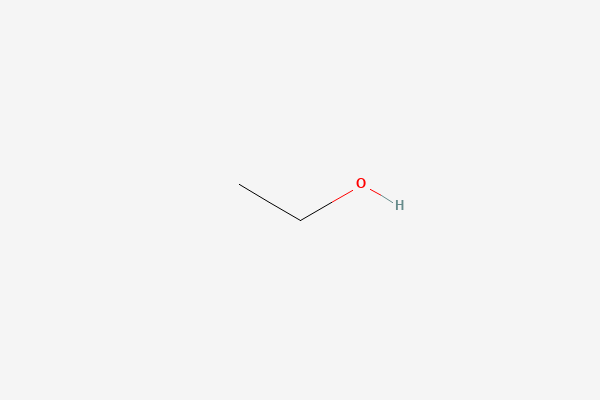
Ethanol molecular structure
PubChem
01

Overview

The parent molecule is PubChem CID 702, formula C2H6O and molecular weight 46.07 g/mol. “Beverage alcohol” refers here to ethanol delivered in beer, wine, spirits or experimental beverage formulations; those matrices are not chemically identical to pure ethanol and can change absorption context. Research doses below are experimental ethanol exposures, often normalized to body mass, not serving guidance. Ethanol is distributed in body water and is eliminated mainly by hepatic oxidation to acetaldehyde; because elimination becomes capacity-limited, a single first-order half-life is a poor general description.

How it works

Capacity-limited hepatic oxidation

Ethanol is metabolized mainly in the liver by alcohol dehydrogenase to acetaldehyde. Clinical pharmacokinetic modeling describes a concentration-dependent process analogous to Michaelis–Menten kinetics, which is why one fixed first-order half-life is not used here. [2]

NMDA-receptor current inhibition

In voltage-clamped hippocampal neurons, ethanol inhibited NMDA-activated current concentration-dependently from 5 to 50 mM; 50 mM reduced NMDA current by 61%, more than kainate- or quisqualate-activated currents in that preparation. This cellular experiment does not establish the magnitude of a human clinical effect. [8]

GABA-A receptor response variability

In 250 healthy people given 0.5 g/kg orally, GABRA4 rs2229940 was associated with reaction-time response to ethanol, while GABRA6 rs4454083 related to motor time but not the ethanol-induced change; multiple other tested GABA-A receptor missense variants were null after correction. Association does not identify a universal ethanol binding site. [7]

02

Subjective effects

Reported experiences are kept separate from measured outcomes and remain tied to their cited context.

Variable
Human research

In a randomized double-blind crossover, 0.2 g/kg produced negligible subjective effects versus placebo; 0.4 g/kg increased sedative-like ratings at 90 minutes; 0.8 g/kg increased both stimulant-like and sedative-like ratings on the ascending limb and only sedative-like ratings on the descending limb. Roughly half of participants showed the expected stimulant-then-sedative pattern, indicating marked individual variability. [3]

Population
49 healthy nonproblem social drinkers aged 21–35
Exposure context
Placebo or ethanol 0.2, 0.4, or 0.8 g/kg orally
03

Measured outcomes

What the research measured, for whom, and under which exposure. Findings remain attached to the study’s task or clinical endpoint.

Ethanol 0.4 g/kg alone significantly slowed simple reaction time for 30–60 minutes. In the same experiment ethanol alone had no detectable effect on immediate recall, prompted recall, learning or word recognition. [6]

Population10 healthy male volunteersExposureEthanol 0.4 g/kg with placebo benzodiazepine conditionMeasureSimple reaction-time and memory test battery
Human research

At 1.0 g/kg, effects were evident across the computerized psychomotor battery; at 0.5 g/kg, only coordination was significantly impaired one hour after drinking. The lower exposure therefore did not impair every measured domain. [4]

Population12 healthy volunteersExposureEthanol 0.5 or 1.0 g/kg orallyMeasureComputerized hand-eye coordination, attention and reaction-skills battery
Human research
04

Doses & routes

Study doses and reference exposures, with route, formulation and duration.

Oral · By mouth · 3 records

Acute subjective dose-response experiment

Research exposure

0.2–0.8 g/kg [3]

Ingredient / form
Ethanol · Oral alcohol challenge beverage
Route
Oral
Frequency
Single exposure per session
Duration
Four randomized crossover sessions
Population
49 healthy nonproblem social drinkers aged 21–35
Purpose
Measure acute stimulant-like and sedative-like subjective responses across dose and blood-alcohol-curve phase

Experimental exposure only; the study included a placebo session and does not establish a general-use dose range.

Acute psychomotor dose-response experiment

Research exposure

0.5–1 g/kg [4]

Ingredient / form
Ethanol · Oral alcohol challenge
Route
Oral
Frequency
Single study exposure
Duration
Acute psychomotor testing
Population
12 healthy volunteers
Purpose
Test coordination, attention and reaction-related performance

Peak blood alcohol concentrations were study-specific and do not establish a general-use dose range.

Fed-versus-fasted pharmacokinetic crossover

Research exposure

0.8 g/kg [5]

Ingredient / form
Ethanol · Oral ethanol exposure
Route
Oral
Frequency
Single exposure per condition
Duration
Blood sampling over approximately 6 hours
Population
10 healthy men
Purpose
Compare blood-ethanol profiles and disappearance with breakfast versus overnight fasting

A specific meal substantially changed exposure in this small study; the result is not a universal meal correction factor.

05

Pharmacokinetics

Absorption, metabolism and elimination depend on the analyte, route, formulation, physiology and other exposures.

Elimination half-life · Ethanol
Not represented by a single first-order half-life

Timing explorer

Published timing evidence
The source reports timing terms but does not provide numeric elapsed intervals.
Onset
Not assigned from the selected evidence
Duration
Not represented by a fixed half-life because elimination is concentration-dependent

Not established as a numeric timeline. Plasma timing and felt effects are distinct measurements. Source

Modeled elimination

The elimination model describes the named analyte after absorption and distribution. It does not establish felt-effect timing.

Systemic · Ethanol · not-established

Not modeled

Elimination model

An elimination model is not established for this observation.

Source-bound record

This observation provides context about the measured record, but it does not support a first-order elimination curve.

Measured analyte
Ethanol
Route
Systemic
Formulation
Ethanol
Population
Humans

Source context

Clinical pharmacokinetic modeling describes concentration-dependent, capacity-limited elimination rather than one stable first-order half-life; a zero-order approximation also has limitations.
Read source context
Review the supporting record and source details.

Ethanol elimination is concentration-dependent and capacity-limited; the selected pharmacokinetic source does not establish one model-stable first-order half-life. [2]

Sourced elimination observations

Ethanol

No numeric estimate

Not established [2]

Route / formulation
Systemic · Ethanol
Population
Humans

Clinical pharmacokinetic modeling describes concentration-dependent, capacity-limited elimination rather than one stable first-order half-life; a zero-order approximation also has limitations.

Bioavailability
Oral systemic exposure varies with absorption and first-pass extraction; no universal value is assigned [2]
Metabolism / metabolites
Primarily hepatic oxidation by alcohol dehydrogenase to acetaldehyde, with capacity-limited elimination at relevant concentrations [2]

Factors that change the estimate

Food or meal timing

Lower peak blood ethanol and faster disappearance in one controlled crossover

After 0.80 g/kg, mean peak BAC was 67 mg/dL after breakfast versus 104 mg/dL fasting; AUC was also lower, and the reported disappearance rate increased after food. Ten healthy men were studied, so no fixed personal correction factor is justified. [5]

Related observation
06

Safety & uncertainty

Adverse effects and interactions reported in the cited studies.

Warning

Liver cirrhosis

In 401,806 UK women who drank at least weekly, cirrhosis incidence rose with amount consumed; at 15 or more drinks per week (mean 220 g alcohol) versus 1–2 drinks (mean 30 g), adjusted RR was 3.43 (95% CI 2.87–4.10). Daily drinking and drinking without meals were additional observational risk markers. Self-report and residual confounding prevent treating meal timing as a protective intervention. [11]

Monitor

Brain structure and cognitive decline

In the Whitehall II imaging substudy, higher long-term intake was associated with hippocampal atrophy and white-matter differences; 14–<21 UK units/week was associated with right hippocampal atrophy versus abstinence (OR 3.4, 95% CI 1.4–8.1). No protective association was found for 1–<7 units/week, and no association was found with cross-sectional cognition, semantic-fluency decline or word recall. Imaging was endpoint observational data with residual-confounding and representativeness limits. [10]

Context

Blood pressure and cardiovascular burden

In 46 normotensive male drinkers, randomized reduction from about 336 to 65 mL ethanol/week lowered systolic blood pressure; the mean difference during the final two weeks was 3.8 mmHg and pressure rose when usual drinking resumed. The short male-only trial measured blood pressure, not cardiovascular events. [9]

Warning

Dependence and withdrawal

NIAAA describes alcohol use disorder as including tolerance and withdrawal and warns that sudden cessation after chronic heavy drinking can produce potentially life-threatening withdrawal, including seizures and delirium tremens. This official clinical synthesis does not predict an individual withdrawal course from ethanol dose alone. [13]

Monitor

Pregnancy

CDC states that no known safe amount or safe time for alcohol use during pregnancy has been established and that beer, wine and liquor can all be harmful; prenatal exposure can cause fetal alcohol spectrum disorders and is associated with adverse pregnancy outcomes. [14]

Context

Pregnancy cohort findings are endpoint-specific

In 10,851 pregnancies, binge exposure defined as 5 UK units (40 g alcohol) was associated with small-for-gestational-age birth (OR 1.68, 95% CI 1.15–2.47), while moderate drinking was not associated with either studied birth outcome and binge drinking was not associated with preterm birth. These observational null findings do not establish a safe prenatal threshold or address neurodevelopmental outcomes. [12]

Interactions in cited sources

Explore a pair of substances

Opioids

FDA warns that opioids combined with benzodiazepines or other CNS depressants, including alcohol, can cause extreme sleepiness, respiratory depression, coma and death. [15]

Mechanism
Additive central nervous system and respiratory depression.
Context
Class-level U.S. regulatory warning; risk magnitude varies by opioid, dose and patient and is not quantified here.
Severity in cited source
Serious risks including respiratory depression, coma and death [15]

Benzodiazepines

FDA warns not to combine benzodiazepines with alcohol because alcohol can increase serious and life-threatening effects. A small older laboratory study at specific low doses found additive critical-flicker impairment but no potentiation or prolongation of the tested benzodiazepine effects. [16]

Mechanism
Additive CNS depression; endpoint-specific interactions can differ.
Context
The narrow null result in ten healthy men does not negate the broader class warning.
Severity in cited source
FDA class warning for serious and life-threatening effects [16]
07

Research & sources

16

Original publications, findings and available funding disclosures.

Reports elsewhere

This link leaves BHWiki for an outside experience index. It is not a finding, a dose, or a source for the claims above. The report text is not stored here.

08

Connected claims

Explore the participants, roles and sources behind each relationship.

classified-asAuthored relationship

Ethanol is classified here as a central nervous system depressant while retaining evidence that acute subjective responses can include stimulant-like ratings on the ascending blood-alcohol curve.

Ethanolsubstance

Acute oral human laboratory studies of subjective and psychomotor effects

Limitation A class label does not imply that every dose, time point, endpoint or individual response is purely sedating.

Explore the relationship graph
10

Publication history

Content updated Oct 16, 2026.

Keep exploring

View graph