The substance library

PhenobarbitalLong-acting barbiturate antiseizure medicine with marked interaction, dependence, and respiratory-depression liabilities.

Phenobarbital is a long-acting barbiturate that depresses central nervous system activity. Research examines seizure control and its sedating effects.
11 sourcesContent date Oct 16, 2026CompareExplore connectionsRevision history
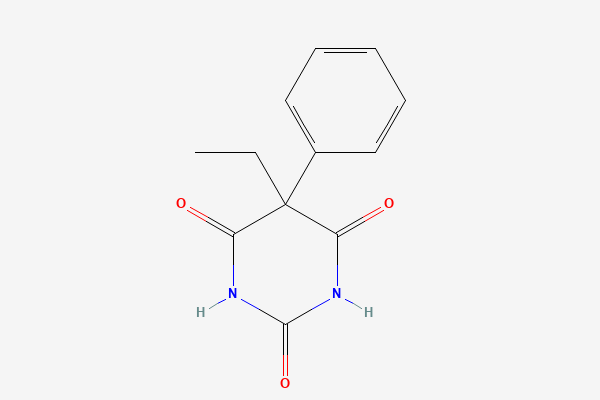
Phenobarbital molecular structure
PubChem
01

Overview

Phenobarbital is 5-ethyl-5-phenylbarbituric acid and acts as a barbiturate CNS depressant. The current neonatal prescribing information states that its precise antiseizure mechanism is not fully understood but is thought to involve potentiation of synaptic inhibition through GABAA receptors. Phenobarbital also induces hepatic drug-metabolizing enzymes; controlled healthy-volunteer work demonstrates increased metabolic clearance of a probe drug after repeated phenobarbital exposure, supporting clinically meaningful enzyme induction in humans. [dailymed-sezaby][dailymed-phenobarbital-tablets][thompson1996]

The evidence base needs regulatory context. SEZABY received U.S. marketing approval on November 17, 2022 for treatment of neonatal seizures in term and preterm infants. Its current label uses intravenous loading followed by short maintenance treatment and includes a boxed warning for concomitant opioid use as well as warnings about dependence and withdrawal when treatment is extended beyond the recommended neonatal course. Current oral phenobarbital tablet labeling describes anticonvulsant use in generalized and partial seizures, but the particular DailyMed tablet record cited here is not presented as an FDA-approved NDA product. [fda-sezaby-approval][dailymed-sezaby][dailymed-phenobarbital-tablets]

How it works

GABAA-mediated synaptic inhibition

The current neonatal label states that the precise antiseizure mechanism is not fully understood but is thought to involve potentiation of synaptic inhibition through an action at the GABAA receptor. This should not be presented as a complete explanation of every clinical effect. [3]

Hepatic enzyme induction

Phenobarbital induces drug-metabolizing pathways including CYP3A4, CYP2B6, CYP2C enzymes and UGT activity. Healthy-volunteer probe-drug data independently demonstrate increased metabolic clearance during repeated phenobarbital treatment. [8]

Long persistence and accumulation

Multi-day elimination half-lives mean serum phenobarbital can persist and accumulate well beyond the oral label's 10–12-hour duration-of-action statement; dose timing, steady state and withdrawal therefore cannot be inferred from felt sedation alone. [2]

02

Subjective effects

Reported experiences are kept separate from measured outcomes and remain tied to their cited context.

Increased
Human research

In the neonatal clinical-trial safety data summarized in the current SEZABY label, sedation was reported in 16% of phenobarbital-only subjects versus 5% of levetiracetam-only subjects. [3]

Population
Neonates in the SEZABY clinical-trial program
Exposure context
Intravenous antiseizure treatment
Increased
Human research

The current neonatal label reports abnormal respiration in 25% of phenobarbital-only subjects versus 5% of levetiracetam-only subjects and separately warns that phenobarbital can produce respiratory depression or insufficiency. [3]

Population
Neonates in the SEZABY clinical-trial program
Exposure context
Intravenous antiseizure treatment
Increased
Human research

Current oral labeling describes dose-dependent progression from drowsiness and sedation toward hypnosis and, at higher exposure, greater CNS and respiratory depression. This is label pharmacology rather than a standardized healthy-volunteer subjective-effects scale. [2]

Population
Labeled clinical use
Exposure context
Systemic phenobarbital
03

Measured outcomes

What the research measured, for whom, and under which exposure. Findings remain attached to the study’s task or clinical endpoint.

In the blinded phase IIb NEOLEV2 trial, phenobarbital produced substantially more complete 24-hour seizure freedom than levetiracetam in the modified intention-to-treat analysis. [5]

PopulationNeonates with electrographically confirmed seizuresExposureFirst-line intravenous phenobarbital, 20 mg/kg with protocol-permitted escalation to 40 mg/kg totalMeasureContinuous EEG independently reviewed by two neurophysiologists
Human research

In seven healthy adults, phenobarbital sodium parenteral solution given rectally was well absorbed relative to intramuscular administration. [7]

PopulationSeven healthy adult volunteersExposure5 mg/kg intramuscularly and rectally in a crossover design separated by five weeksMeasureSerial serum phenobarbital measurements over 288 hours
Human research

Repeated phenobarbital exposure increased antipyrine clearance and urinary 6-beta-hydroxycortisol in healthy male volunteers, providing direct human evidence of enzyme induction. [8]

PopulationHealthy male volunteersExposurePhenobarbital 30 mg orally every 6 hours for 17 daysMeasureAntipyrine pharmacokinetics and urinary 6-beta-hydroxycortisol
Human research

In neonates and infants receiving ECMO, renal replacement therapy was the major modeled covariate associated with higher phenobarbital clearance. [9]

PopulationThirty-five neonates and infants on ECMO; five received CVVHDFExposureIntravenous phenobarbital with therapeutic drug monitoringMeasurePopulation pharmacokinetic modeling of 194 measured concentrations
Human research
04

Doses & routes

Study doses and reference exposures, with route, formulation and duration.

Oral · By mouth · 3 records

Adult oral anticonvulsant dosage

Approved-label context

60–200 mg/day [2]

Ingredient / form
Phenobarbital · Tablet
Route
Oral
Frequency
Individualized daily regimen
Duration
Ongoing treatment as clinically indicated
Population
Adults treated for labeled anticonvulsant indications in the cited tablet SPL
Purpose
Seizure treatment

The current DailyMed tablet SPL lists generalized and partial seizures but identifies this product record's approval type as "unapproved drug other"; dosage must be individualized.

Pediatric oral anticonvulsant maintenance context

Reference description

3–6 mg/kg/day [2]

Ingredient / form
Phenobarbital · Tablet-label dosing information
Route
Oral
Frequency
Individualized daily regimen
Duration
Ongoing treatment as clinically indicated
Population
Pediatric patients
Purpose
Seizure treatment

The oral label directs individualization by age, weight and clinical condition and use of the clinical laboratory's reference values when interpreting anticonvulsant serum concentrations.

Infant and child anticonvulsant loading context

Reference description

15–20 mg/kg [2]

Ingredient / form
Phenobarbital · Tablet-label anticonvulsant dosing information
Route
Oral
Frequency
Loading-dose context
Duration
Initial loading
Population
Infants and children
Purpose
Seizure treatment

The cited oral label reports this loading range as producing a phenobarbital blood concentration of about 20 mcg/mL shortly after administration; it does not establish that concentration as a universal treatment target.

05

Pharmacokinetics

Absorption, metabolism and elimination depend on the analyte, route, formulation, physiology and other exposures.

Elimination half-life · Phenobarbital
53–118 hours in adults; mean 79 hours

Timing explorer

Published timing evidence
The source reports timing terms but does not provide numeric elapsed intervals.
Onset
Oral onset of action is one hour or longer in the tablet label.
Duration
Label-described pharmacologic duration of action is 10–12 hours; this is not a participant-rated felt duration and is distinct from the much longer plasma elimination half-life.

Not established as a numeric timeline. Plasma timing and felt effects are distinct measurements. Source

Modeled elimination

The elimination model describes the named analyte after absorption and distribution. It does not establish felt-effect timing.

Oral · Tablet · reported-range

Illustrative elimination model

Phenobarbital remaining over time

Single exposure

The modeled analyte is Phenobarbital. The curve begins after absorption and distribution; it does not predict onset, felt effects, or an individual’s response.

Route: Oral. Formulation: Tablet. Population: Adults.

The current oral tablet label reports a plasma half-life range of 53–118 hours with a mean of 79 hours. Its separately stated 10–12-hour duration of action should not be substituted for this elimination half-life. Read source context

Reported range: 53–118 hours.

85.5 hours

The midpoint is the initial illustrative choice within the reported range. It is not a measured average or a prediction.

53 hReported range118 h

The model treats this as the starting amount of Phenobarbital after absorption and distribution. It does not calculate bioavailability or conversion from another substance. Leave blank to view percentages.

Phenobarbital remaining (%)
Phenobarbital: illustrative elimination with a 85.5 hour half-lifeA first-order elimination model of Phenobarbital. 50% remains after 85.5 hours and 25% remains after 171 hours. Horizontal axis: elapsed hours after absorption and distribution. Vertical axis: percentage of the modeled analyte remaining. This is a mathematical illustration, not a personalized prediction.02550751000 h118 h236 h354 h472 h590 h
ElapsedRemaining
After 85.5 h50% remains
After 171 h25% remains
After 428 h3.125% remains

Model: fraction remaining = 2−time / half-life. Assumes a single exposure, instantaneous distribution, and a constant half-life for Phenobarbital. Formation of metabolites, repeated exposure, and interactions are not modeled. Read source context

Plasma elimination half-life reported in the current U.S. oral phenobarbital tablet label; neonatal and pediatric elimination is generally longer and more variable. [2]

Sourced elimination observations

Phenobarbital

Reported range

53–118 hours [2]

Route / formulation
Oral · Tablet
Population
Adults

The current oral tablet label reports a plasma half-life range of 53–118 hours with a mean of 79 hours. Its separately stated 10–12-hour duration of action should not be substituted for this elimination half-life.

Phenobarbital

Reported range

60–180 hours [2]

Route / formulation
Systemic · Phenobarbital
Population
Children and newborn infants younger than 48 hours as grouped by the cited tablet label

The tablet label reports 60–180 hours with a mean of 110 hours for its combined children/newborn-infant wording; the grouping limits age-specific interpretation.

Phenobarbital

Approximate estimate

168 hours [3]

Route / formulation
Intravenous · Phenobarbital sodium
Population
Neonates

The current SEZABY label summarizes published literature as reporting an elimination half-life of approximately one week in neonates and notes negligible CYP2C9 expression at birth as a contributor to longer neonatal elimination.

Phenobarbital

Study mean

112 hours [7]

Route / formulation
Intramuscular · Phenobarbital sodium parenteral solution
Population
Seven healthy adult volunteers

Healthy volunteers received 5 mg/kg intramuscular phenobarbital sodium and were sampled over 288 hours in a crossover bioavailability study.

Phenobarbital

Study mean

113 hours [7]

Route / formulation
Rectal · Phenobarbital sodium parenteral solution administered rectally
Population
Seven healthy adult volunteers

The same crossover study reported a 113-hour half-life, Tmax 4.4 hours and approximately 90% relative bioavailability versus intramuscular dosing; these values are route-specific and do not establish oral kinetics.

Bioavailability
Oral absolute bioavailability is not established in the cited current label; a separate seven-person healthy-volunteer study found about 90% relative bioavailability for rectal phenobarbital sodium solution versus intramuscular administration. [2]
Metabolism / metabolites
Hepatic microsomal metabolism; the neonatal label identifies CYP2C9 as primary with lesser CYP2C19, CYP2E1 and UGT involvement, while the oral label reports substantial unchanged urinary excretion. [2]

Factors that change the estimate

Neonatal age and maturation

Elimination is generally slower and more variable early in life than in adults.

The adult tablet-label mean half-life is 79 hours, whereas its children/newborn grouping has a mean of 110 hours and the current neonatal label summarizes an approximately one-week neonatal half-life. The neonatal label links prolonged elimination partly to negligible CYP2C9 expression at birth. [3]

Related observation

Renal impairment

Dose requirements may change, but the magnitude is not defined by the current cited labels.

The oral label states that dosage should be reduced in impaired renal function, while the neonatal label says the effect of renal impairment on neonatal phenobarbital pharmacokinetics is unknown. These statements should not be converted into an unsupported numerical adjustment. [2]

Related observation

Continuous venovenous hemodiafiltration during ECMO

Phenobarbital clearance can increase markedly.

In a retrospective population-PK study of 35 neonates and infants on ECMO, the five children receiving CVVHDF had model-estimated clearance about 6.2-fold higher than children without renal replacement therapy. The authors emphasized the small RRT sample and recommended therapeutic drug monitoring rather than uncritical extrapolation of the model. [9]

Related observation

Hepatic disease

Reduced dosing and greater caution may be required; marked liver impairment is a contraindication in the cited oral label.

The oral label advises reduced initial doses in hepatic damage and identifies marked liver impairment as a contraindication. The current neonatal label does not quantify how hepatic impairment changes neonatal exposure. [2]

Related observation

Pregnancy

Pregnancy materially changes the fetal and neonatal risk context, while a quantitative pregnancy-specific phenobarbital clearance change is not established in the current sources used here.

Phenobarbital crosses the placenta; current labeling warns of fetal harm and neonatal sedation, respiratory depression, hypotonia or withdrawal after maternal exposure. These safety findings are not evidence for a specific pregnancy half-life correction. [3]

Related observation

Therapeutic hypothermia in neonates

No clinically significant phenobarbital PK difference is identified by the current neonatal label.

SEZABY labeling states that there are no clinically significant pharmacokinetic differences in neonates administered therapeutic hypothermia; this is a null modifier finding rather than evidence that every critically ill neonate has identical exposure. [3]

Related observation

Metabolic inhibitors and inducers

Phenobarbital exposure can change in either direction.

The neonatal label identifies phenobarbital as a substrate of CYP2C9, CYP2C19, CYP2E1 and UGT pathways and expects inhibitors to raise and inducers to lower exposure, while noting that dedicated neonatal interaction studies have not quantified these effects. [3]

Related observation
06

Safety & uncertainty

Adverse effects and interactions reported in the cited studies.

Warning

Respiratory depression and overdose

Phenobarbital is a dose-dependent respiratory depressant. Severe overdose can progress to marked CNS depression, coma, hypotension, respiratory or circulatory collapse and death; suspected overdose is a medical emergency rather than a situation for self-management. [2]

Monitor

Opioid combination risk

The current SEZABY boxed warning states that concomitant phenobarbital and opioid use can cause profound sedation, respiratory depression, coma and death; when such coadministration is clinically necessary, the label calls for limiting exposure and close monitoring. [3]

Context

Tolerance, physical dependence and withdrawal

Tolerance and physical dependence can develop with repeated phenobarbital exposure. Abrupt discontinuation or rapid dose reduction after dependence has developed can provoke severe and potentially life-threatening withdrawal, including seizures and delirium; prolonged therapy therefore requires clinician-directed tapering rather than abrupt cessation. [2]

Warning

Dependence risk after extending neonatal treatment

SEZABY's recommended neonatal course is short; its boxed warning specifically notes dependence and withdrawal reactions when phenobarbital is used for longer than recommended and warns against abrupt discontinuation after extended exposure. [3]

Monitor

Pregnancy and neonatal exposure

Phenobarbital crosses the placenta and current labeling warns that maternal exposure can harm the fetus. Late-pregnancy exposure can also produce neonatal sedation, respiratory depression, hypotonia or withdrawal; pregnancy therefore changes the risk-benefit and monitoring context even though a quantitative pregnancy-specific PK correction is not established here. [3]

Context

Serious cutaneous and systemic hypersensitivity

Current labeling includes serious dermatologic reactions and multiorgan hypersensitivity including DRESS; clinically significant rash or systemic hypersensitivity requires urgent medical assessment. [3]

Warning

Liver, kidney, respiratory disease and porphyria

The cited oral label contraindicates phenobarbital in marked liver impairment, manifest or latent porphyria and respiratory disease with dyspnea or obstruction, and advises lower dosing in impaired renal function or hepatic disease. [2]

Monitor

Therapeutic drug monitoring is contextual

Phenobarbital's long and variable half-life, age effects and interaction burden make serum concentrations useful in selected clinical contexts. The oral label directs interpretation against clinical-laboratory reference values, while specialized ECMO/RRT research strongly recommends TDM; the 20–40 mg/L research target used in that ECMO study is not treated here as a universal therapeutic range. [9]

Interactions in cited sources

Explore a pair of substances

Opioids

Concomitant use can produce profound sedation, respiratory depression, coma and death. SEZABY carries a boxed warning directing clinicians to reserve such combinations for situations in which alternatives are inadequate, minimize exposure and monitor closely. [3]

Mechanism
Additive CNS and respiratory depression
Context
Current U.S. boxed warning
Severity in cited source
Boxed-warning interaction [3]

Alcohol

Alcohol can add to phenobarbital's CNS-depressant effects; the oral label warns against alcohol and other CNS depressants because additive depression can occur. [2]

Mechanism
Additive CNS depression
Context
Current U.S. oral labeling

Valproate / valproic acid

Valproate can increase phenobarbital serum concentrations. Current oral labeling calls for phenobarbital level monitoring and dosage adjustment when needed rather than assuming unchanged exposure. [2]

Mechanism
Inhibition of phenobarbital elimination
Context
Label-described antiseizure-medication interaction

Phenytoin

The interaction is explicitly variable in the oral phenobarbital label: some reports describe accelerated phenytoin metabolism while others report no effect. The label therefore recommends more frequent concentration monitoring when the drugs are used together. [2]

Mechanism
Enzyme induction with reported interindividual or study variability
Context
Conflicting label-described observations are preserved rather than collapsed into a single direction.

Carbamazepine

Current carbamazepine labeling lists phenobarbital among CYP3A4 inducers shown or expected to decrease carbamazepine plasma concentrations by increasing its metabolism. [10]

Mechanism
Enzyme induction increasing carbamazepine metabolism
Context
Current U.S. carbamazepine labeling

Hormonal contraceptives

Phenobarbital enzyme induction can reduce the effect of steroidal hormones. The oral label describes reduced estradiol effect and pregnancies reported during oral-contraceptive use and advises consideration of alternative contraceptive measures. [2]

Mechanism
Induction of hepatic metabolism of steroid hormones
Context
Current U.S. oral labeling
07

Research & sources

11

Original publications, findings and available funding disclosures.

Reports elsewhere

This link leaves BHWiki for an outside experience index. It is not a finding, a dose, or a source for the claims above. The report text is not stored here.

08

Connected claims

Explore the participants, roles and sources behind each relationship.

regulatory-statusAuthored relationship

SEZABY phenobarbital sodium is FDA-approved in the United States for treatment of neonatal seizures in term and preterm infants.

Phenobarbitalactive-moiety
Age contextapproved-indication

FDA's orphan-drug approval record gives a marketing approval date of November 17, 2022, and the current NDA-linked DailyMed label carries the same indication.

Limitation This approval is formulation- and indication-specific and does not make every phenobarbital product FDA-approved for every seizure context.

regulatory-statusAuthored relationship

A current U.S. oral phenobarbital tablet SPL lists generalized and partial seizures as anticonvulsant indications, but that specific DailyMed product record is classified as "unapproved drug other."

Phenobarbitalactive-ingredient

This distinction prevents an official DailyMed label from being silently described as an FDA-approved NDA indication.

Limitation Other phenobarbital products may have different regulatory histories; this statement is specific to the cited current SPL.

comparative-efficacyAuthored relationship

Phenobarbital achieved more 24-hour EEG-confirmed neonatal seizure freedom than levetiracetam in the NEOLEV2 phase IIb randomized trial.

Phenobarbitalintervention
Depressantcomparator
Age contexttreatment-context

Modified intention-to-treat seizure freedom was 80% versus 28%, respectively.

Limitation The phenobarbital arm was small, the study was phase IIb, and the investigators called for definitive trials with long-term outcomes; the result should not be extrapolated to every neonatal seizure etiology or dosing protocol.

evidence-boundaryAuthored relationship

A single universal phenobarbital serum concentration target should not be inferred from the sources in this article.

Oral systemic exposuremonitoring-context

The oral label directs use of laboratory reference values, whereas the ECMO study used 20–40 mg/L as a study-specific goal and recommended TDM particularly during renal replacement therapy.

Limitation Individual clinical laboratories, indications and specialist protocols may define operational ranges not reproduced as a universal BHWiki threshold here.

evidence-boundaryAuthored relationship

Phenobarbital's serum elimination half-life is not the same quantity as its pharmacologic or subjectively felt duration.

Oral systemic exposurepharmacokinetic-measure
Drowsinessexperiential-measure

The oral label reports 10–12 hours as duration of action but 53–118 hours as adult plasma half-life; the primary healthy-volunteer PK study used here did not establish a standardized participant-rated felt-duration endpoint.

Limitation Subjective sedation may vary with dose, tolerance, co-medications and individual sensitivity, so no numerical "felt duration" is supplied.

null-findingAuthored relationship

Current SEZABY labeling does not identify a clinically significant phenobarbital pharmacokinetic difference attributable to therapeutic hypothermia in neonates.

The label explicitly preserves this as a no-clinically-significant-difference finding.

Limitation This does not establish PK equivalence under every combination of organ dysfunction, extracorporeal support or concomitant medication.

Explore the relationship graph
10

Publication history

Content updated Oct 16, 2026.

Keep exploring

View graph