The substance library

Magnesium malateMagnesium salt

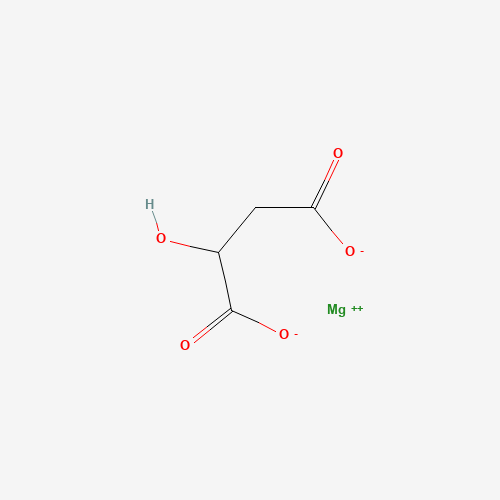
Also known as: magnesium malate · magnesium 2-hydroxybutanedioate

Magnesium malate is a 1:1 magnesium salt with about 15.5% theoretical elemental magnesium. Human fibromyalgia studies mostly used magnesium plus malic acid or multinutrient di-magnesium-malate products, so they do not establish isolated-salt efficacy. Absorption and safety remain formulation-specific. [mmm-pubchem] [mmm-russell] [mmm-ferreira]
10 sourcesContent date Oct 11, 2026CompareExplore connectionsRevision history
Magnesium malate molecular structure
PubChem
01

Overview

Retail names include mono-, hydrated and di-magnesium malate materials. The published Super Malic trial used a combination product, and the timed-release study added vitamins. Compound mass therefore cannot be treated as elemental magnesium mass. [mmm-efsa] [mmm-weiss]

How it works

Elemental magnesium contribution

The magnesium ion is the mineral component measured in supplementation studies; malate changes salt identity and mass. [3]

Malate metabolic rationale

Malate participates in cellular metabolism, but this biochemical rationale does not establish that oral magnesium malate increases energy or reduces pain. [4]

Relative absorption signal

A rat comparison and an unpublished human crossover suggest product-specific absorption differences, but neither establishes a human clinical advantage. [7]

Research mechanism

Source-specific mechanism detail is preserved in the cited source. [1]

Research mechanism

Source-specific mechanism detail is preserved in the cited source. [1]

Research mechanism

Source-specific mechanism detail is preserved in the cited source. [1]

Research mechanism

Source-specific mechanism detail is preserved in the cited source. [1]

02

Subjective effects

Reported experiences are kept separate from measured outcomes and remain tied to their cited context.

Variable
Limited research

Small uncontrolled reports suggested improvement, while the blinded Super Malic phase did not show a clear treatment effect. [5]

Population
Adults with fibromyalgia
Exposure context
Magnesium/malic-acid combination for 4 weeks plus uncontrolled escalation
Variable
Limited research

A timed-release multinutrient di-magnesium-malate product reported symptom and status changes, but attribution to malate is unresolved. [8]

Population
Adults in product study
Exposure context
500 mg/day elemental magnesium as di-magnesium malate plus vitamins
Variable
Human research

The blinded Super Malic phase did not outperform placebo on pain, tender-point index, tender-point average, function, depression, or perceived stress; pain and tenderness improved only during the later open-label escalation. [1]

Variable
Human research

Fatigue and sexual-energy questionnaire items improved after 30 days in the multinutrient MagSRT study, but the authors explicitly stated that magnesium alone could not be credited. [1]

Variable
Human research

Timed-release di-magnesium malate increased serum magnesium acutely and red-blood-cell magnesium over 30–90 days in one product-specific study. [1]

Variable
Human research

In the MagSRT study, 6 of 53 intervention participants reported loose stools or diarrhea and 2 reported gastrointestinal symptoms; 5 participants did not complete the trial because of side effects. [1]

Variable
Human research

Thirteen of 24 randomized participants reported at least one adverse event, but investigators did not attribute events to malic acid or magnesium; gastrointestinal symptoms predominated during open-label treatment. [1]

03

Measured outcomes

What the research measured, for whom, and under which exposure. Findings remain attached to the study’s task or clinical endpoint.

The combination trial evidence is small and inconsistent; later uncontrolled or multinutrient findings do not establish isolated magnesium-malate efficacy. [6]

PopulationAdults with fibromyalgiaExposureMagnesium plus malic acid combinationMeasureFatigue and depressive-symptom measures
Limited research

The timed-release multinutrient study reported higher serum and red-cell magnesium; this is a status outcome, not proof of energy or pain benefit. [8]

PopulationStandard adult clinical populationExposureDi-magnesium malate plus vitaminsMeasureSerum and red-cell magnesium
Limited research

Source-specific outcome evidence is preserved in the cited reference. [1]

PopulationNot establishedExposureNot establishedMeasureNot assessed
Human research

Source-specific outcome evidence is preserved in the cited reference. [1]

PopulationNot establishedExposureNot establishedMeasureNot assessed
Human research

Source-specific outcome evidence is preserved in the cited reference. [1]

PopulationNot establishedExposureNot establishedMeasureNot assessed
Human research

safety

Variable

Source-specific outcome evidence is preserved in the cited reference. [1]

PopulationNot establishedExposureNot establishedMeasureNot assessed
Human research
04

Doses & routes

Study doses and reference exposures, with route, formulation and duration.

Oral · By mouth · 5 records

Preliminary fibromyalgia report

Research exposure

300–600 mg/day [4]

Ingredient / form
Magnesium plus malic acid · Formulation not adequately characterized
Route
Oral
Frequency
Daily
Duration
Approximately 8 weeks
Population
15 people with fibromyalgia
Purpose
Research exposure

Not an isolated magnesium-malate salt trial; elemental basis unclear.

Super Malic blinded phase

Research exposure

300 mg/day [5]

Ingredient / form
Super Malic combination · Magnesium hydroxide plus malic acid; publication descriptions differ
Route
Oral
Frequency
Twice daily
Duration
4 weeks
Population
Adults with fibromyalgia
Purpose
Research exposure

Elemental amount cannot be recovered confidently; blinded phase had no clear treatment effect.

Super Malic open-label escalation

Research exposure

600 mg/day [5]

Ingredient / form
Super Malic combination · Magnesium hydroxide plus malic acid
Route
Oral
Frequency
Twice daily
Duration
Uncontrolled extension
Population
Adults with fibromyalgia
Purpose
Research exposure

Dose escalation was uncontrolled and not isolated magnesium malate.

Timed-release di-magnesium malate study

Research exposure

500 mg/day [8]

Ingredient / form
Di-magnesium malate · Timed-release product with vitamin C, B6, folate and B12
Route
Oral
Frequency
4 tablets/day
Duration
30–90 days
Population
Standard adult clinical population
Purpose
Research exposure

Multinutrient product; attribution to malate alone is not possible.

EFSA crossover absorption study

Research exposure

150 mg [7]

Ingredient / form
Di-magnesium malate and comparator supplements · Applicant-submitted tested supplements
Route
Oral
Frequency
Single dose
Duration
Single crossover session
Population
14 participants
Purpose
Research exposure

Unpublished study reviewed by EFSA; identity and safety data had gaps.

05

Pharmacokinetics

Absorption, metabolism and elimination depend on the analyte, route, formulation, physiology and other exposures.

Timing explorer

Published timing evidence
The source reports timing terms but does not provide numeric elapsed intervals.
Peak
Serum and red-cell magnesium changed in a product-specific multinutrient study.
Duration
Fibromyalgia reports used 4–8 weeks; no validated salt-specific duration.

Not established as a numeric timeline. Plasma timing and felt effects are distinct measurements. Source

Modeled elimination

The elimination model describes the named analyte after absorption and distribution. It does not establish felt-effect timing.

Oral · Magnesium malate or di-magnesium-malate products · not-established

Not modeled

Elimination model

An elimination model is not established for this observation.

Source-bound record

This observation provides context about the measured record, but it does not support a first-order elimination curve.

Measured analyte
Magnesium ion
Route
Oral
Formulation
Magnesium malate or di-magnesium-malate products
Population
Humans; no analyte-specific terminal half-life study located

Source context

Human studies measured serum, red-cell or urinary magnesium; no valid magnesium-malate terminal half-life was established. Animal AUC findings are not half-life data.
Read source context
Review the supporting record and source details.

Sourced elimination observations

Magnesium ion

No numeric estimate

Not established [8]

Route / formulation
Oral · Magnesium malate or di-magnesium-malate products
Population
Humans; no analyte-specific terminal half-life study located

Human studies measured serum, red-cell or urinary magnesium; no valid magnesium-malate terminal half-life was established. Animal AUC findings are not half-life data.

Parent compound or reported analyte

No numeric estimate

Not established [1]

Population
Humans

Source-specific pharmacokinetic detail is preserved in the cited source.

Parent compound or reported analyte

No numeric estimate

Not established [1]

Population
Humans

Source-specific pharmacokinetic detail is preserved in the cited source.

Parent compound or reported analyte

No numeric estimate

Not established [1]

Population
Humans

Source-specific pharmacokinetic detail is preserved in the cited source.

Parent compound or reported analyte

No numeric estimate

Not established [1]

Population
Humans

Source-specific pharmacokinetic detail is preserved in the cited source.

Parent compound or reported analyte

No numeric estimate

Not established [1]

Population
Humans

Source-specific pharmacokinetic detail is preserved in the cited source.

Bioavailability
An unpublished EFSA-reviewed crossover reported comparable availability of di-magnesium malate to permitted sources but had identity and data gaps. [7]
Metabolism / metabolites
Magnesium and malate handling are not represented by a single validated elimination curve. [7]

Factors that change the estimate

Formulation identity

Variable elemental dose and coingredients

Mono-, hydrated and di-magnesium malate products are not interchangeable by compound mass; the Super Malic studies used a combination product. [7]

Related observation

Attribution

Combination products confound clinical effects

Magnesium, malic acid, placebo response and added vitamins cannot be separated in the reported interventions. [8]

Related observation

Renal function

Reduced clearance increases magnesium risk

Magnesium-class renal warnings apply, but isolated malate-specific safety data are limited. [3]

Related observation

Modifier 1

Variable

Source-specific modifier evidence is preserved in the cited reference. [1]

Related observation

Modifier 2

Variable

Source-specific modifier evidence is preserved in the cited reference. [1]

Related observation

Modifier 3

Variable

Source-specific modifier evidence is preserved in the cited reference. [1]

Related observation

Modifier 4

Variable

Source-specific modifier evidence is preserved in the cited reference. [1]

Related observation

Modifier 5

Variable

Source-specific modifier evidence is preserved in the cited reference. [1]

Related observation
06

Safety & uncertainty

Adverse effects and interactions reported in the cited studies.

Warning

Combination-product attribution

Super Malic and timed-release products include malic acid, magnesium hydroxide or vitamins; observed outcomes cannot be assigned to isolated magnesium malate. [5]

Monitor

Renal impairment

General magnesium toxicity risk rises with reduced kidney function; isolated malate-specific safety data are limited. [3]

Context

Evidence quality

Fibromyalgia evidence is small, short, mixed-form and partly manufacturer-linked; no robust isolated-salt efficacy trial was identified. [6]

Warning

Product characterization

EFSA found the proposed di-magnesium-malate material insufficiently characterized to establish that it differed from authorized magnesium malate. [7]

Monitor

Research caution

Source-specific caution detail is preserved in the cited source. [1]

Context

Research caution

Source-specific caution detail is preserved in the cited source. [1]

Warning

Research caution

Source-specific caution detail is preserved in the cited source. [1]

Monitor

Research caution

Source-specific caution detail is preserved in the cited source. [1]

Context

Research caution

Source-specific caution detail is preserved in the cited source. [1]

Interactions in cited sources

Explore a pair of substances

Magnesium-class oral antibiotic interaction

Magnesium can reduce absorption of susceptible oral antibiotics; follow the antibiotic label. [3]

Context
Class-level interaction; no malate-specific DDI trial.

Oral bisphosphonates

Magnesium can reduce absorption of oral bisphosphonates when coadministered. [3]

Context
Class-level interaction; no malate-specific DDI trial.

Documented or hypothesized coexposure

Source-specific interaction detail is preserved in the cited source. [1]

Context
Evidence context preserved from Deep Research

Documented or hypothesized coexposure

Source-specific interaction detail is preserved in the cited source. [1]

Context
Evidence context preserved from Deep Research

Documented or hypothesized coexposure

Source-specific interaction detail is preserved in the cited source. [1]

Context
Evidence context preserved from Deep Research

Documented or hypothesized coexposure

Source-specific interaction detail is preserved in the cited source. [1]

Context
Evidence context preserved from Deep Research
07

Research & sources

10

Original publications, findings and available funding disclosures.

08

Connected claims

Explore the participants, roles and sources behind each relationship.

clinical-efficacyAuthored relationship

Magnesium malate treats fibromyalgia.

Magnesium malateintervention
Fatigue severityoutcome-domain

Human evidence mainly studied magnesium plus malic-acid combinations, not isolated magnesium malate.

Limitation No isolated, adequately controlled efficacy trial establishes treatment benefit.

dose-interpretationAuthored relationship

Di-magnesium malate product mass is interchangeable with elemental magnesium mass.

Salt stoichiometry, hydration and product composition affect elemental-magnesium interpretation.

Limitation Product assay and label declarations are required.

mechanistic-rationaleAuthored relationship

Magnesium malate increases energy through malate metabolism.

Metabolic participation is a mechanistic rationale, not a demonstrated clinical outcome.

Limitation Human efficacy remains unestablished.

evidence-boundaryAuthored relationship

Treats fibromyalgia or chronic pain

Magnesium malateintervention
Cognitive test performancereported-outcome-context

Source-specific research report

Limitation Source-specific limitation preserved in the returned report.

evidence-boundaryAuthored relationship

Boosts energy because malate feeds the Krebs cycle

Magnesium malateintervention
Cognitive test performancereported-outcome-context

Source-specific research report

Limitation Source-specific limitation preserved in the returned report.

evidence-boundaryAuthored relationship

Raises magnesium status

Magnesium malateintervention
Cognitive test performancereported-outcome-context

Source-specific research report

Limitation Source-specific limitation preserved in the returned report.

evidence-boundaryAuthored relationship

Better absorbed than other magnesium forms

Magnesium malateintervention
Cognitive test performancereported-outcome-context

Source-specific research report

Limitation Source-specific limitation preserved in the returned report.

evidence-boundaryAuthored relationship

Gentle on the stomach

Magnesium malateintervention
Cognitive test performancereported-outcome-context

Source-specific research report

Limitation Source-specific limitation preserved in the returned report.

Explore the relationship graph
10

Publication history

Content updated Oct 11, 2026.

Keep exploring

View graph