 Wikipedia
 Examine
COPD exacerbations
VariableNo significant primary exacerbation benefit; exploratory steroid-use subgroup signals remain separate. [20]
Human research
The substance library
Also known as: NAC · N-acetyl-L-cysteine · Acetylcysteine · N-acetyl cysteine
NAC supplies a cysteine precursor for glutathione synthesis and is used medically as a mucolytic and acetaminophen antidote. Oral trials show condition-specific benefits and important null findings; routine supplementation for healthy aging or cognitive enhancement remains unproven (13; 23; 65).
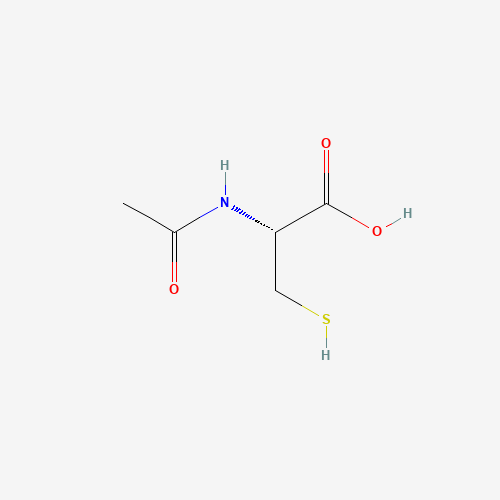
This page focuses on oral NAC in adults. COPD trials show heterogeneous effects on exacerbations, with positive PANTHEON findings alongside negative BRONCUS and 2024 coprimary outcomes. Small trials support symptom improvement in hair-pulling and skin-picking disorders, while OCD, addiction, mood, and metabolic studies give mixed or negative results. Biomarker changes do not establish disease prevention, and GlyNAC is a separate combination intervention (22; 20; 23; 25; 27; 28; 31; 48; 60).
NAC supplies cysteine equivalents for glutathione synthesis. A rise in glutathione depends on baseline status and biological context; it is not proof of longevity or disease prevention. [13]
The thiol group can reduce disulfide bonds in mucus proteins. Direct mucolytic chemistry and the magnitude of chronic oral COPD outcomes are separate questions. [3]
Cystine–glutamate exchange motivates psychiatric research; a small MRS crossover study changed regional glutamate but cannot establish cessation or psychiatric efficacy. [54]
In 12 Parkinson patients, two days of oral NAC increased CSF NAC dose-dependently; 70 mg/kg per dose produced about 9.26 μM, with no acute motor or cognitive improvement. [53]
IV NAC attenuated selected early exercise-responsive signaling. This cannot be translated into established loss of training adaptation from ordinary oral doses. [57]
Early NAC improved behavioral recovery in mouse and rat injury models; this does not establish efficacy in healthy adults. [5]
A 1.7 g/kg/day rat experiment altered oxidative stress and mitochondrial-biogenesis responses without preventing all mitochondrial damage. Its dose is excluded from adult oral exposures. [11]
Rat blast-injury work combined NAC with another antioxidant; its biomarker findings cannot establish oral NAC-alone efficacy. [6]
What the research measured, for whom, and under which exposure. Findings remain attached to the study’s task or clinical endpoint.
No significant primary exacerbation benefit; exploratory steroid-use subgroup signals remain separate. [20]
No significant reduction in annual FEV1 decline. [20]
Walking distance did not significantly improve; mMRC and SGRQ were also unchanged. [21]
Primary endpoint favored NAC; 964 participants contributed to the primary analysis. [22]
The coprimary total-exacerbation endpoint was not significant. [23]
The coprimary lung-function endpoint was not significant. [23]
Secondary exploratory endpoint favored NAC; multiplicity was not adjusted. [23]
Pooled mucolytic evidence suggests fewer exacerbations and hospitalizations; this is class-level evidence. [24]
Hair-pulling symptoms improved; separation was first observed after nine weeks. [25]
Skin-picking severity improved; psychosocial functioning did not significantly differ. [27]
No evidence of primary or secondary benefit; point estimate favored placebo. [28]
Borderline signal at 5–8 weeks, with no significant benefit beyond 12 weeks. [29]
Greater Y-BOCS symptom reduction in a small pilot; the inconsistent abstract responder statistic is omitted. [30]
No significant between-group cognitive advantage. [30]
No improvement in early/end-of-treatment abstinence or time to relapse. [32]
Primary results were negative overall; the already-abstinent subgroup signal was exploratory. [33]
No superiority over placebo; prior-abstinence subgroup findings are exploratory. [34]
No consistent consumption benefit; some time-by-treatment findings varied across the observation period. [35]
Pooled craving reduction with very high heterogeneity; this is not evidence of abstinence. [37]
Primary endpoint was negative; later secondary and severe-baseline subgroup signals remain exploratory. [38]
No primary or meaningful secondary advantage; numerical CI is withheld because of the abstract inconsistency. [39]
Small pooled adjunctive symptom reduction, with mixed diagnostic contexts. [40]
No significant pooled benefit in symptoms, functioning, or quality of life. [41]
Modest pooled estimate; low/very low certainty and no direct active-treatment comparisons. [42]
Some glucose improvement versus placebo; other metabolic comparisons with metformin often crossed the null. The plotted estimate is the placebo subgroup; 869 is the total review population. [43]
Lower testosterone and higher FSH; no significant follicle-count, endometrial-thickness, progesterone, LH, or SHBG effect. [44]
No statistically established clinical-pregnancy advantage; live birth remains unresolved. [45]
Higher clinical pregnancy and lower uFSH requirements with adjunctive NAC; active treatment context and lack of identical placebo limit inference. [47]
HOMA-IR decreased despite null steatosis and liver-enzyme results. [48]
Total glutathione increased; this biomarker does not establish structural liver benefit. [48]
No significant insulin-resistance benefit, unlike the smaller-dose placebo-controlled MASLD trial. [49]
Reported improved noninvasive fibrosis measures; active comparisons and multiple endpoints limit conclusions about structural reversal. [50]
Severity scores and selected hepatic/renal laboratory measures improved; clinical events were not established. [51]
HOMA-IR improved before/after treatment without a concurrent control. [52]
Dose-related CSF exposure did not produce acute cognitive or motor improvement. [53]
Regional glutamate shifted toward the comparison range; this biomarker does not demonstrate abstinence benefit. [54]
Sprint performance improved in a very small crossover experiment. [55]
Small pooled soreness reduction; mixed routes and scales preclude an oral-only magnitude claim. [56]
Combination trial did not improve the primary total-glutathione endpoint or the redox ratio; post-hoc low-GSH/high-stress signals remain exploratory. [60]
Small combination trial reported improved physical-function measures. [59]
Lower cancer incidence was associated with NAC prescribing; residual confounding prevents causal interpretation. [62]
Acute post-blast symptom resolution favored NAC. [4]
35 of 50 findings in this selection lack structured estimates. Different measures, populations, instruments, comparators, or assessment times are shown separately.
Study doses and reference exposures, with route, formulation and duration.
Food timing and solubility labels describe the cited route or formulation. Solubility alone does not establish whether food changes absorption.
Oral · By mouth · 25 records
Absorption, metabolism and elimination depend on the analyte, route, formulation, physiology and other exposures.
The elimination model describes the named analyte after absorption and distribution. It does not establish felt-effect timing.
Intravenous reference with oral formulation comparisons · 600 mg NAC; IV reference and four oral preparations · study-mean
Late elimination in a 600 mg comparison with an IV reference; not a universal oral half-life or effect duration. [15]
Adverse effects and interactions reported in the cited studies.
Nausea, vomiting, diarrhea, dyspepsia, and abdominal discomfort are recognized oral adverse effects. The 2–4 g/day OCD trial chiefly reported mild gastrointestinal events. [28]
Anaphylactoid reactions, bronchospasm, and marked hypotension are especially relevant to IV antidote regimens. Their incidence must not be transferred to oral supplement use. [13]
COPD trials extend one to three years at 600–1200 mg/day. They do not establish comparable multi-year safety of 2–4 g/day in healthy adults. [20]
Adverse events occurred in 25.2% versus 21.1%, and serious events in 8.6% versus 6.7%; differences were not statistically significant. This does not exclude rare harms. [23]
Acetylcysteine treats acetaminophen poisoning under medical protocols. Supplement-style exposures and outcome data cannot substitute for time-sensitive poisoning management. [13]
EUROSCAN did not improve survival or second-primary-tumor outcomes. Its cancer-survivor population and duration cannot establish safety or prevention for every setting. [61]
Acute performance and recovery findings are context-dependent; chronic oral NAC has not been shown to universally improve or impair training adaptation. [58]
Copper/zinc findings in cells and mice do not establish clinically important deficiency from ordinary oral NAC in humans. [9]
Original publications, findings and available funding disclosures.
Explore the participants, roles and sources behind each relationship.
Disease severity, dose, geography, and endpoint definitions differ.
Limitation No inference of benefit in healthy lungs.
Biochemical precursor supply.
Limitation Biomarker changes are not clinical efficacy.
Small pilots and time-window analyses versus a negative phase III trial.
Limitation No proven routine adjunctive efficacy.
Different substances and clinical populations.
Limitation Craving and verified drug use are different outcomes.
MASLD trials differ in blinding, dose, comparator, and duration.
Limitation No established prevention of cirrhosis or clinical liver events.
Content updated Nov 14, 2026.