 Wikipedia
 Examine
Asthenia MFI-20
IncreasedThe 2025 synthesis of 549 patients reported a mean MFI-20 reduction of 16.3 points after about one month, but the estimate is not a pooled placebo-controlled difference. [1]
Human research
The substance library
Also known as: Fonturacetam · Phenotropil · Фенотропил · 4-Phenylpiracetam · Carphedon · Actitropil
Phenylpiracetam/fonturacetam is a racemic prescription drug in the Russian evidence base; R- and S-enantiomer findings are preclinical and must not be substituted for racemate clinical evidence.
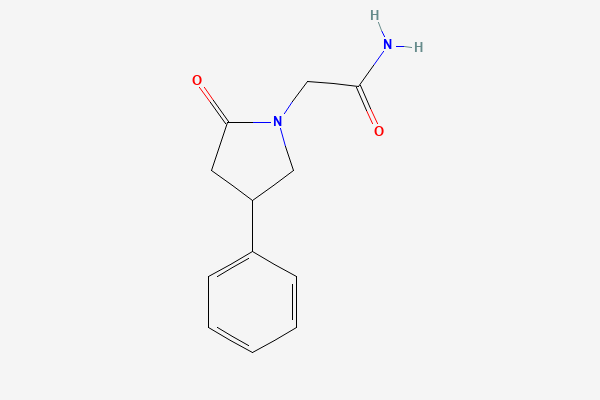
The current Fonturacetam-Akrikhin label describes 100 mg tablets and adult regimens, but label indications are not equivalent to high-certainty randomized evidence. Online products marketed as Phenotropil, phenylpiracetam or R-phenylpiracetam are not assumed to match registered tablets. [dr-phenylpiracetam-s20]
R/MRZ-9547 and S-phenylpiracetam DAT findings are preclinical; they do not establish human DAT occupancy, abuse liability or cognition. [12]
Reported experiences are kept separate from measured outcomes and remain tied to their cited context.
What the research measured, for whom, and under which exposure. Findings remain attached to the study’s task or clinical endpoint.
The 2025 synthesis of 549 patients reported a mean MFI-20 reduction of 16.3 points after about one month, but the estimate is not a pooled placebo-controlled difference. [1]
A 400-person controlled study reported better neurologic and activities-of-daily-living recovery with phenotropil added to rehabilitation; randomization and blinding are not clear. [2]
Small add-on trials report lower seizure burden and improved cognitive/EEG measures, but numerical treatment effects and design details are limited. [6]
The completed NCT07852130 registry arm had no posted results; it supplies no usable efficacy result at the cutoff. [16]
4-Phenylpyracetam was found to activate the operant behavior more powerfully, to remove psychodepressant effects of diazepam, to inhibit post-rotational nystagmus, and to prevent the development of retrograde amnesia. [24]
Study doses and reference exposures, with route, formulation and duration.
Oral · By mouth · 5 records
Absorption, metabolism and elimination depend on the analyte, route, formulation, physiology and other exposures.
Current label supplies dosing and safety but not a verified quantitative human PK profile in the retrieved material. [15]
Adverse effects and interactions reported in the cited studies.
The label lists blood-pressure elevation, psychomotor agitation, panic/hallucination/delusion concerns and insomnia, especially with late dosing. [15]
Current labeling contraindicates use in pregnancy, breastfeeding and ages 0–17; no adequate human safety studies were identified. [15]
No dedicated primary human abuse-liability, dependence, withdrawal, organ-impairment PK or long-term cardiovascular trial was located. [15]
Original publications, findings and available funding disclosures.
This link leaves BHWiki for an outside experience index. It is not a finding, a dose, or a source for the claims above. The report text is not stored here.
Explore the participants, roles and sources behind each relationship.
No published primary human healthy-volunteer efficacy trial and no posted results from the 2026 registry were identified.
Limitation Russian label language and anti-doping classification do not establish controlled efficacy.
The R/S literature in the eligible set is preclinical and chemically distinct from racemic clinical products.
Limitation Do not merge enantiomer and racemate evidence.
Source-specific result from PMID 6403074; applies to the population and design described in that abstract.
Limitation Abstract result from PMID 6403074; this single study does not establish general efficacy or safety.
Content updated Oct 11, 2026.