Six-minute walk distance
VariableThe 2026 meta-analysis pooled +17.03 m (95% CI −5.33 to 39.40; P=.135; I²=0), graded low certainty. [12]
Human research
The substance library
Also known as: Urolithin A · UA · UroA · 3,8-Dihydroxybenzo[c]chromen-6-one · Mitopure
Urolithin A is a direct oral metabolite intervention designed to bypass variable gut-microbiome conversion.
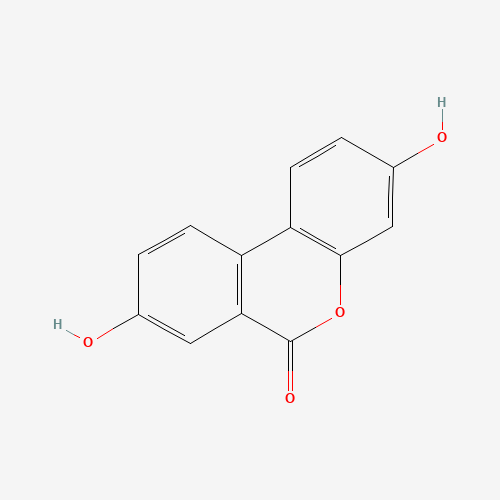
Direct synthetic urolithin A and pomegranate-juice precursor exposure are different interventions. Product, dose, population, microbiome producer status, and sponsor context materially affect interpretation. The evidence below separates concentration/biomarker observations from functional outcomes and records Amazentis sponsorship where reported. [singh-2022-bioavailability][singh-2022-atlas][whitfield-2025-runners]
Preclinical work supports a mitophagy rationale; human trials measure biomarkers rather than proving increased mitophagic flux in target tissues. [2]
Direct UA supplementation bypasses variable conversion of ellagitannin precursors by gut microbiota. [6]
Reported experiences are kept separate from measured outcomes and remain tied to their cited context.
First-in-human and immune studies reported selected mitochondrial, fatty-acid-oxidation, or cellular-health biomarker changes; these are surrogate endpoints. [5]
ENERGIZE reported a month-2 fatigue-resistance signal that was not maintained at month 4; ATLAS and athlete studies reported selected secondary signals. [7]
Runner and soccer studies reported exploratory recovery or CK/perceived-exertion signals alongside null primary performance endpoints. [10]
An obesity trial reported a cerebrovascular hemodynamic change while task performance remained null. [48]
What the research measured, for whom, and under which exposure. Findings remain attached to the study’s task or clinical endpoint.
The 2026 meta-analysis pooled +17.03 m (95% CI −5.33 to 39.40; P=.135; I²=0), graded low certainty. [12]
ATLAS had a null peak-power primary endpoint but selected hamstring-torque improvements; resistance-athlete 1RM was null. [8]
A 4-week runner trial found no 3,000-m or mitochondrial-function primary benefit; recovery measures were exploratory. [10]
A small HFrEF crossover study found no cardiac, glucose, or CRP benefit; HDL changed in isolation. [45]
A randomized immune-aging study changed immune-cell or fatty-acid-oxidation biomarkers without a clinical aging outcome. [11]
Study doses and reference exposures, with route, formulation and duration.
Oral · By mouth · 7 records
250 mg [5]
Phase I safety, tolerability, and PK cohorts; range is not a recommended dose.
250 mg/day [5]
Discrete dose cohorts with mitochondrial-associated biomarkers.
500 mg [6]
Compared with approximately 240 mL pomegranate juice containing precursors; direct UA produced higher conjugate exposure.
1,000 mg/day [7]
Randomized placebo-controlled trial of muscle endurance, 6-minute walk, ATP production, and biomarkers.
500 mg/day [8]
Peak-power primary endpoint was null; selected hamstring and aerobic signals were secondary.
1,000 mg/day [9]
Selected MVC/fatigue findings; 1RM endpoint was null.
1,000 mg/day [10]
No 3,000-m or mitochondrial-function primary benefit; recovery signals exploratory.
Absorption, metabolism and elimination depend on the analyte, route, formulation, physiology and other exposures.
Not established as a numeric timeline. Plasma timing and felt effects are distinct measurements. Source
The elimination model describes the named analyte after absorption and distribution. It does not establish felt-effect timing.
oral · 500 mg direct UA versus pomegranate juice · not-established
Elimination model
This observation provides context about the measured record, but it does not support a first-order elimination curve.
Source context
Direct UA produced more than sixfold higher incremental glucuronide exposure than juice; sparse 0-, 6-, and 24-hour sampling does not establish a terminal half-life.Read source context ↗
NOURISH cites approximately 24 hours for generic UA and 3–4 days for elimination, but sparse analyte-specific sampling does not establish a universal parent or conjugate terminal half-life. [6]
Not established [6]
Direct UA produced more than sixfold higher incremental glucuronide exposure than juice; sparse 0-, 6-, and 24-hour sampling does not establish a terminal half-life.
Not established [6]
Mean glucuronide concentration was highest at the 6-hour sampled point and remained elevated at 24 hours; exact Tmax and terminal half-life were not established.
Not established [6]
Producer status varied after precursor exposure; direct UA bypassed this conversion step.
Pomegranate precursors require gut conversion; direct UA produced more consistent circulating conjugate exposure. [6]
Related observation500 and 1,000 mg/day Mitopure trials used product-specific preparations; results cannot be transferred to pomegranate juice or dietary ellagitannins. [8]
Related observationTrials often excluded severe renal, hepatic, or other disease and were conducted in selected older adults, athletes, or healthy volunteers. [7]
Related observationAdverse effects and interactions reported in the cited studies.
The pooled 6-minute-walk estimate was not statistically significant and was graded low certainty. [12]
Most product trials were Amazentis-linked and several disclose sponsor employees or industry relationships; this is relevant to interpretation. [10]
Trials and registries commonly excluded severe renal or hepatic disease; dedicated safety evidence in these groups is lacking. [33]
A small 2026 case series found urolithin A in kidney-stone composition, but direct supplement causality and incidence are unknown. [49]
Pomegranate juice and dietary precursors require microbiome conversion and are not equivalent to direct UA dosing. [6]
Dedicated coadministration and impairment interaction data are limited because severe disease was commonly excluded. [33]
No validated human drug-interaction profile was established in the cited trials; mechanistic pathway overlap remains uncertain. [32]
Original publications, findings and available funding disclosures.
National Center for Biotechnology Information
Authoritative chemical identity record supporting PubChem CID, formula, molecular weight and canonical structure information.
Limitations Chemical identity database; does not establish human efficacy or clinical safety.
Funding: Not assessed; government chemical database record.
Conflicts of interest: Not assessed; not a clinical publication.
Ryu D, et al.
Established UA-induced mitophagy and functional effects in C. elegans and rodent muscle models.
Limitations Predominantly preclinical evidence; lifespan and muscle effects cannot be directly extrapolated to humans.
Funding: Funding details were not fully reassessed from the primary declaration during this run.
Conflicts of interest: Primary conflict declaration was not fully reassessed during this run.
Heilman J, Andreux P, Tran N, Rinsch C, Blanco-Bose W
Genotoxicity and repeated-dose toxicology testing did not identify target-organ toxicity at the highest tested rat exposures and supported subsequent regulatory safety assessment.
Limitations Animal toxicology cannot be converted into a human therapeutic dose or long-term human safety guarantee.
Funding: The underlying data were associated with commercial development of UA; complete publication funding wording was not independently reassessed.
Conflicts of interest: Author affiliations include Amazentis-associated investigators; the exact primary conflict statement was not independently reassessed.
U.S. Food and Drug Administration
FDA lists Amazentis SA as notifier and records a December 20, 2018 'FDA has no questions' response for specified food uses of urolithin A.
Limitations GRAS notice status concerns specified food uses and is not FDA drug approval or proof of clinical efficacy.
Funding: Not applicable to a regulatory database record; classified as not-assessed under the article schema.
Conflicts of interest: Not applicable to a regulatory database record; classified as not-assessed under the article schema.
Pénélope A Andreux, William Blanco-Bose, Dongryeol Ryu, Frédéric Burdet, Mark Ibberson, Patrick Aebischer, Johan Auwerx, Anurag Singh, Chris Rinsch
Single and repeated oral UA was bioavailable and had a favorable short-term safety profile; 500 and 1,000 mg/day for 28 days altered plasma acylcarnitines and skeletal-muscle mitochondrial gene expression.
Limitations Small early-phase study emphasizing safety and molecular biomarkers rather than clinical efficacy; detailed analyte-specific PK values were in supplementary information not independently retrievable in this review.
Funding: Amazentis SA was the clinical-study sponsor; the publication also acknowledged grant support from Fondation Suisse de Recherche sur les Maladies Musculaires and Fondation Marcel Levaillant.
Conflicts of interest: A.S., P.A.A., W.B. and C.R. were Amazentis employees; P.A. and C.R. were board members; J.A. and P.A. were members of the Amazentis scientific advisory board.
Source disclosureAnurag Singh, Davide D'Amico, Pénélope A Andreux, Gillian Dunngalvin, Timo Kern, William Blanco-Bose, Johan Auwerx, Patrick Aebischer, Chris Rinsch
Among 100 healthy adults, direct 500 mg UA produced far greater and more consistent circulating exposure than pomegranate juice; only a subset efficiently generated UA from dietary precursors.
Limitations Open-label acute bioavailability study; it establishes exposure differences, not comparative clinical benefit of UA versus pomegranate.
Funding: Amazentis SA was the registered lead sponsor of NCT04160312.
Conflicts of interest: The publication disclosed Amazentis employment and leadership/advisory relationships among several authors.
Source disclosureSophia Liu, Davide D'Amico, Eric Shankland, Saakshi Bhayana, Jose M Garcia, Patrick Aebischer, Chris Rinsch, Anurag Singh, David J Marcinek
1,000 mg/day for four months improved selected muscle-endurance and plasma biomarker measures, while 6-minute-walk distance and maximal ATP-production primary outcomes were not significantly better than placebo.
Limitations Only 66 participants; all participants were White and approximately three quarters were women; positive findings were predominantly secondary outcomes.
Funding: Research was supported by Amazentis SA; the funder was reported to have roles in study design/conduct, data handling and analysis/interpretation, manuscript activities and the decision to submit.
Conflicts of interest: Disclosures included Amazentis employment, company leadership/shareholding, and UA-related issued or pending patents; outside relationships were also disclosed by some investigators.
Source disclosureAnurag Singh, Davide D'Amico, Pénélope A Andreux, Andréane M Fouassier, William Blanco-Bose, Mal Evans, Patrick Aebischer, Johan Auwerx, Chris Rinsch
Selected hamstring-strength measures improved with 500 and 1,000 mg/day UA, and muscle molecular analyses showed mitochondrial/mitophagy-associated changes; the prespecified peak-power endpoint was not significantly improved.
Limitations Proof-of-concept trial with 88 randomized participants, multiple exploratory/secondary outcomes and some favorable changes driven partly by deterioration in placebo; several whole-body comparisons did not reach significance.
Funding: The study was funded by Amazentis SA.
Conflicts of interest: Multiple authors were Amazentis employees; P.A. and C.R. were board members and J.A./P.A. had scientific-advisory relationships with the company.
Source disclosureHaotian Zhao, Hongkang Zhu, Hezhang Yun, Jingqi Liu, Ge Song, Jin Teng, Dixin Zou, Naiyan Lu, Chang Liu
In 20 resistance-trained men, 1,000 mg/day improved MVIC and repetitions to failure versus placebo, whereas bench-press and squat 1RM changes were not significant.
Limitations Very small single-sex study; multiple endpoints and no reported confidence intervals for the principal between-group findings.
Funding: Supported by the 14th Five-Year Education Plan of Jiangsu Province (C/2022/01/78).
Conflicts of interest: The authors explicitly reported no potential conflict of interest.
Source disclosureJamie Whitfield, Alannah K A McKay, Nicolin Tee, Rachel McCormick, Aimee Morabito, Leonidas G Karagounis, Andréane M Fouassier, Davide D'Amico, Anurag Singh, Louise M Burke, John A Hawley
1,000 mg/day during a four-week altitude camp reduced selected muscle-damage/recovery signals and altered muscle proteomic pathways but did not significantly improve 3,000 m time-trial performance.
Limitations Only 42 male elite runners; time-trial and biopsy analyses used still smaller subsets and concurrent altitude training strongly influenced physiological adaptation.
Funding: Research funding from Amazentis SA was disclosed to senior investigators.
Conflicts of interest: The paper disclosed Amazentis employees and other company-related support or relationships.
Source disclosureDominic Denk, Anurag Singh, Herbert G Kasler, Davide D'Amico, Julia Rey, Lucía Alcober-Boquet, Johanna M Gorol, Christoph Steup, Ritesh Tiwari, Ryan Kwok, Rafael J Argüello, Julie Faitg, Kathrin Sprinzl, Stefan Zeuzem, Valentina Nekljudova, Sibylle Loibl, Eric Verdin, Chris Rinsch, Florian R Greten
1,000 mg/day for four weeks altered CD8 T-cell phenotype and fatty-acid-oxidation capacity and changed additional immune-cell functional and transcriptional endpoints.
Limitations Short 50-person trial focused on cellular immune phenotypes and ex-vivo functions rather than infection rates or other patient-centered clinical endpoints.
Funding: Amazentis SA funded the study and supplied the investigational product.
Conflicts of interest: Disclosures included Amazentis employment and company leadership; additional consulting, travel and patent-related interests were reported by individual authors.
Source disclosureTam Dao, Thanh T Nguyen, Karim Gariani, Hyun Jin Kim, Dongryeol Ryu
Five RCTs with 236 participants were identified. Pooled 6-minute-walk improvement was +17.03 m (95% CI -5.33 to 39.40) and statistically inconclusive; GRADE certainty was low, while other outcomes were too heterogeneous for quantitative pooling.
Limitations Only two studies contributed to the pooled 6-minute-walk analysis and the included populations, outcomes and training states were heterogeneous.
Funding: The full funding declaration was not independently extracted during this review.
Conflicts of interest: The full conflict-of-interest declaration was not independently extracted during this review.
Source disclosureAmazentis SA (assignee); Christopher L. Rinsch et al. (inventors)
Amazentis-assigned patent family covering urolithin-related mitochondrial-function and therapeutic claims; representative of the commercial intellectual-property interests disclosed around UA research.
Limitations A patent establishes claimed intellectual property, not clinical efficacy, regulatory approval or confirmation that every claim is valid in practice.
Funding: Not assessed for patent record.
Conflicts of interest: The patent itself documents inventor/assignee commercial interests rather than a journal conflict declaration.
Amazentis SA (assignee)
Amazentis patent covering claimed uses of urolithins or precursors in autophagy/longevity-related applications.
Limitations Patent claims are not evidence that human longevity is increased.
Funding: Not assessed for patent record.
Conflicts of interest: Patent ownership represents a commercial interest but is not a clinical-study COI declaration.
Amazentis SA (assignee); Wolfgang Skranc, George Yiannikouros, Alexander Trofimov, Zhixing Shan, Christopher Goss (inventors)
Patent covering scalable preparation of urolithin A, relevant to proprietary manufacturing and commercial supply rather than evidence of biological efficacy.
Limitations Manufacturing intellectual property does not establish clinical effectiveness.
Funding: Not assessed for patent record.
Conflicts of interest: Patent ownership represents a commercial interest but is not a clinical-study COI declaration.
Amazentis SA
Manufacturer source identifying Amazentis as the company behind proprietary Mitopure urolithin A and describing its commercial research and intellectual-property program.
Limitations Commercial manufacturer source; marketing statements are not treated as independent efficacy evidence.
Funding: Corporate self-publication.
Conflicts of interest: Commercial manufacturer source with direct financial interest in Mitopure.
Source disclosureEuropean Commission
Official European Commission application summary documenting an Amazentis novel-food application for urolithin A submitted in 2018.
Limitations An application record is not itself a final EU authorization; a final authorization was not established from the official material inspected in this research run.
Funding: Not applicable to regulatory record; classified as not-assessed.
Conflicts of interest: Not applicable to regulatory record; classified as not-assessed.
Pénélope A Andreux, William Blanco-Bose, Dongryeol Ryu, Frédéric Burdet, Mark Ibberson, Patrick Aebischer, Johan Auwerx, Anurag Singh, Chris Rinsch
Direct source link preserved from the returned Deep Research bibliography.
Limitations The capture did not recover a complete title, author list, funding, or disclosure statement for this link.
Funding: not-assessed
Conflicts of interest: not-assessed
Publication metadata not assessed in the returned report
Direct source link preserved from the returned Deep Research bibliography.
Limitations The capture did not recover a complete title, author list, funding, or disclosure statement for this link.
Funding: not-assessed
Conflicts of interest: not-assessed
Anurag Singh, Davide D'Amico, Pénélope A Andreux, Gillian Dunngalvin, Timo Kern, William Blanco-Bose, Johan Auwerx, Patrick Aebischer, Chris Rinsch
Direct source link preserved from the returned Deep Research bibliography.
Limitations The capture did not recover a complete title, author list, funding, or disclosure statement for this link.
Funding: not-assessed
Conflicts of interest: not-assessed
Publication metadata not assessed in the returned report
Direct source link preserved from the returned Deep Research bibliography.
Limitations The capture did not recover a complete title, author list, funding, or disclosure statement for this link.
Funding: not-assessed
Conflicts of interest: not-assessed
Sophia Liu, Davide D'Amico, Eric Shankland, Saakshi Bhayana, Jose M Garcia, Patrick Aebischer, Chris Rinsch, Anurag Singh, David J Marcinek
Direct source link preserved from the returned Deep Research bibliography.
Limitations The capture did not recover a complete title, author list, funding, or disclosure statement for this link.
Funding: not-assessed
Conflicts of interest: not-assessed
Publication metadata not assessed in the returned report
Direct source link preserved from the returned Deep Research bibliography.
Limitations The capture did not recover a complete title, author list, funding, or disclosure statement for this link.
Funding: not-assessed
Conflicts of interest: not-assessed
Anurag Singh, Davide D'Amico, Pénélope A Andreux, Andréane M Fouassier, William Blanco-Bose, Mal Evans, Patrick Aebischer, Johan Auwerx, Chris Rinsch
Direct source link preserved from the returned Deep Research bibliography.
Limitations The capture did not recover a complete title, author list, funding, or disclosure statement for this link.
Funding: not-assessed
Conflicts of interest: not-assessed
Publication metadata not assessed in the returned report
Direct source link preserved from the returned Deep Research bibliography.
Limitations The capture did not recover a complete title, author list, funding, or disclosure statement for this link.
Funding: not-assessed
Conflicts of interest: not-assessed
Haotian Zhao, Hongkang Zhu, Hezhang Yun, Jingqi Liu, Ge Song, Jin Teng, Dixin Zou, Naiyan Lu, Chang Liu
Direct source link preserved from the returned Deep Research bibliography.
Limitations The capture did not recover a complete title, author list, funding, or disclosure statement for this link.
Funding: not-assessed
Conflicts of interest: not-assessed
Publication metadata not assessed in the returned report
Direct source link preserved from the returned Deep Research bibliography.
Limitations The capture did not recover a complete title, author list, funding, or disclosure statement for this link.
Funding: not-assessed
Conflicts of interest: not-assessed
Jamie Whitfield, Alannah K A McKay, Nicolin Tee, Rachel McCormick, Aimee Morabito, Leonidas G Karagounis, Andréane M Fouassier, Davide D'Amico, Anurag Singh, Louise M Burke, John A Hawley
Direct source link preserved from the returned Deep Research bibliography.
Limitations The capture did not recover a complete title, author list, funding, or disclosure statement for this link.
Funding: not-assessed
Conflicts of interest: not-assessed
Publication metadata not assessed in the returned report
Direct source link preserved from the returned Deep Research bibliography.
Limitations The capture did not recover a complete title, author list, funding, or disclosure statement for this link.
Funding: not-assessed
Conflicts of interest: not-assessed
Dominic Denk, Anurag Singh, Herbert G Kasler, Davide D'Amico, Julia Rey, Lucía Alcober-Boquet, Johanna M Gorol, Christoph Steup, Ritesh Tiwari, Ryan Kwok, Rafael J Argüello, Julie Faitg, Kathrin Sprinzl, Stefan Zeuzem, Valentina Nekljudova, Sibylle Loibl, Eric Verdin, Chris Rinsch, Florian R Greten
Direct source link preserved from the returned Deep Research bibliography.
Limitations The capture did not recover a complete title, author list, funding, or disclosure statement for this link.
Funding: not-assessed
Conflicts of interest: not-assessed
Publication metadata not assessed in the returned report
Direct source link preserved from the returned Deep Research bibliography.
Limitations The capture did not recover a complete title, author list, funding, or disclosure statement for this link.
Funding: not-assessed
Conflicts of interest: not-assessed
Tam Dao, Thanh T Nguyen, Karim Gariani, Hyun Jin Kim, Dongryeol Ryu
Five randomized trials and 236 participants; pooled 6-minute-walk effect was +17.03 m with 95% CI −5.33 to 39.40 and low certainty.
Limitations Heterogeneous small trials and low GRADE certainty; no longevity endpoint.
Funding: not-assessed
Conflicts of interest: not-assessed
Dao T, Nguyen TT, Gariani K, Kim HJ, Ryu D
DOI link for the 2026 pooled muscle-health analysis.
Limitations Review-level evidence; pooled estimates remain low certainty.
Funding: not-assessed
Conflicts of interest: not-assessed
Publication metadata not assessed in the returned report
Direct source link preserved from the returned Deep Research bibliography.
Limitations The capture did not recover a complete title, author list, funding, or disclosure statement for this link.
Funding: not-assessed
Conflicts of interest: not-assessed
Hodzic Kuerec A, Lim XK, Khoo AL, et al.
Reviews human urolithin A trials and evidence boundaries for aging-related outcomes.
Limitations Heterogeneous short trials and no human longevity endpoint.
Funding: not-assessed
Conflicts of interest: not-assessed
Hodzic Kuerec A, Lim XK, Khoo AL, et al.
DOI link for the 2024 human urolithin A systematic review.
Limitations Review-level synthesis with heterogeneous short trials.
Funding: not-assessed
Conflicts of interest: not-assessed
Best et al.
Eight kidney-stone cases contained urolithin A in 5–80% of stone composition; direct supplement causality was not established.
Limitations Small case series with no exposure or incidence denominator.
Funding: not-assessed
Conflicts of interest: not-assessed
Publication metadata not assessed in the returned report
Direct source link preserved from the returned Deep Research bibliography.
Limitations The capture did not recover a complete title, author list, funding, or disclosure statement for this link.
Funding: not-assessed
Conflicts of interest: not-assessed
Explore the participants, roles and sources behind each relationship.
Some secondary endurance or strength signals exist, but primary endpoints and pooled 6-minute-walk evidence are inconsistent.
Limitation Small selected trials, surrogate endpoints, and low-certainty meta-analysis.
No human longevity endpoint has been demonstrated.
Limitation Preclinical lifespan findings cannot be transferred to human supplementation.
Biomarker changes are compatible with the mechanism but do not establish target engagement or clinical benefit.
Limitation Human tissue flux measurements and clinical mediation are limited.
FDA no-questions response for specified food uses; not a drug or efficacy approval. Authority source
Application and product authorization context do not establish clinical efficacy or longevity benefit. Authority source
Content updated Oct 10, 2026.